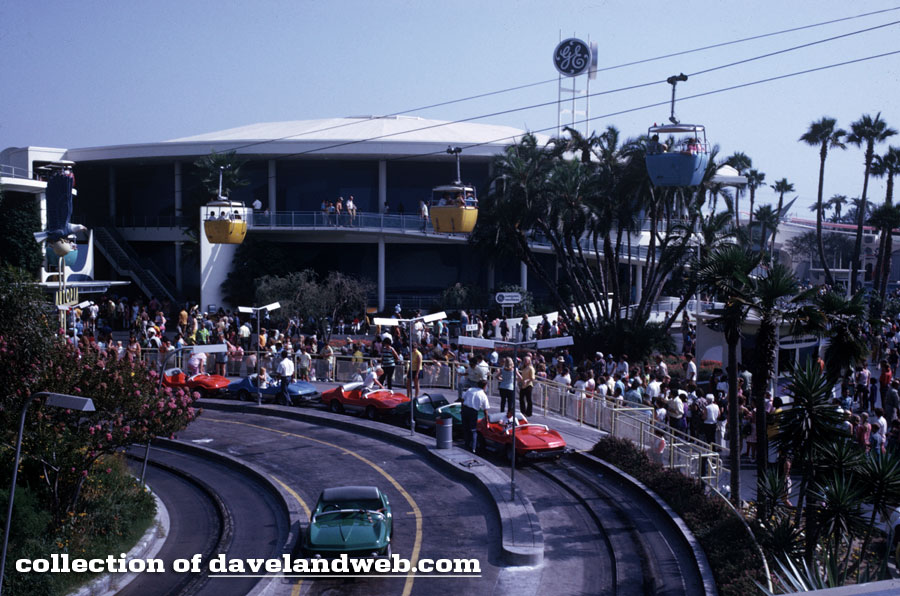
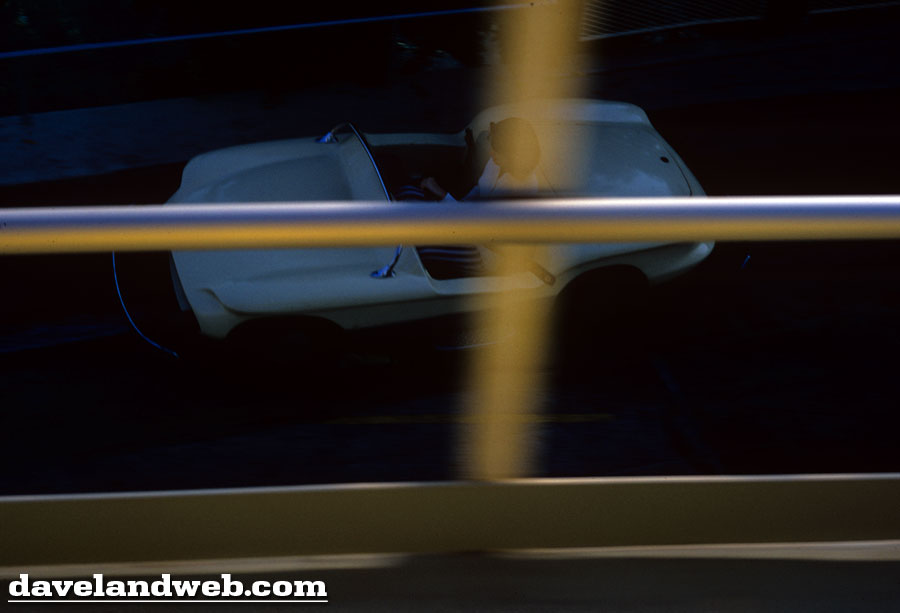
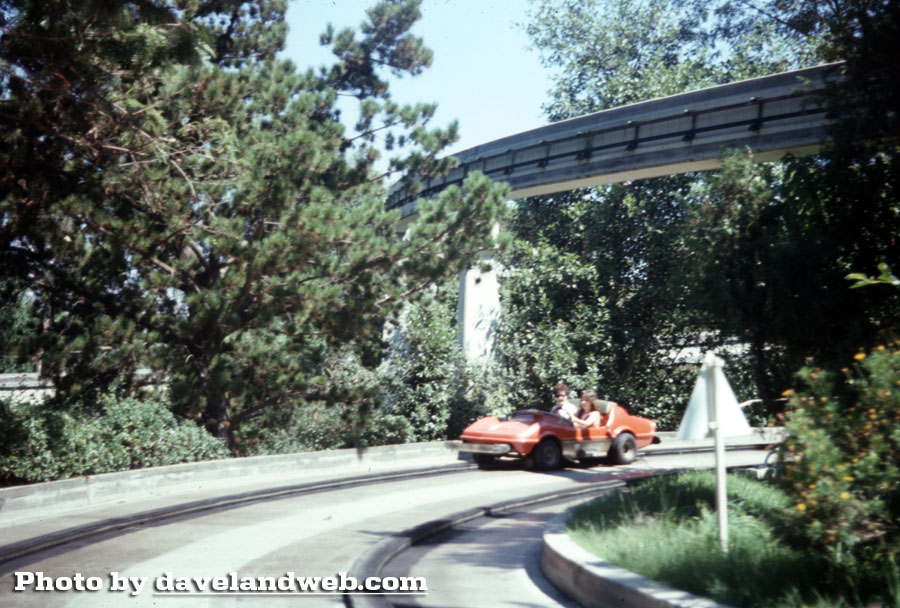
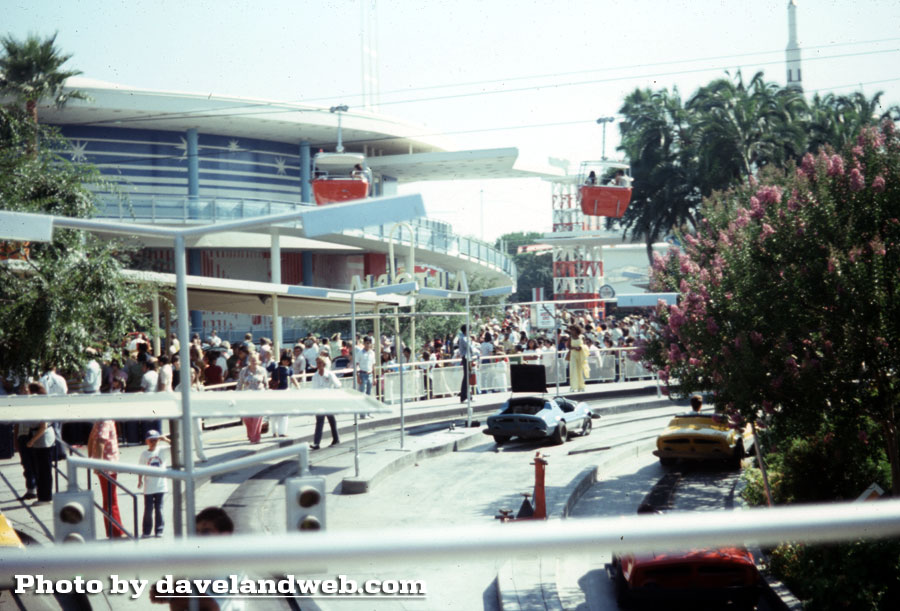
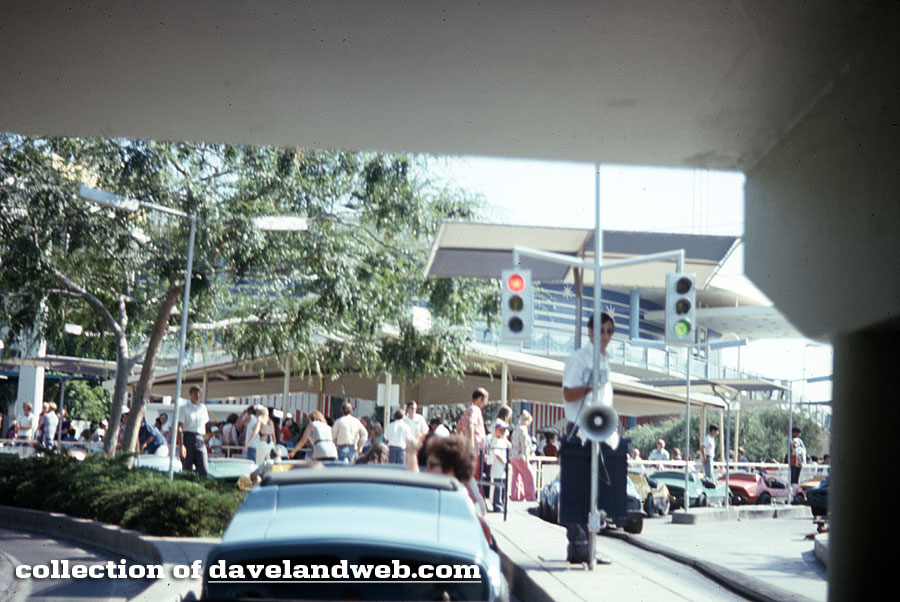
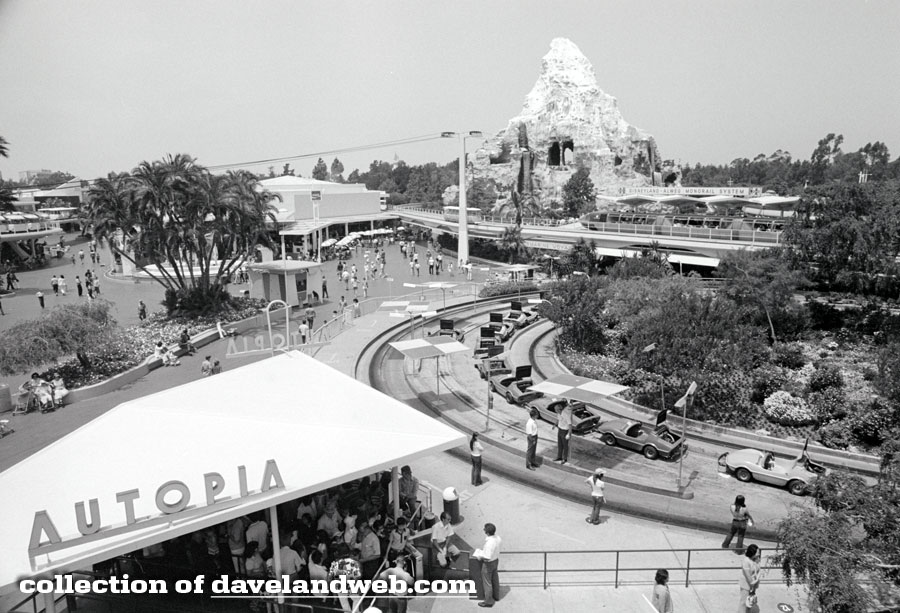
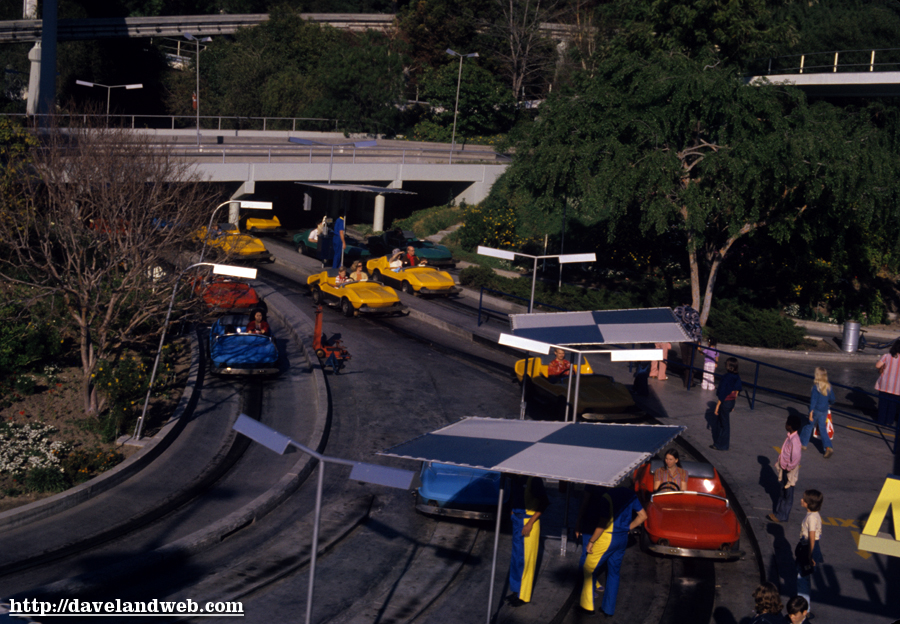
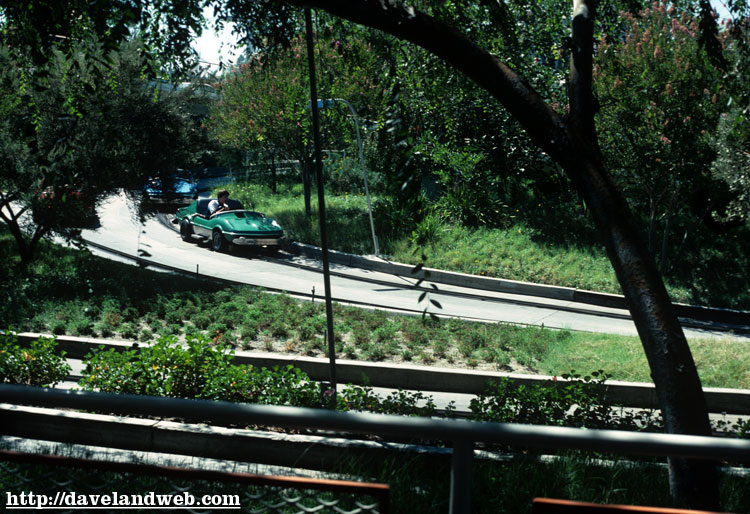
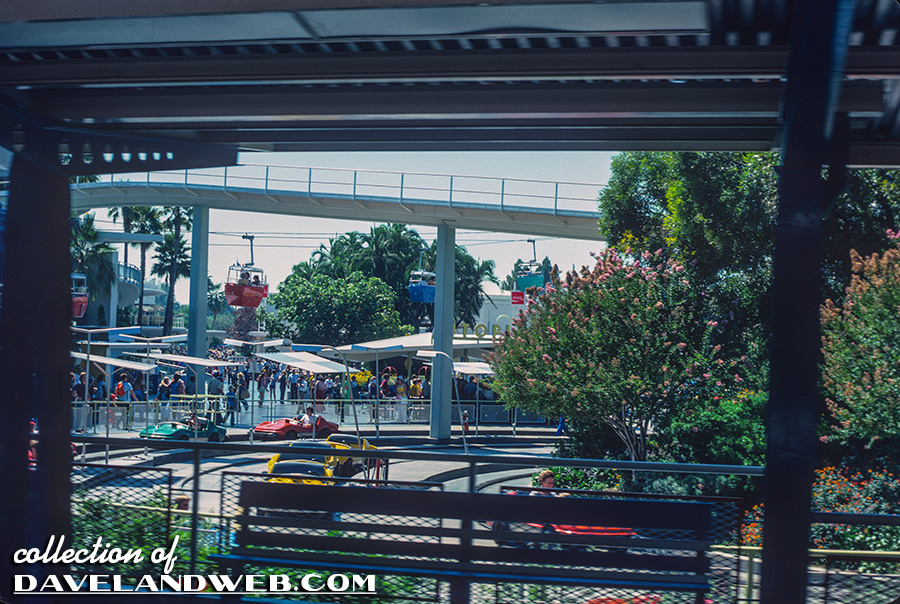
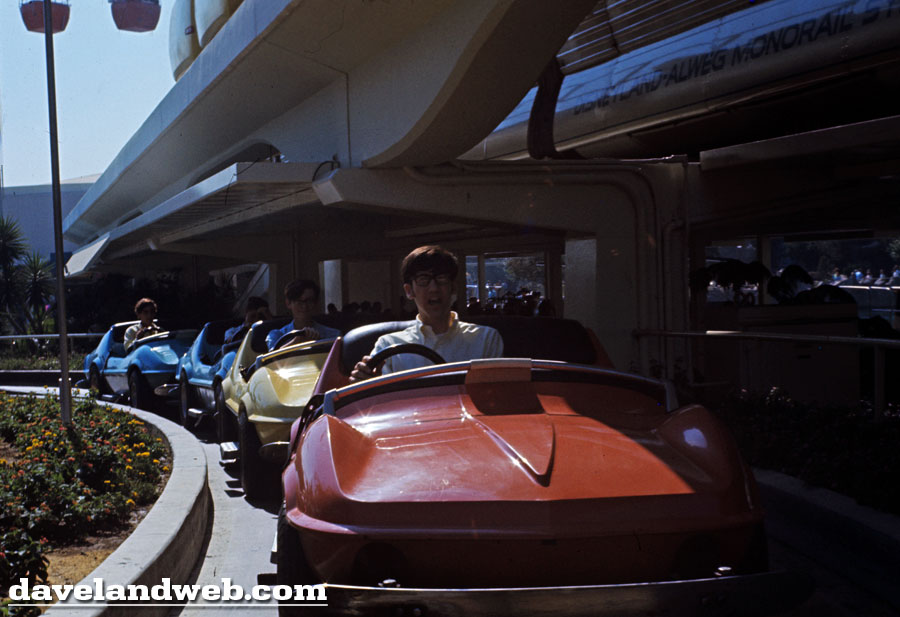
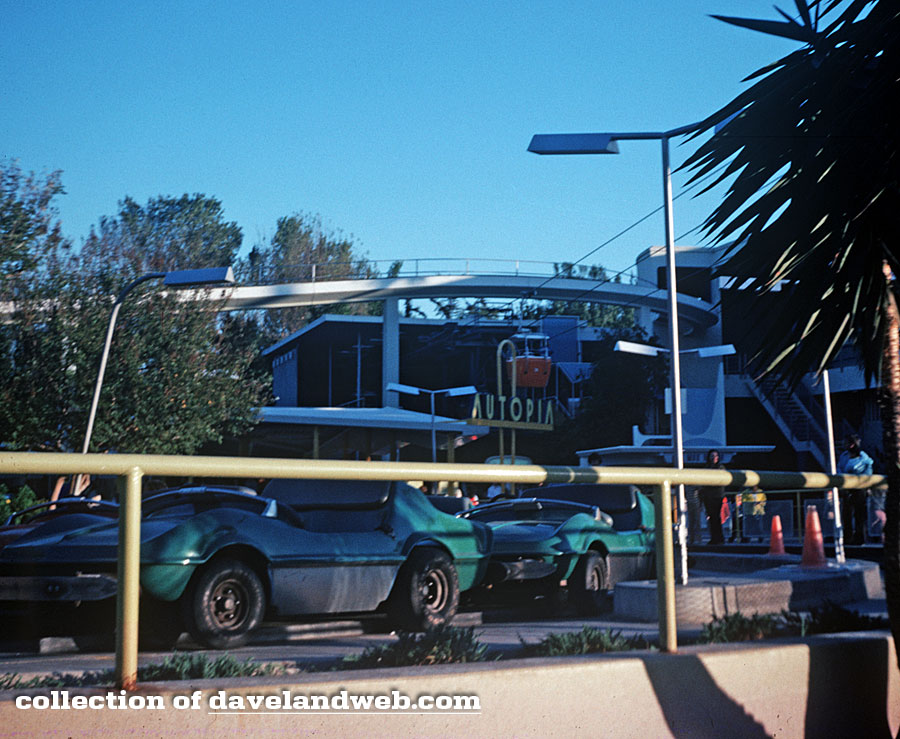
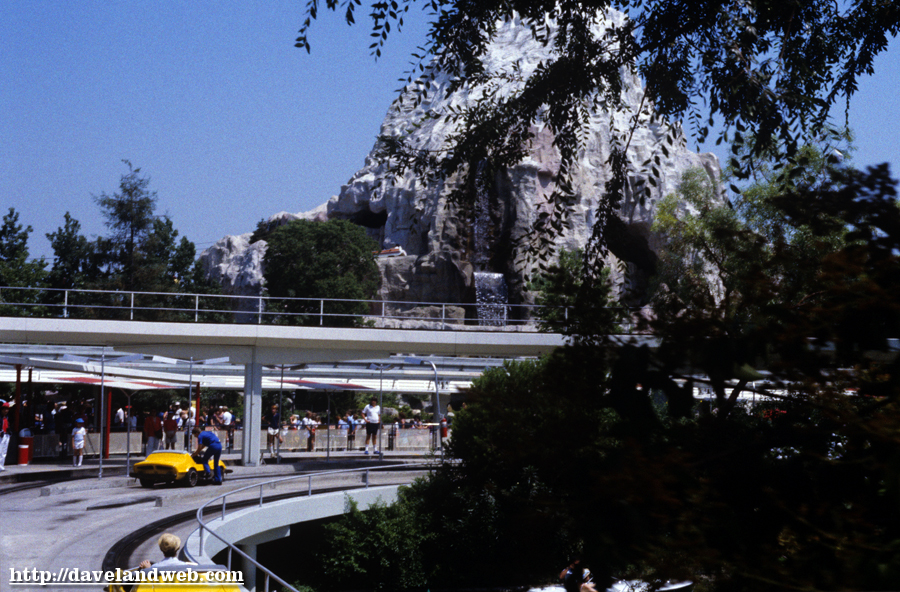
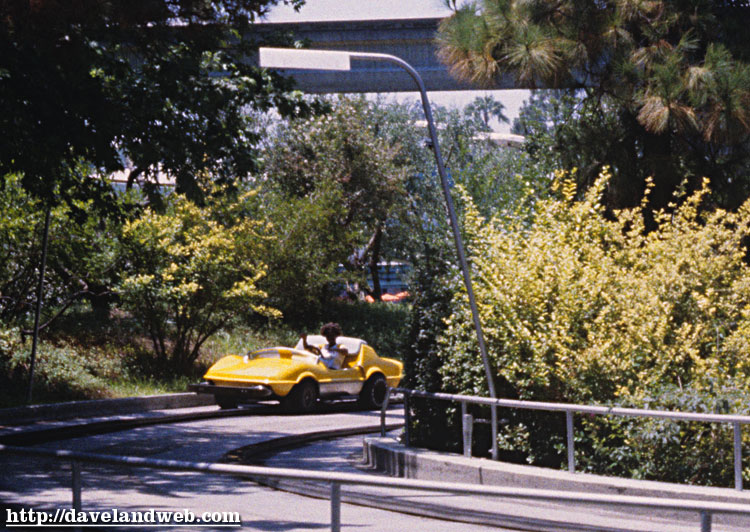
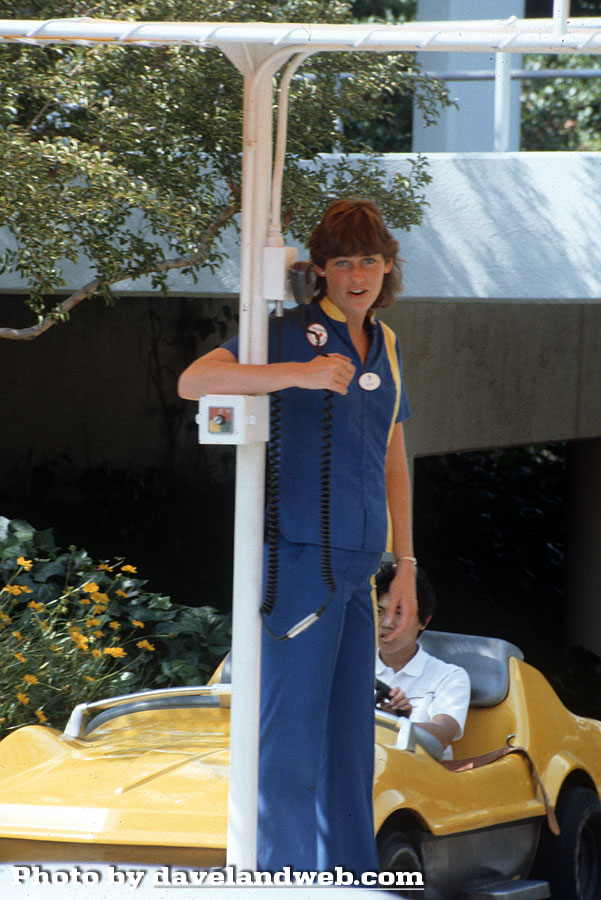
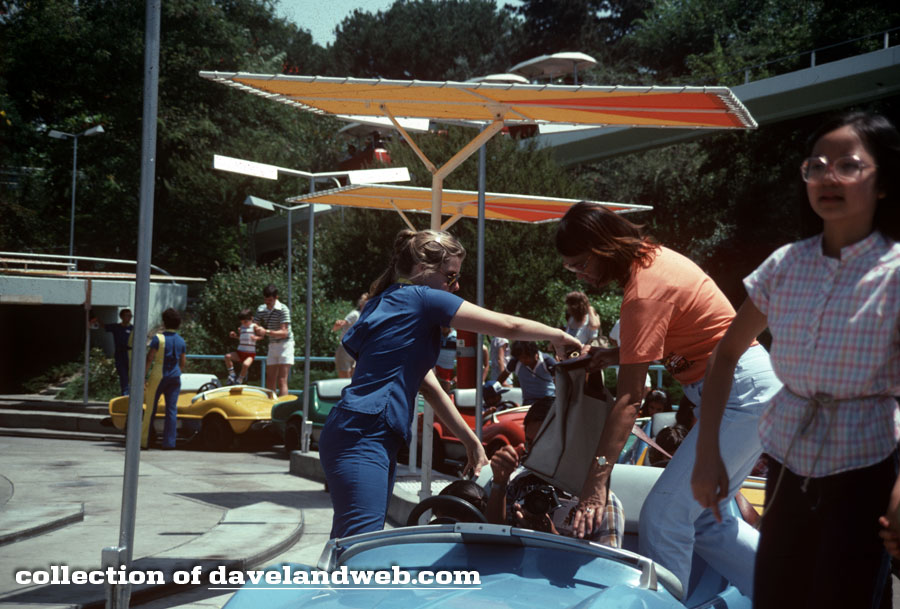
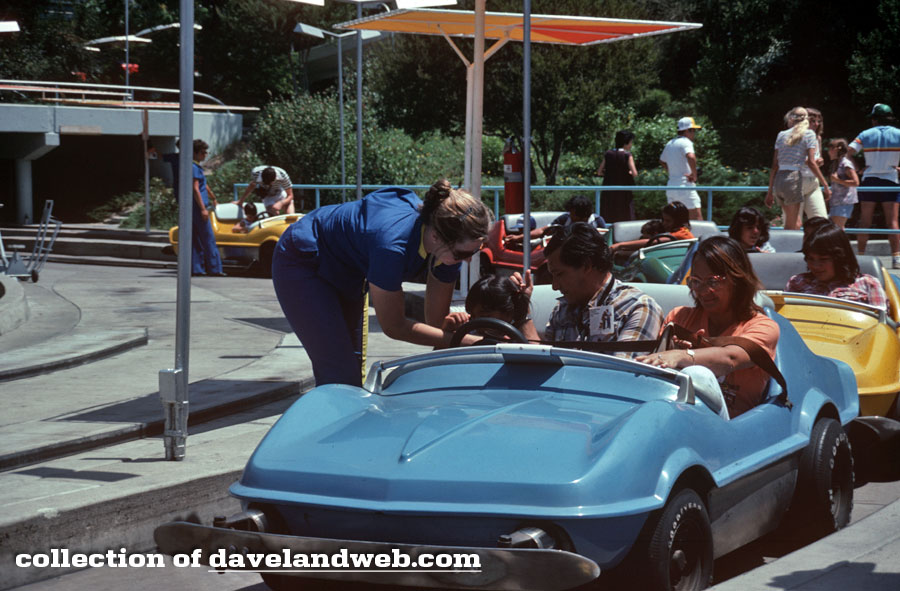
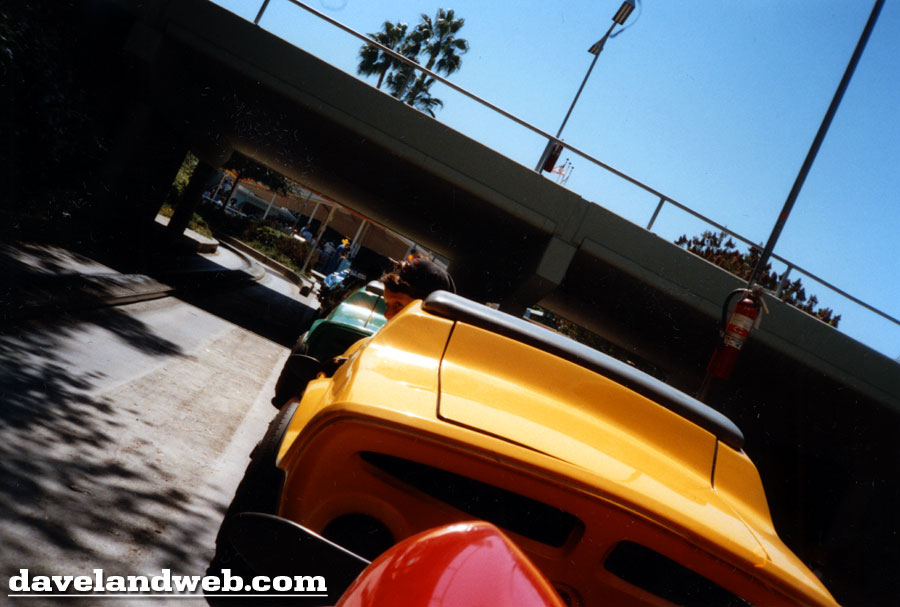
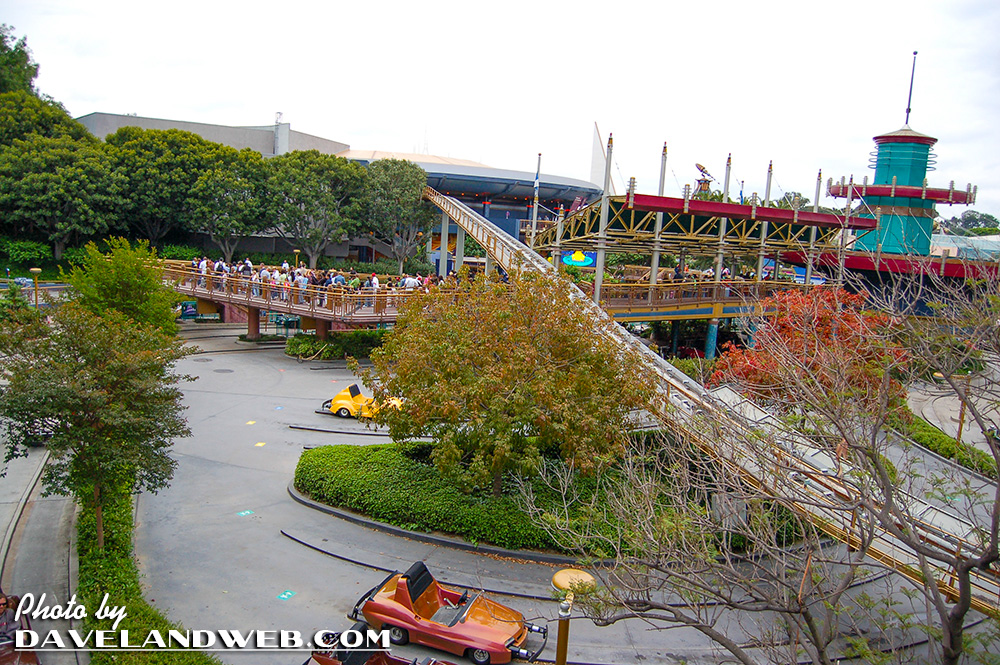
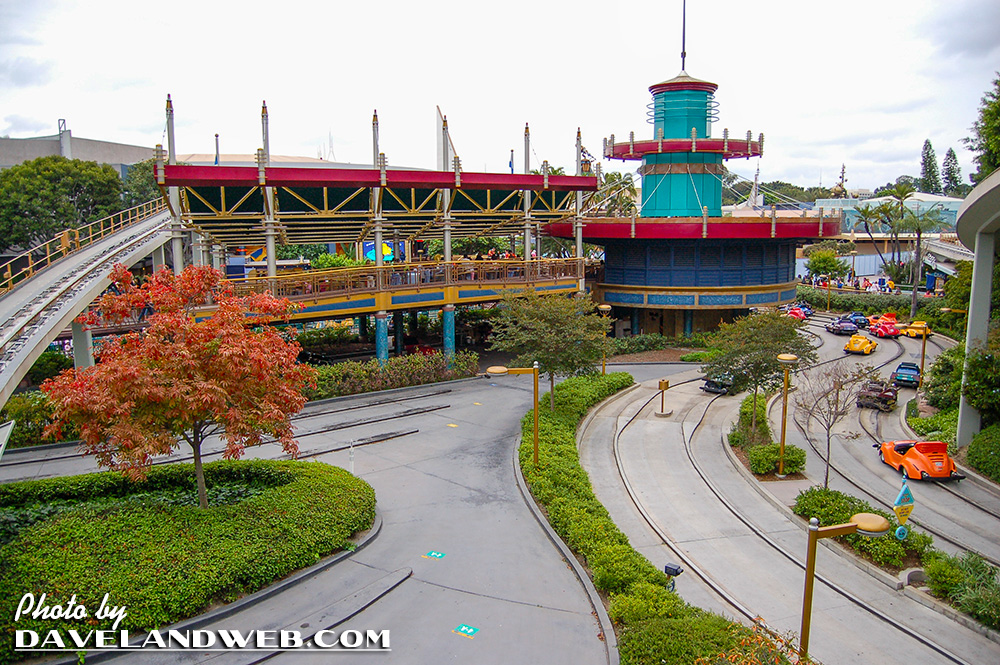
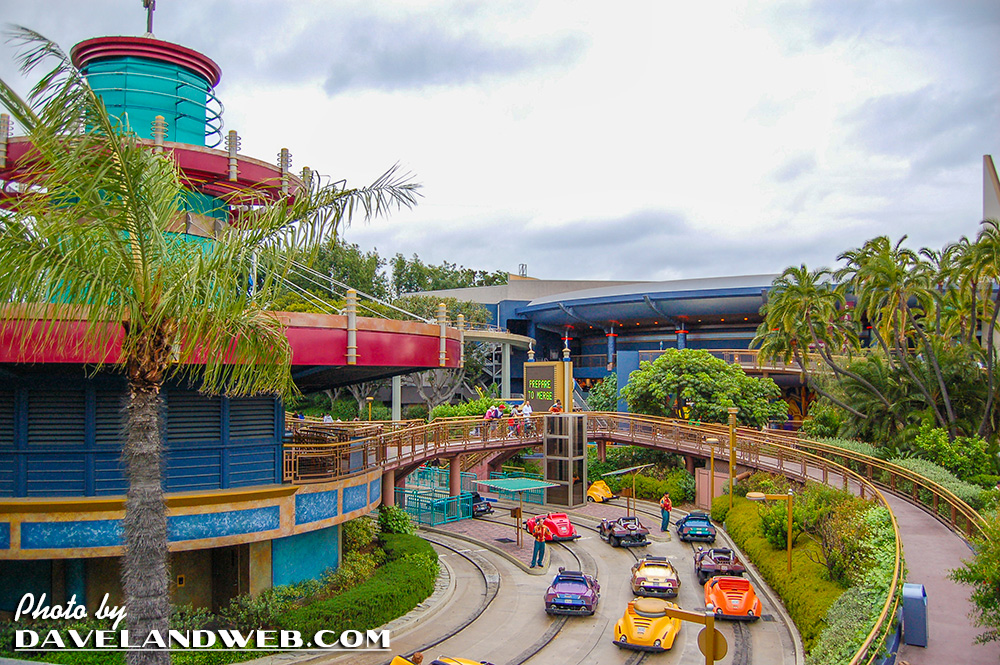
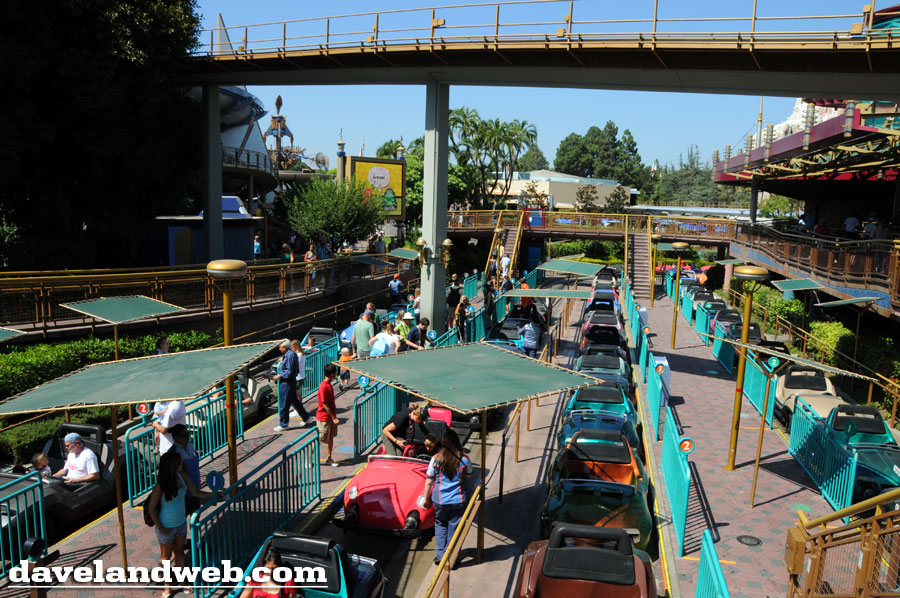
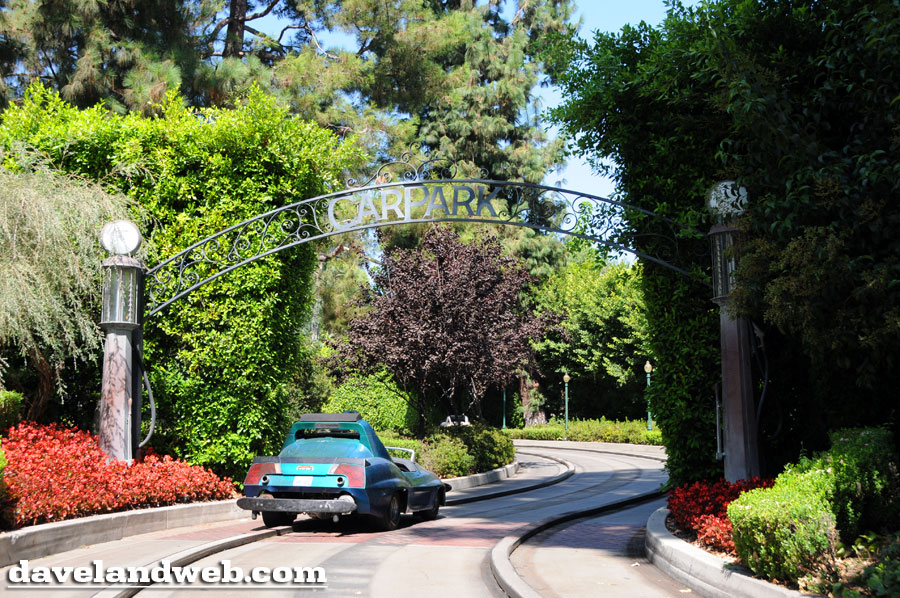
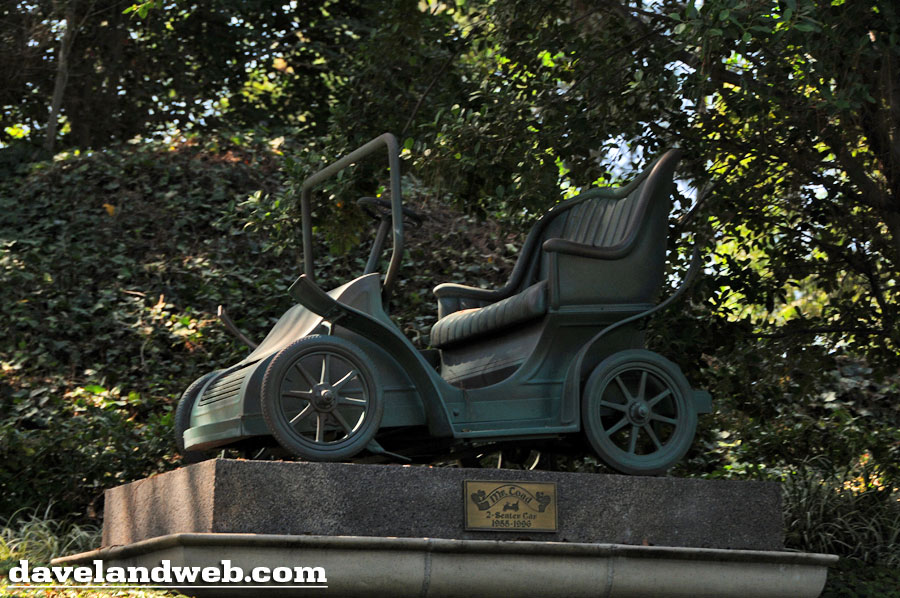
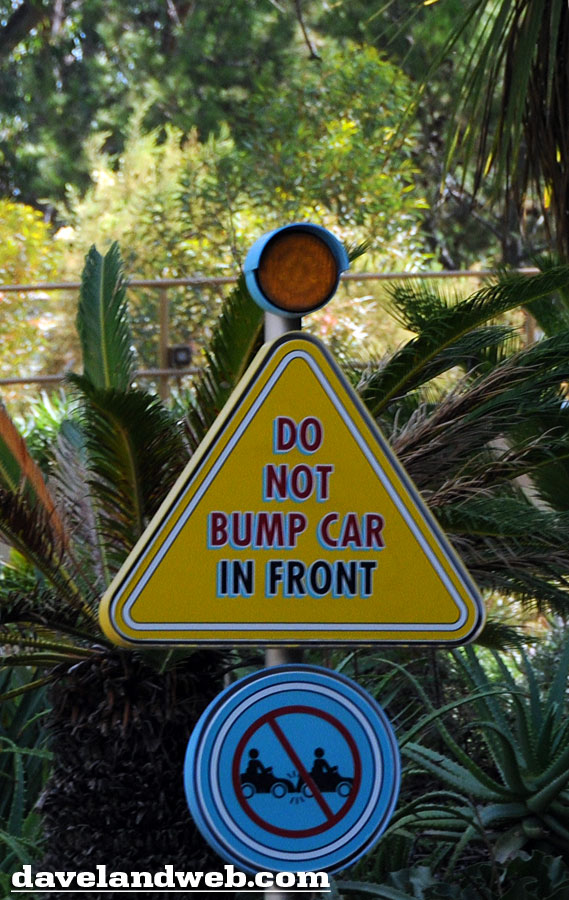
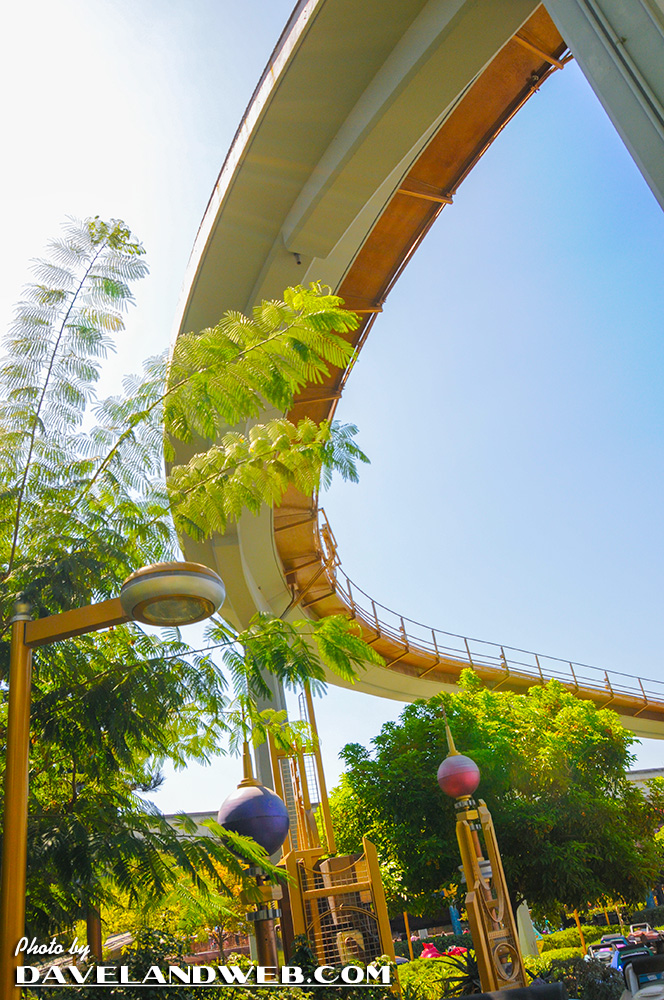
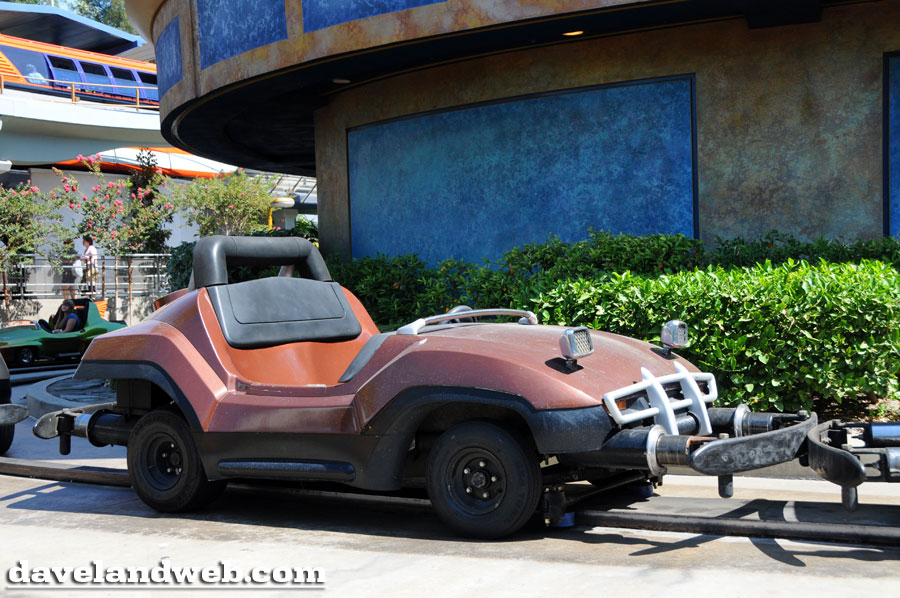
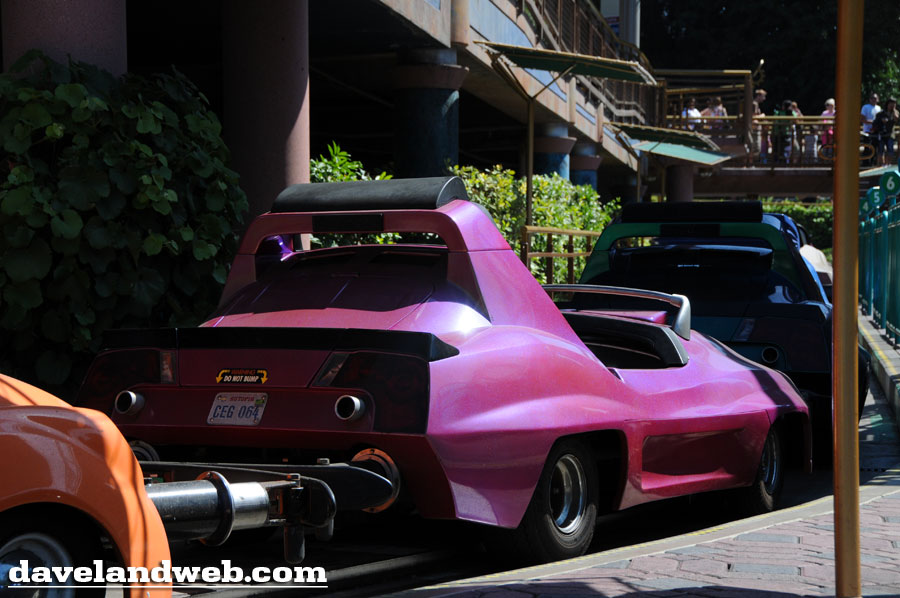
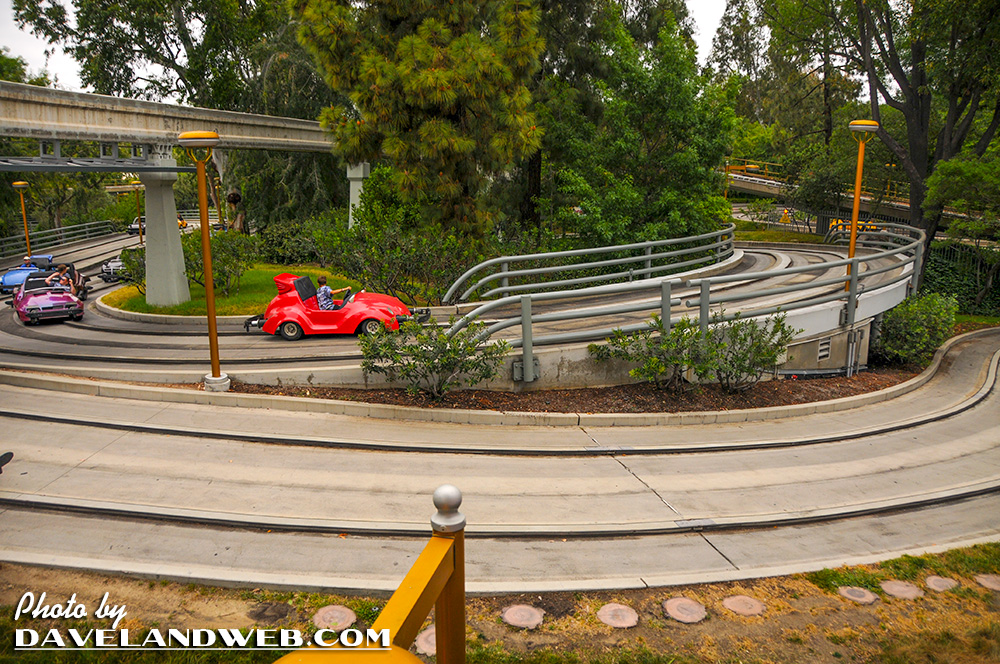
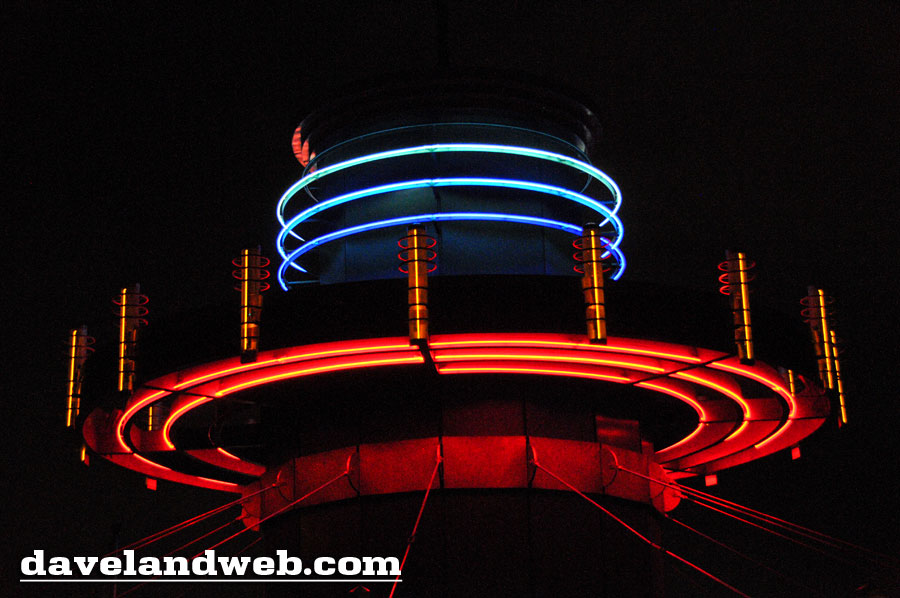
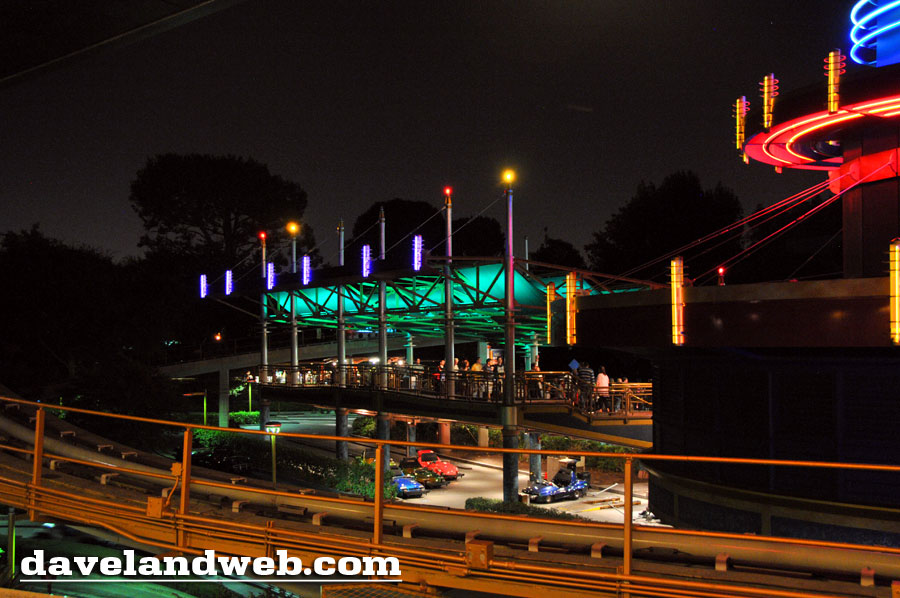
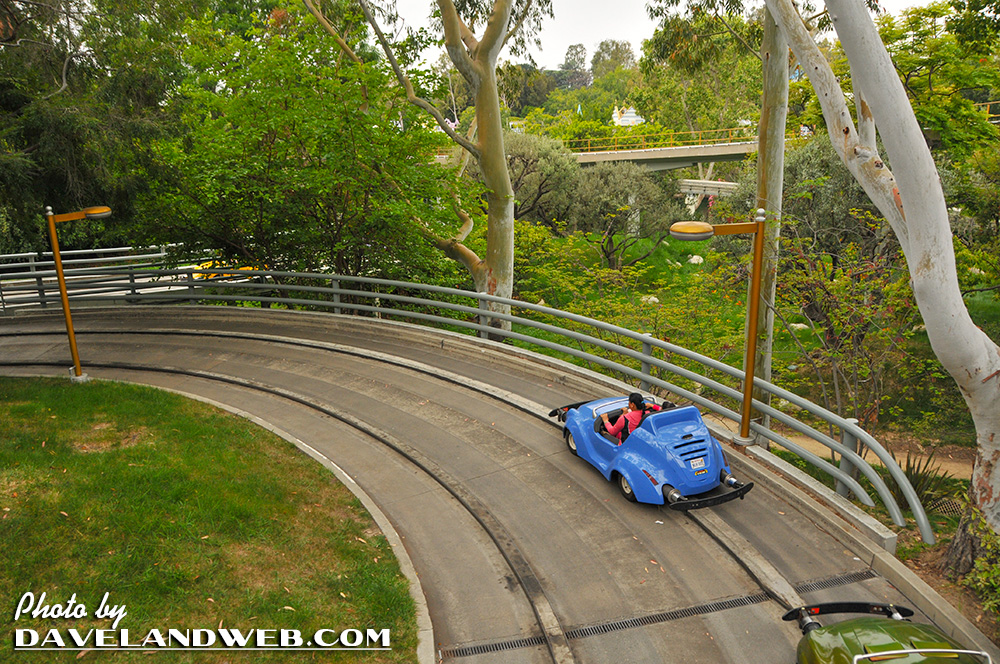
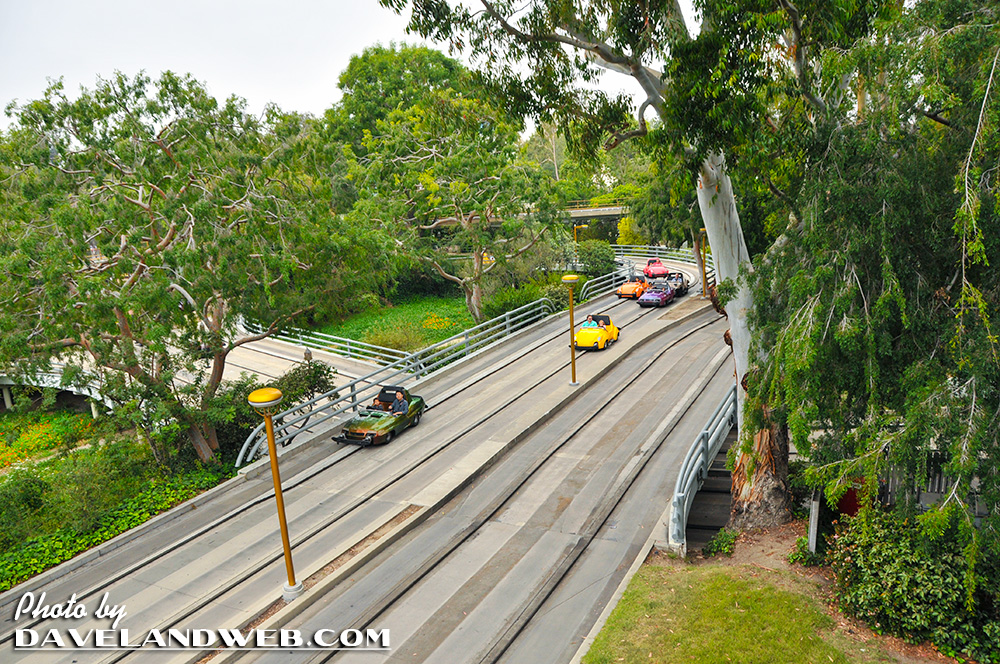
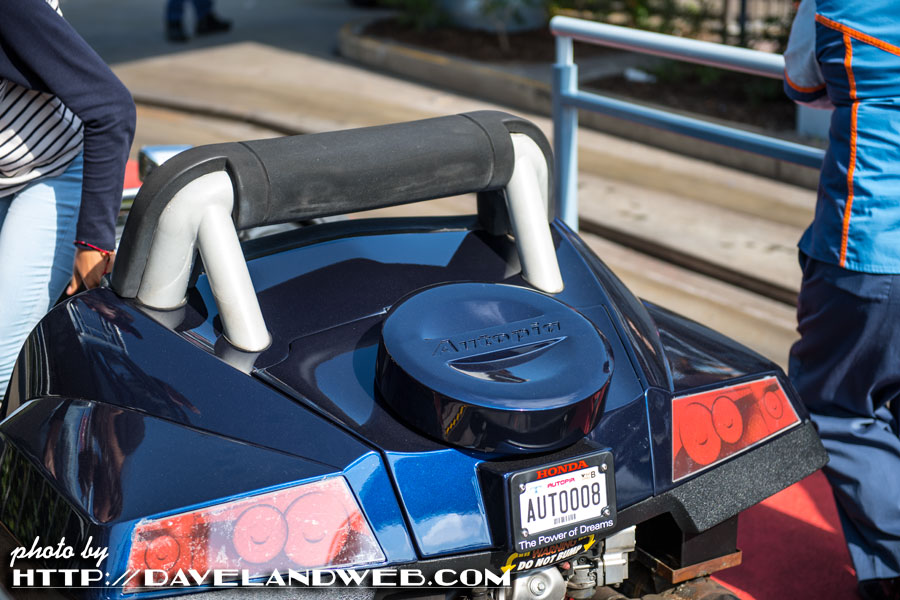
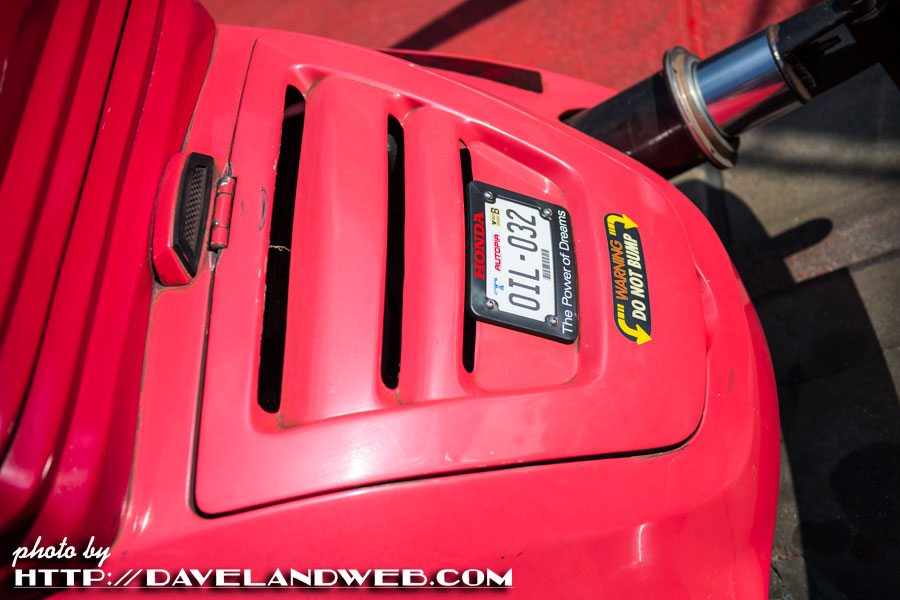
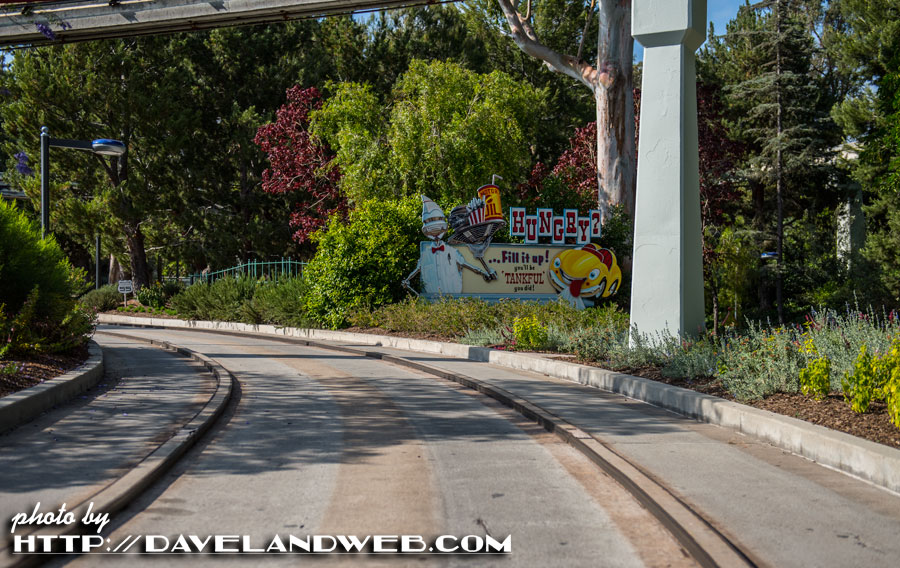
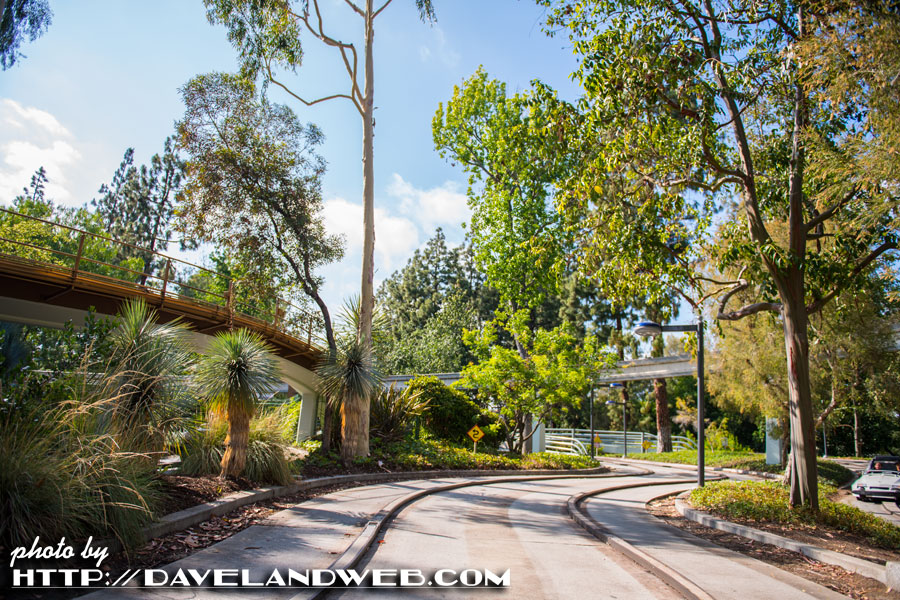
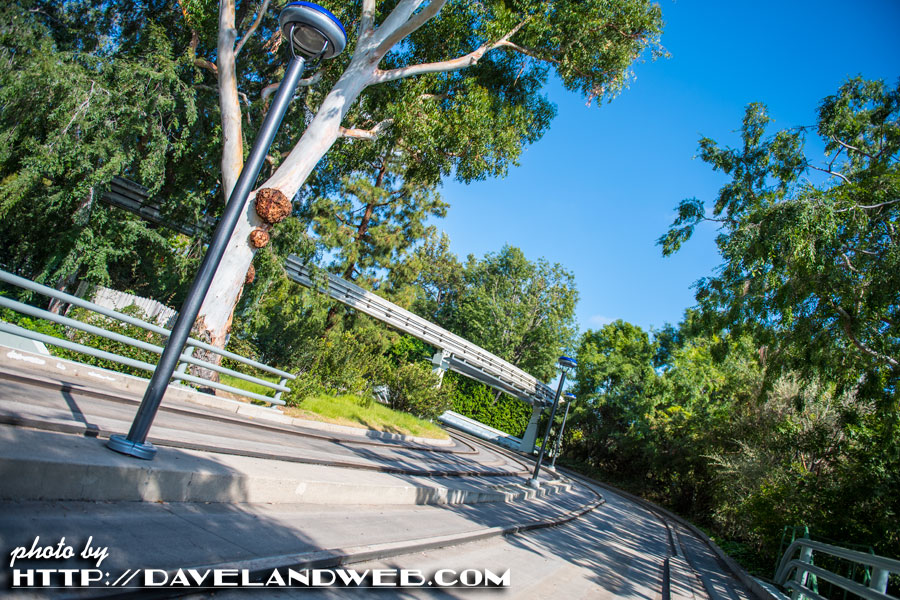
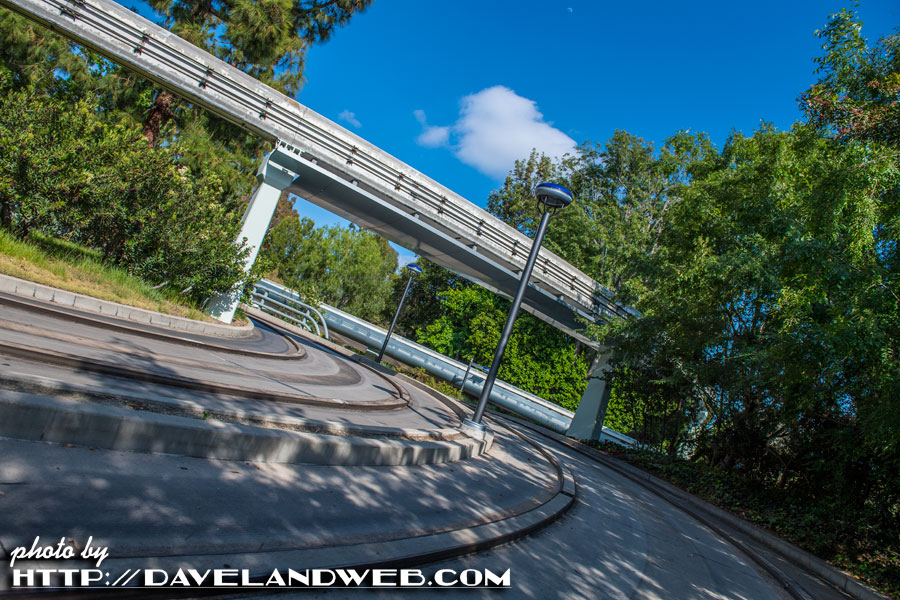
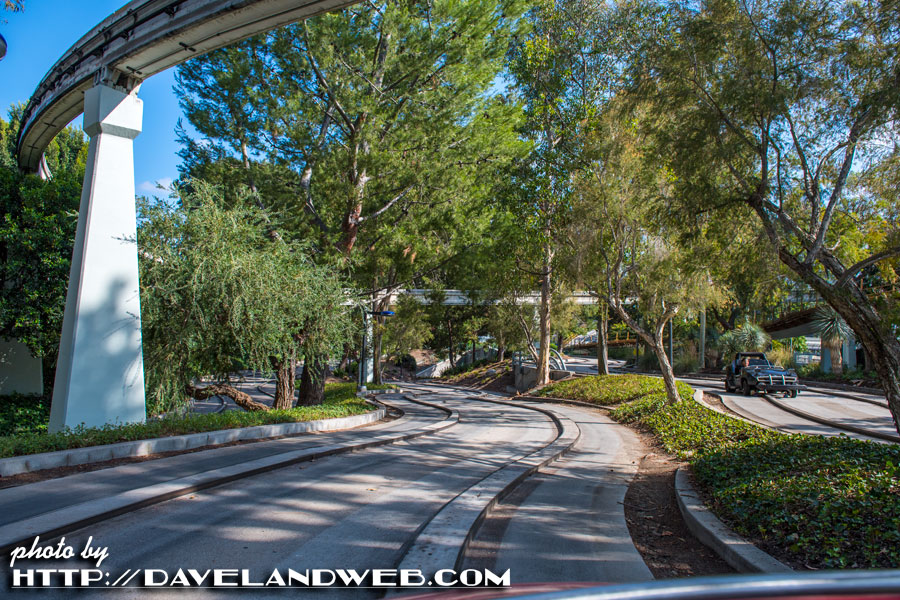
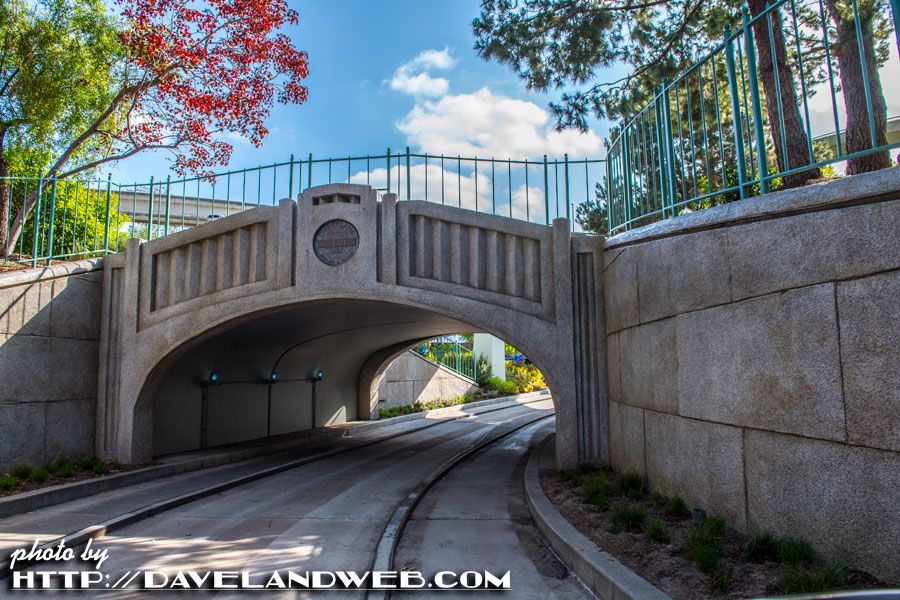
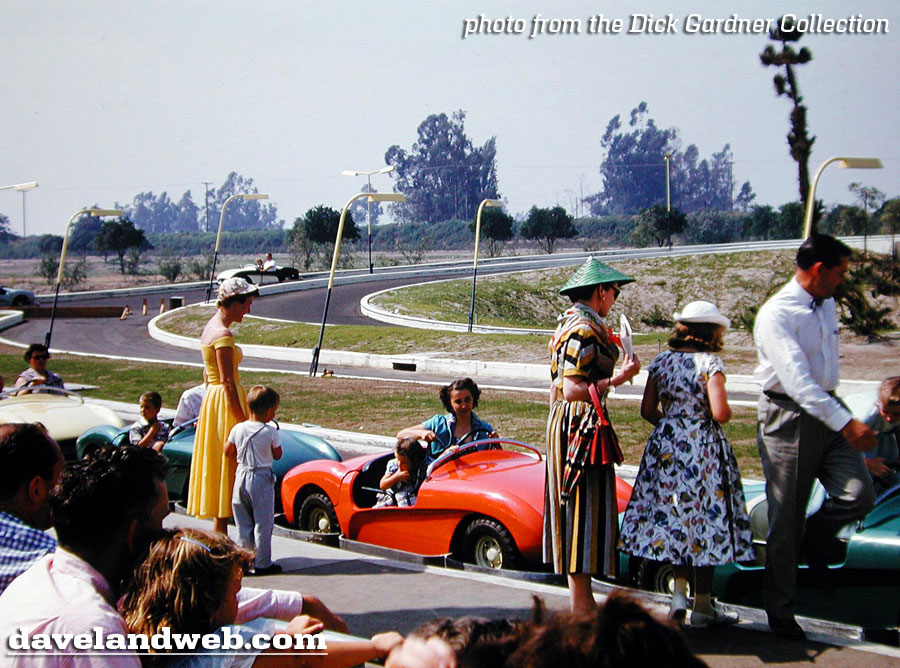
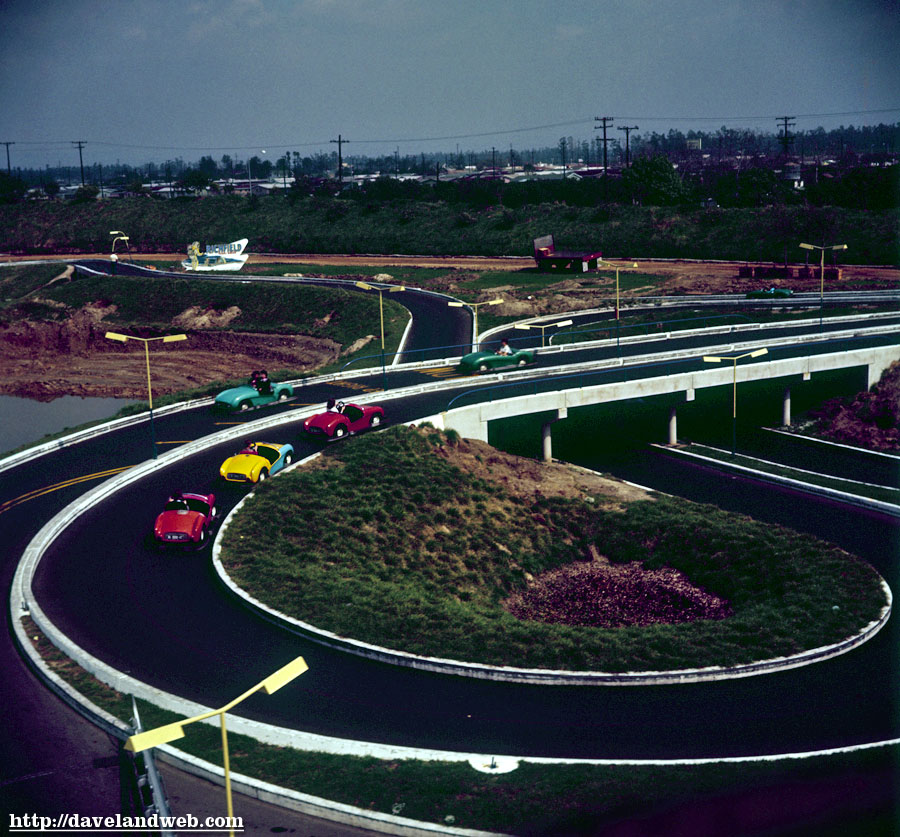
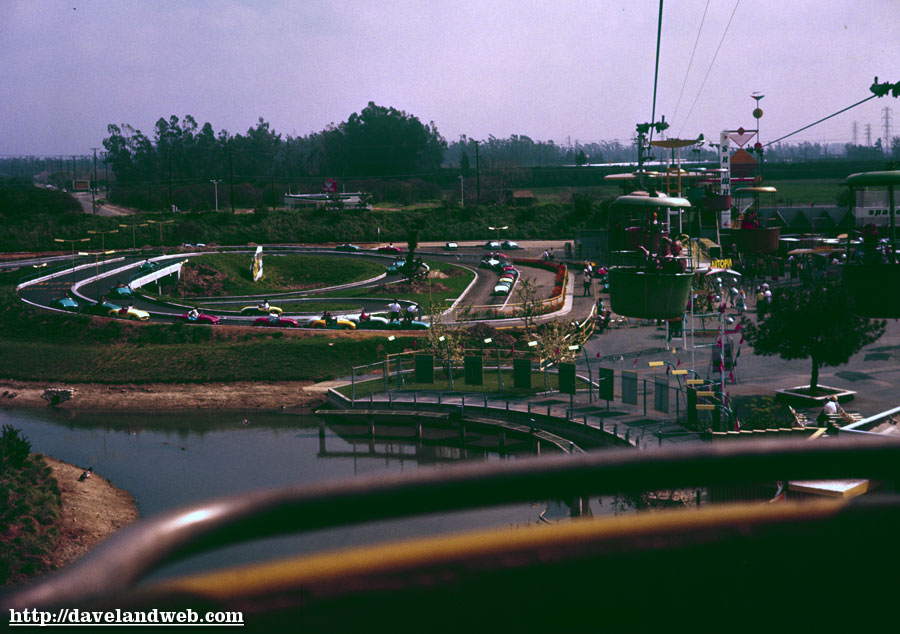
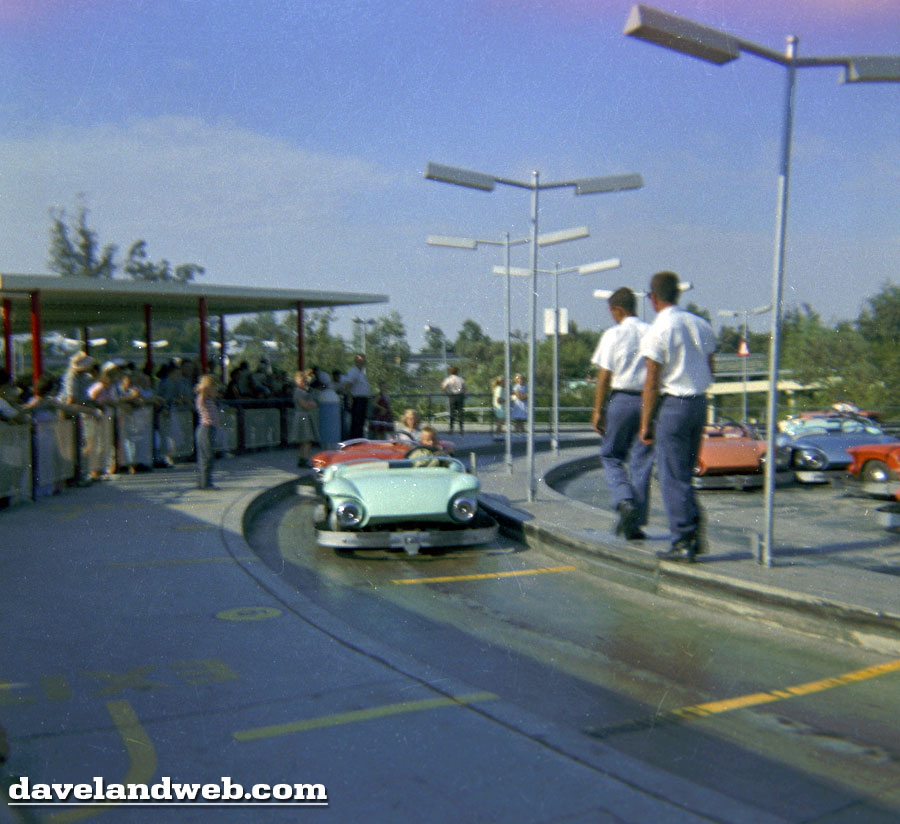
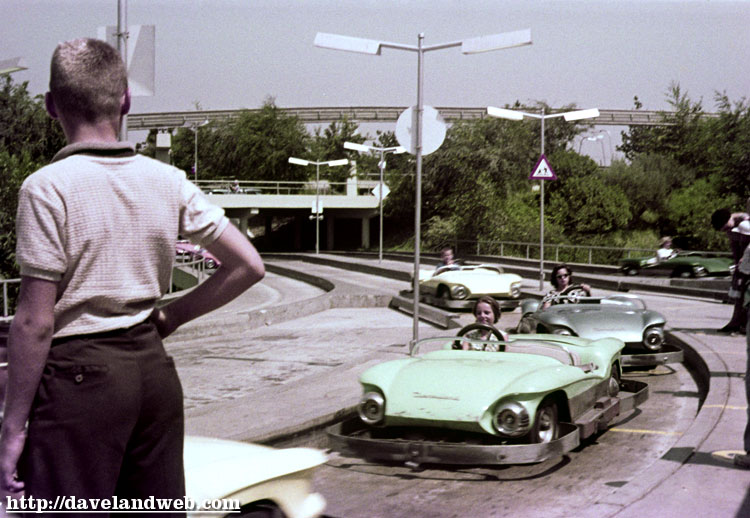
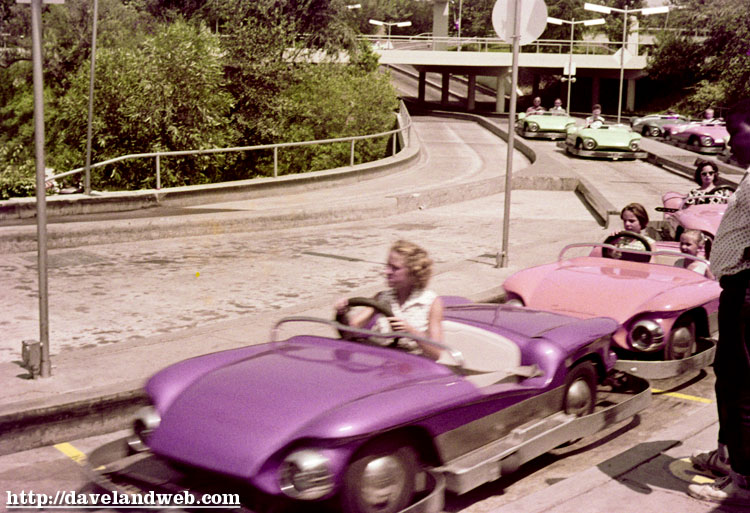
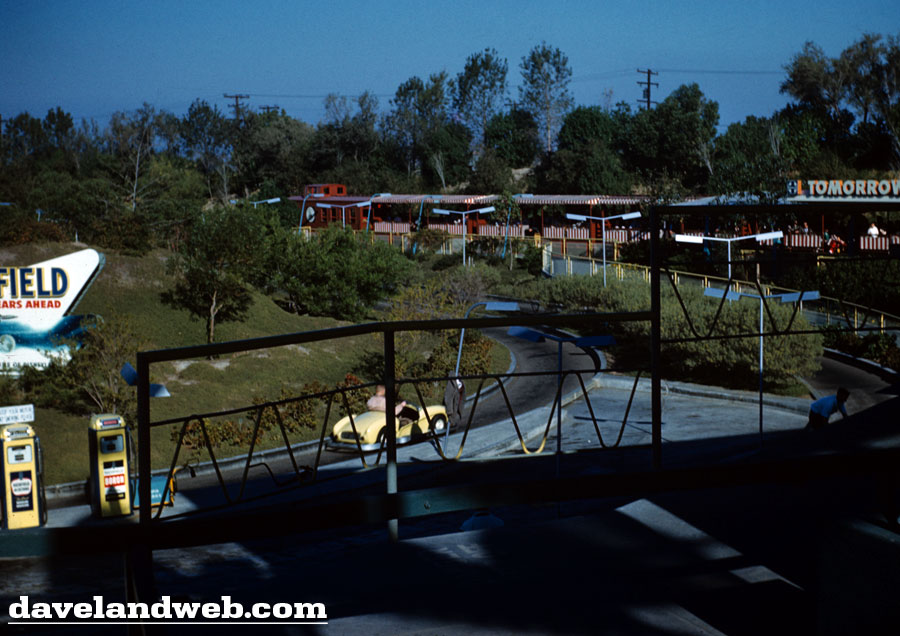
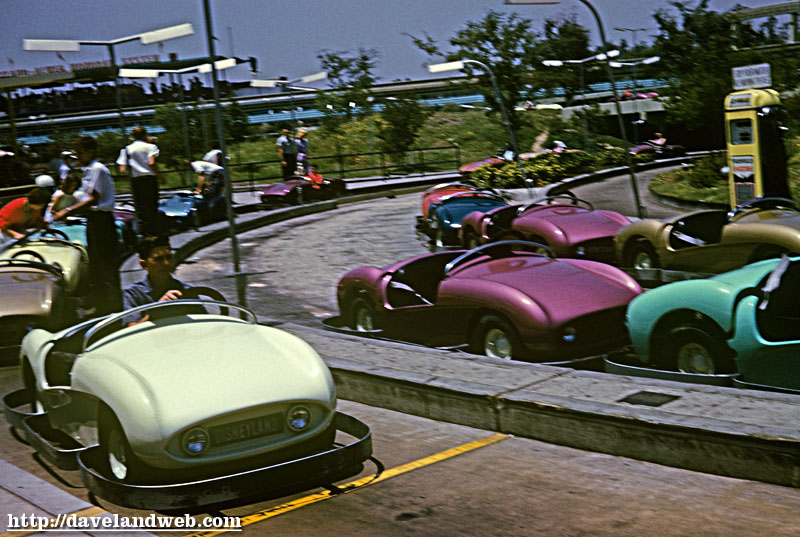
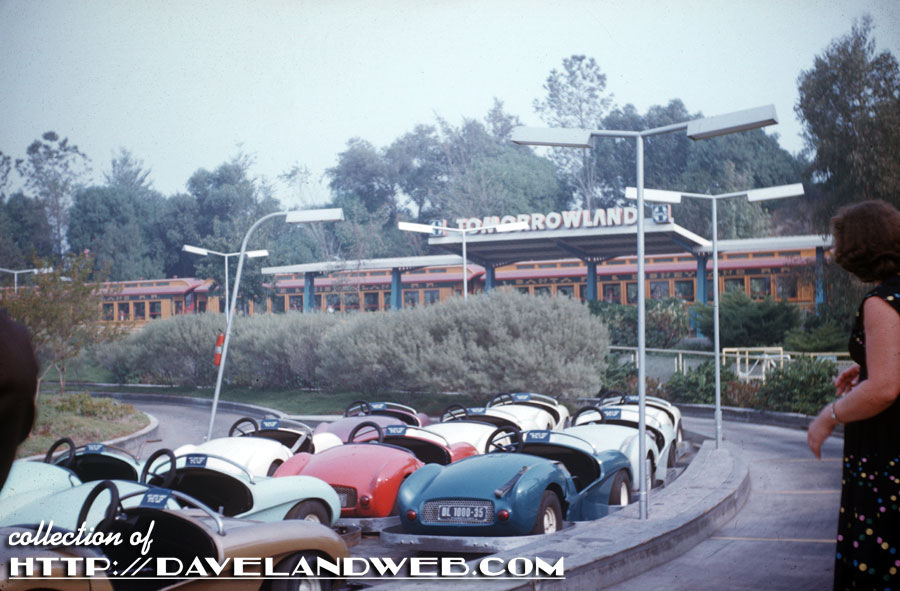
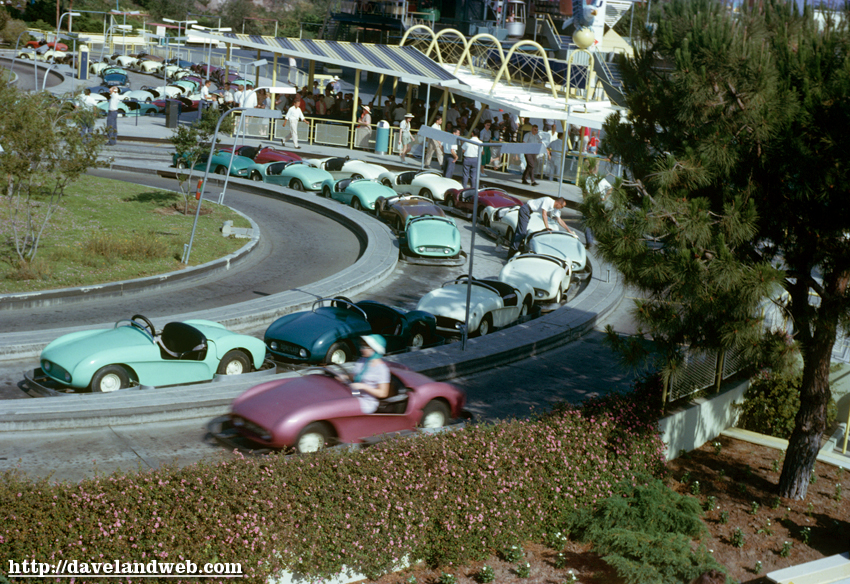
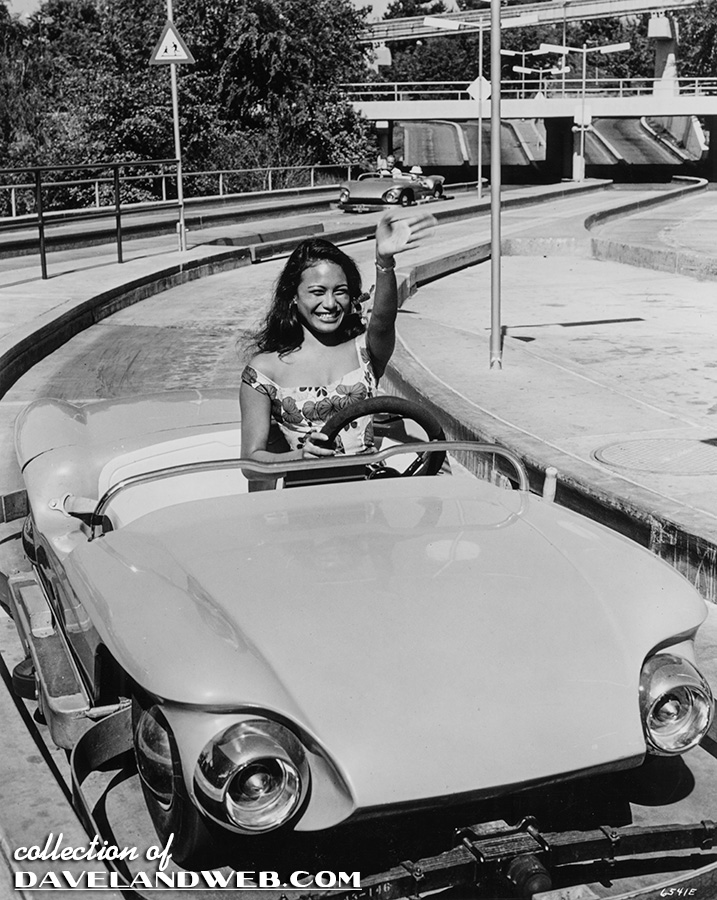
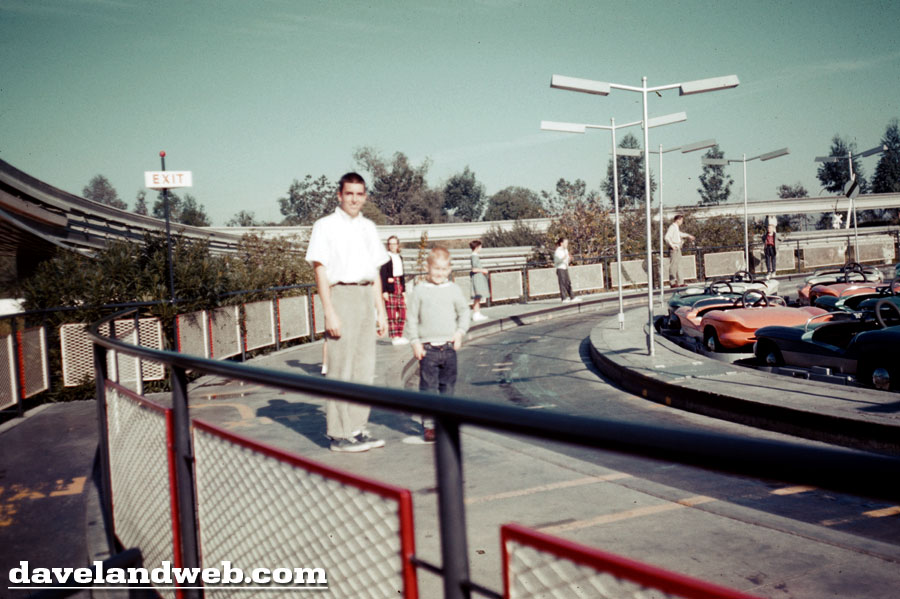
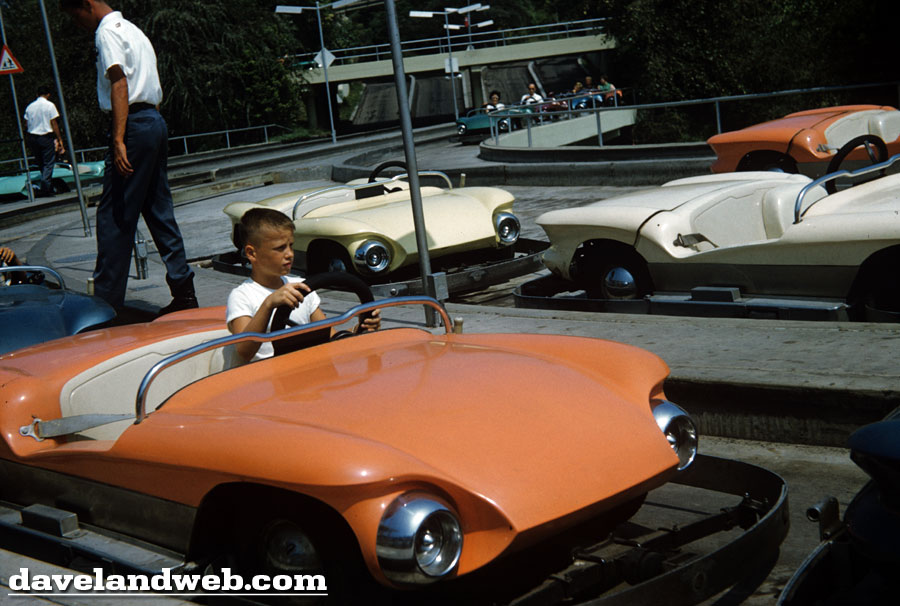
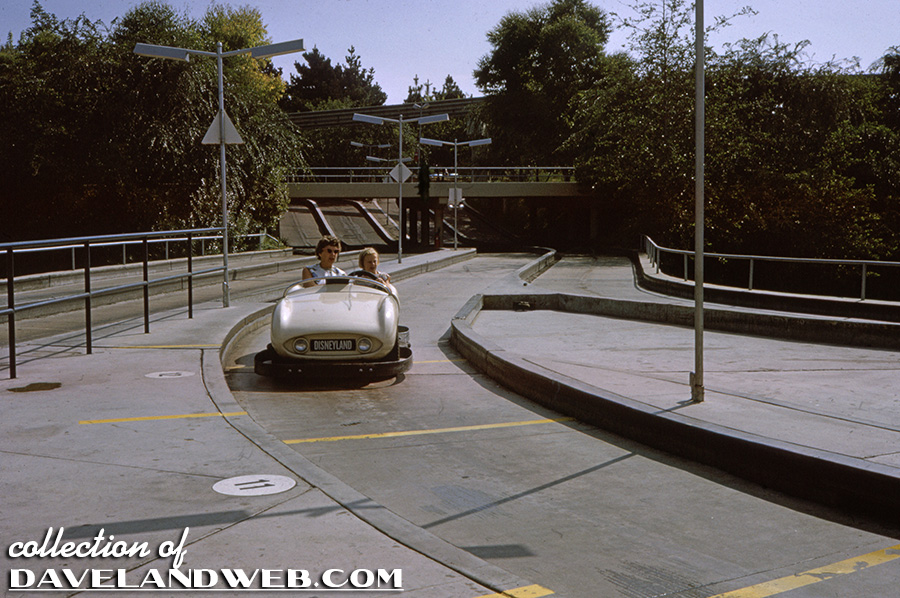
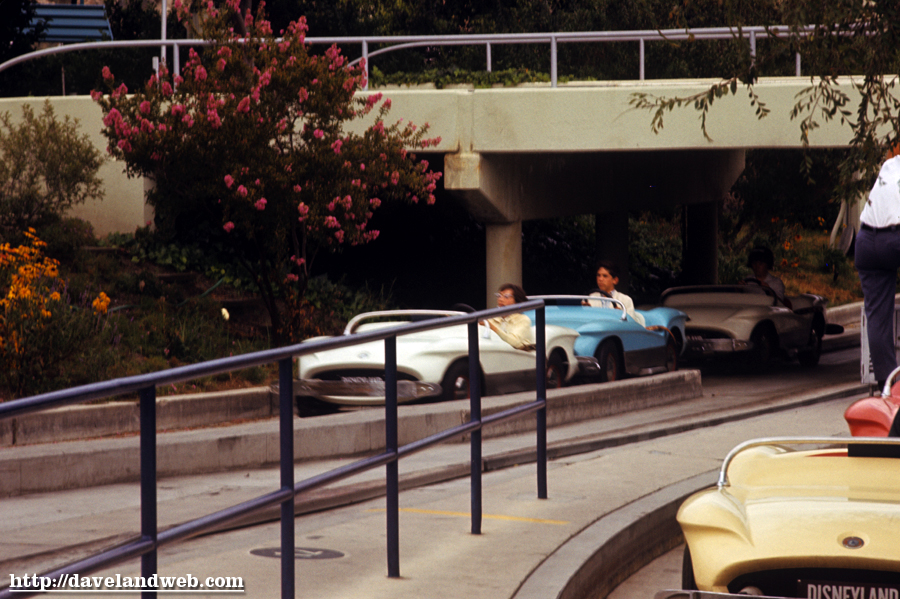
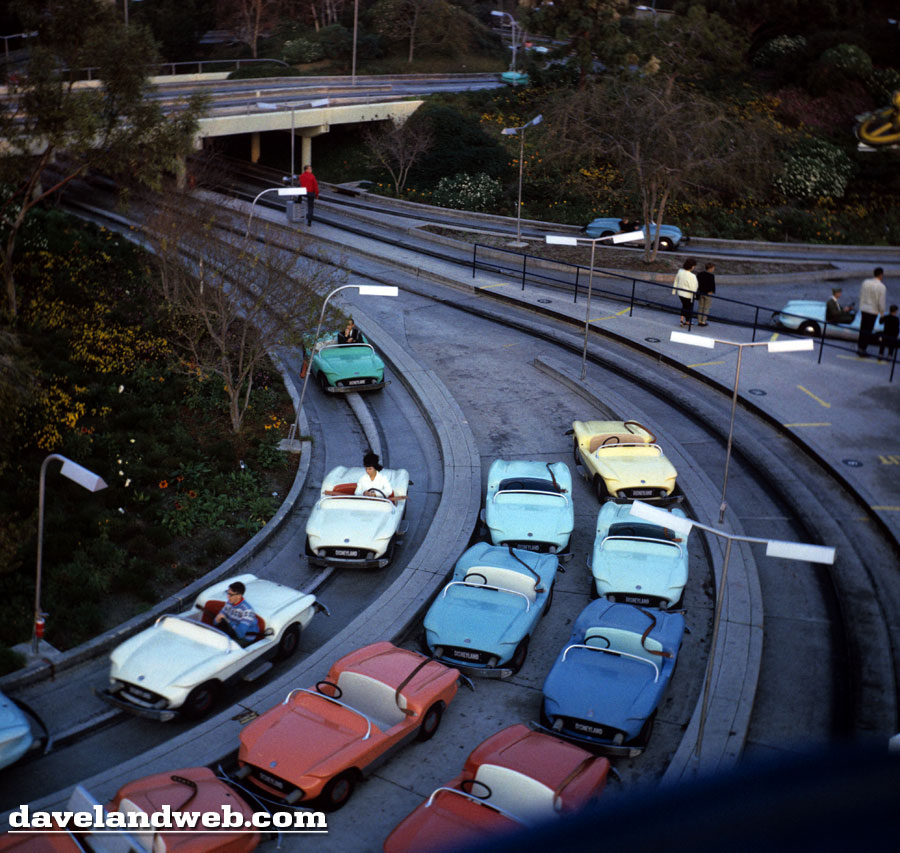
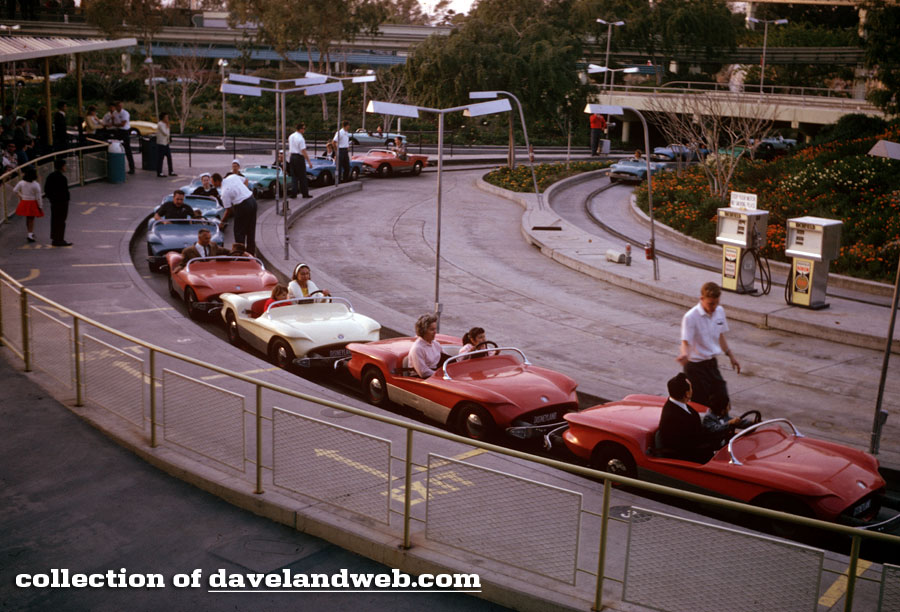
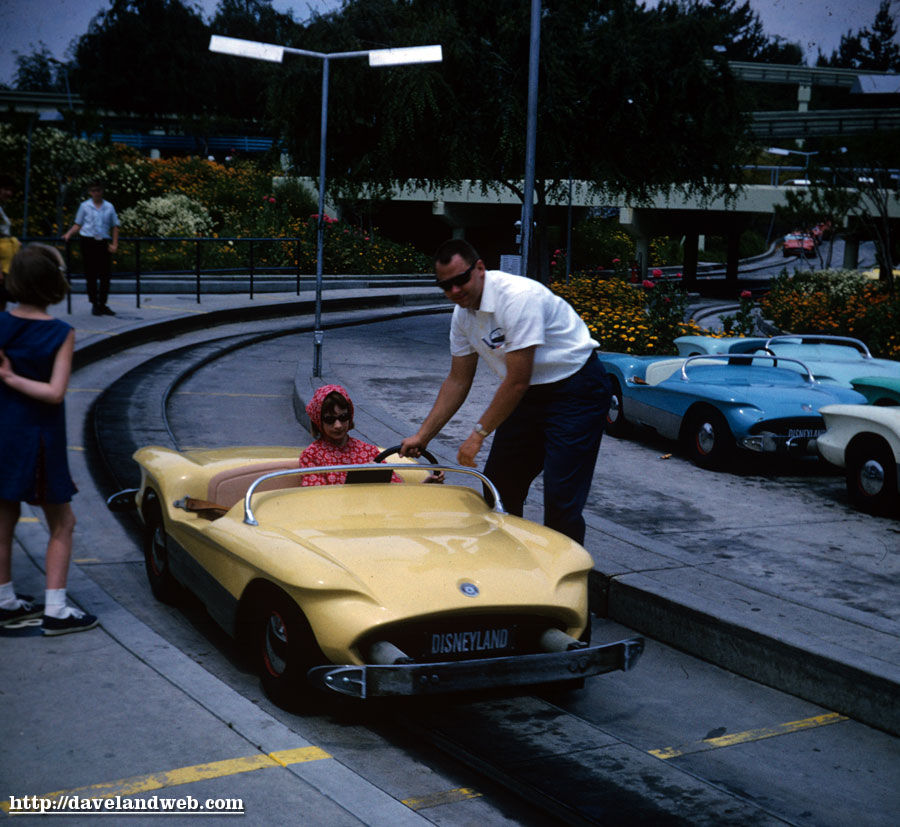
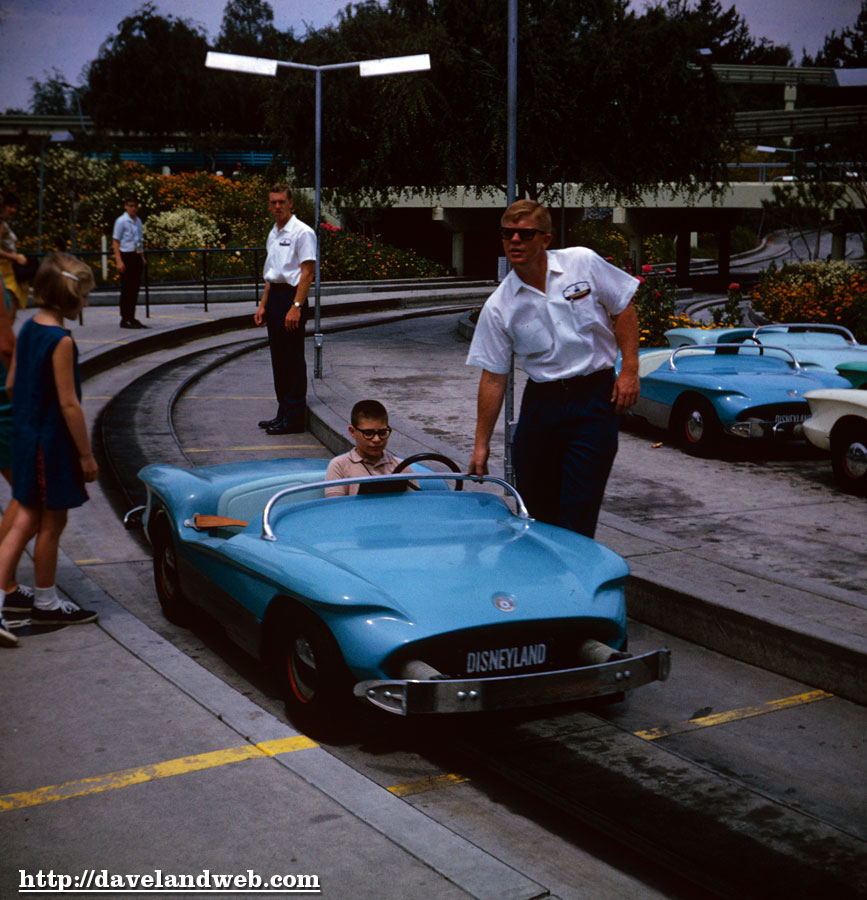
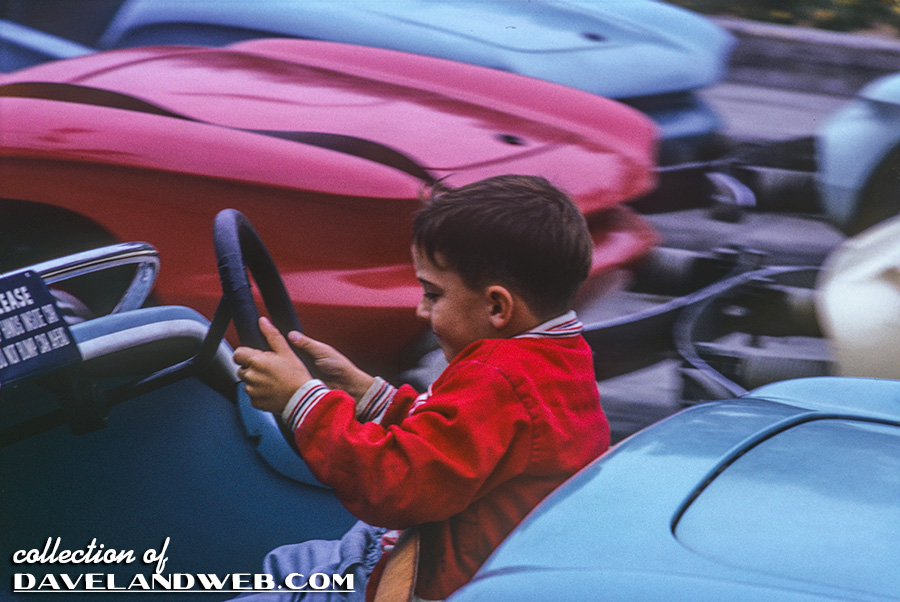
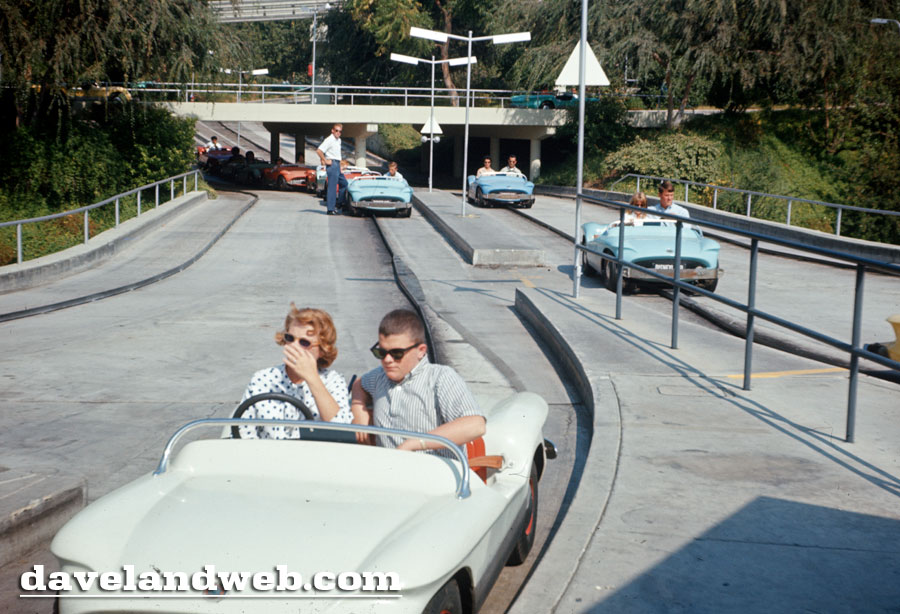
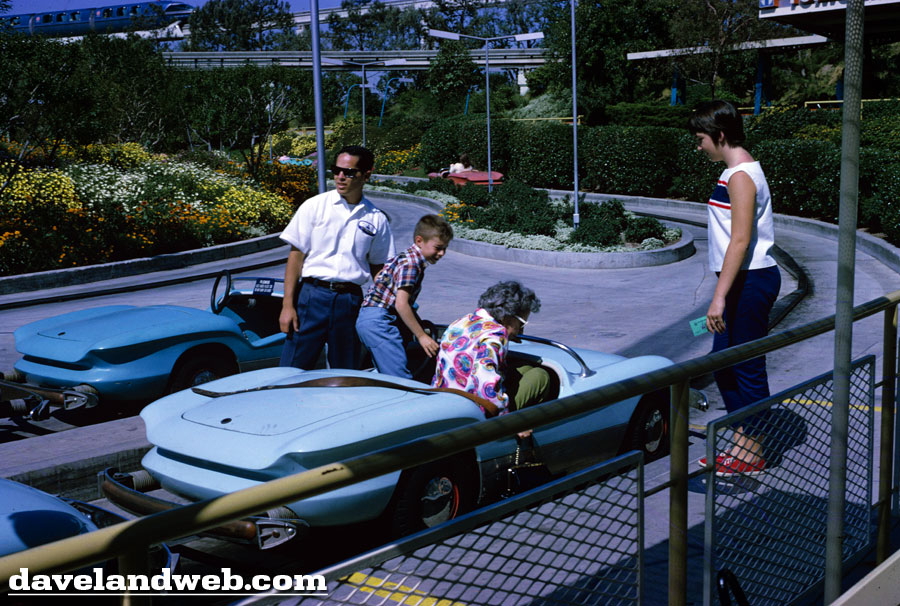
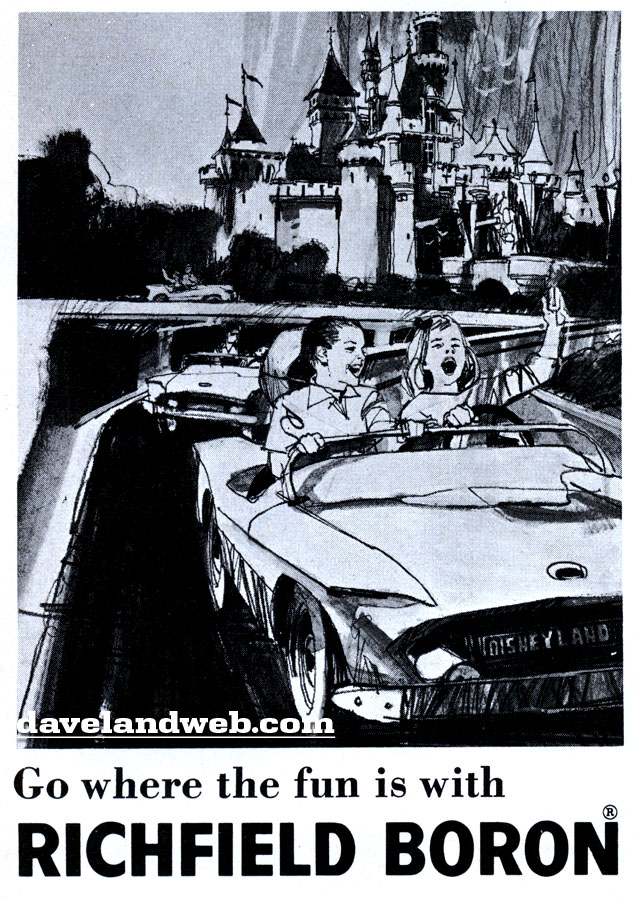
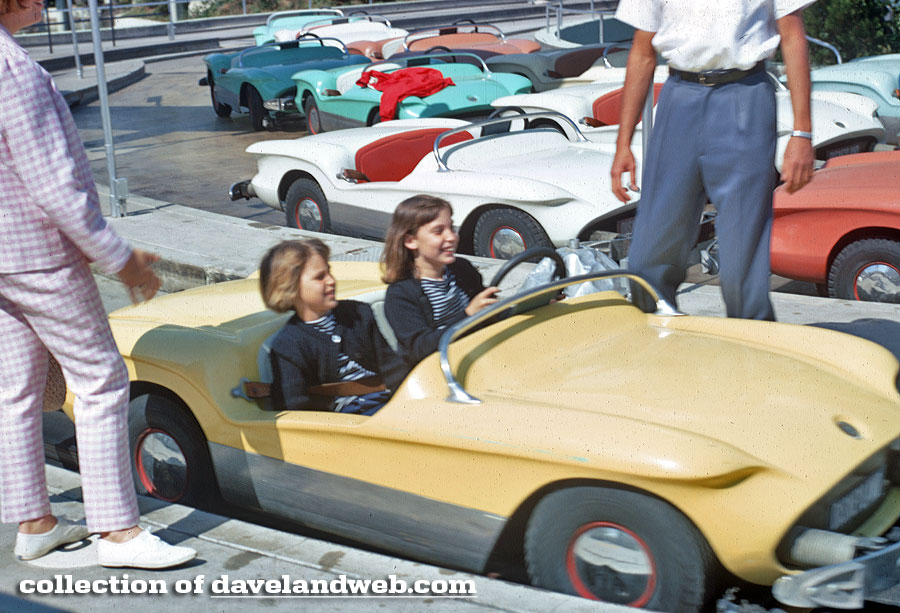
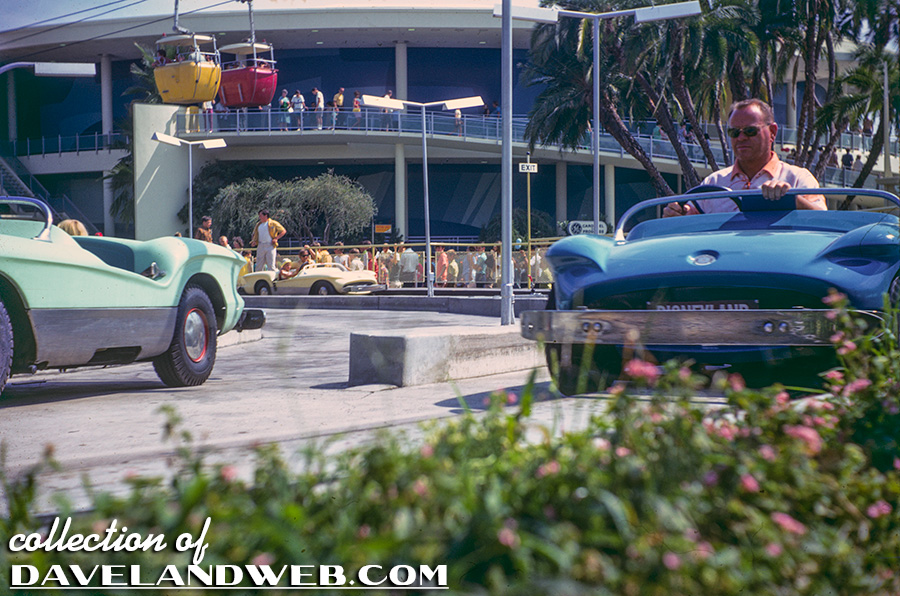
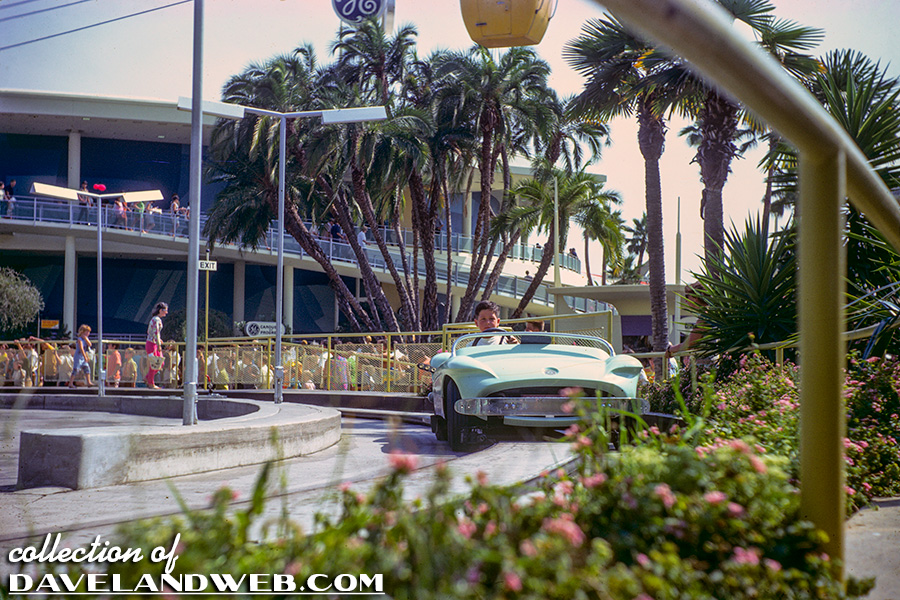
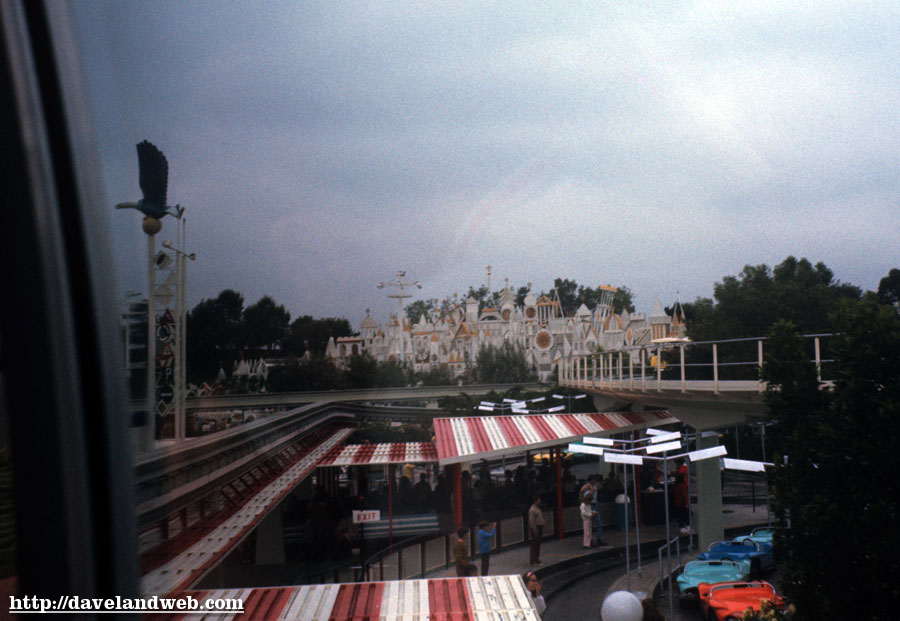
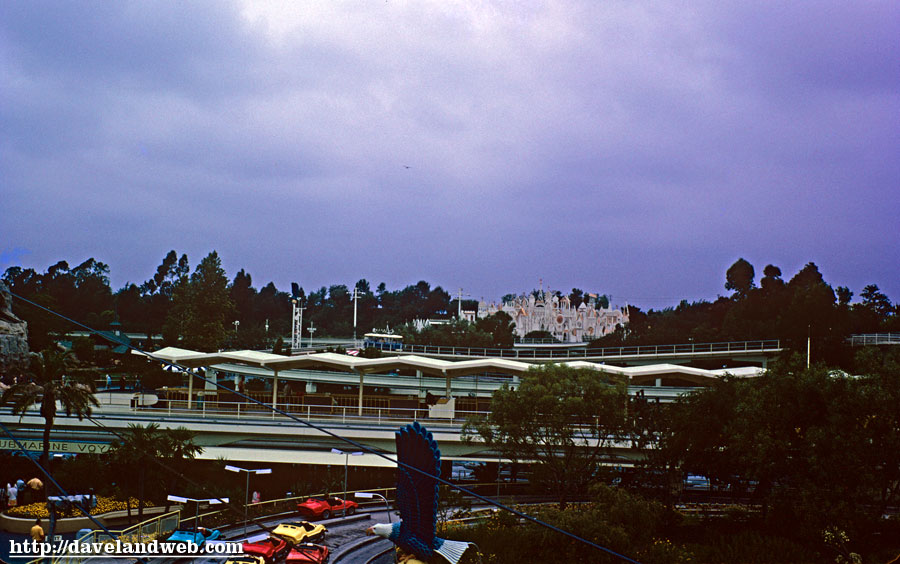
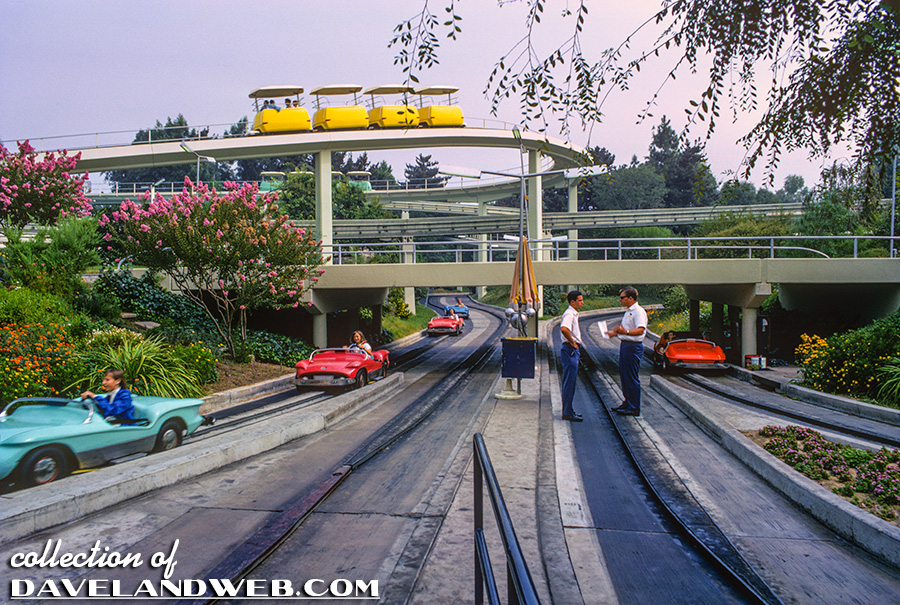
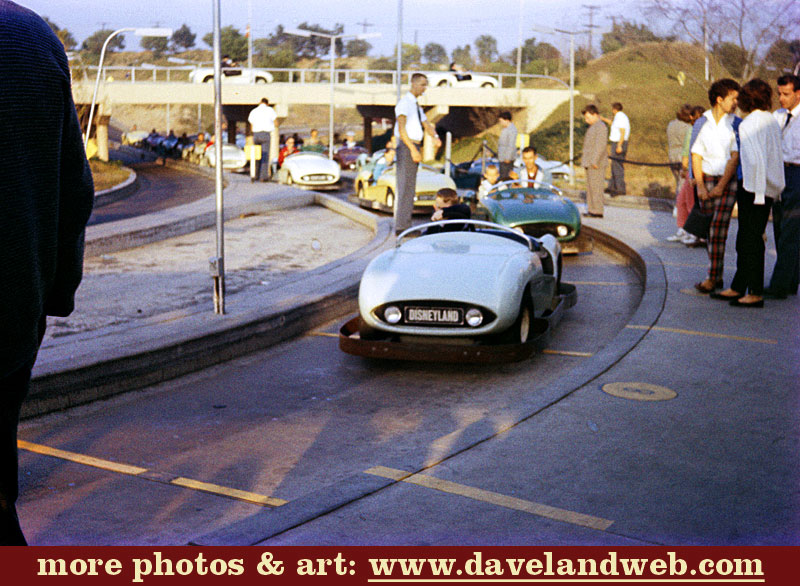
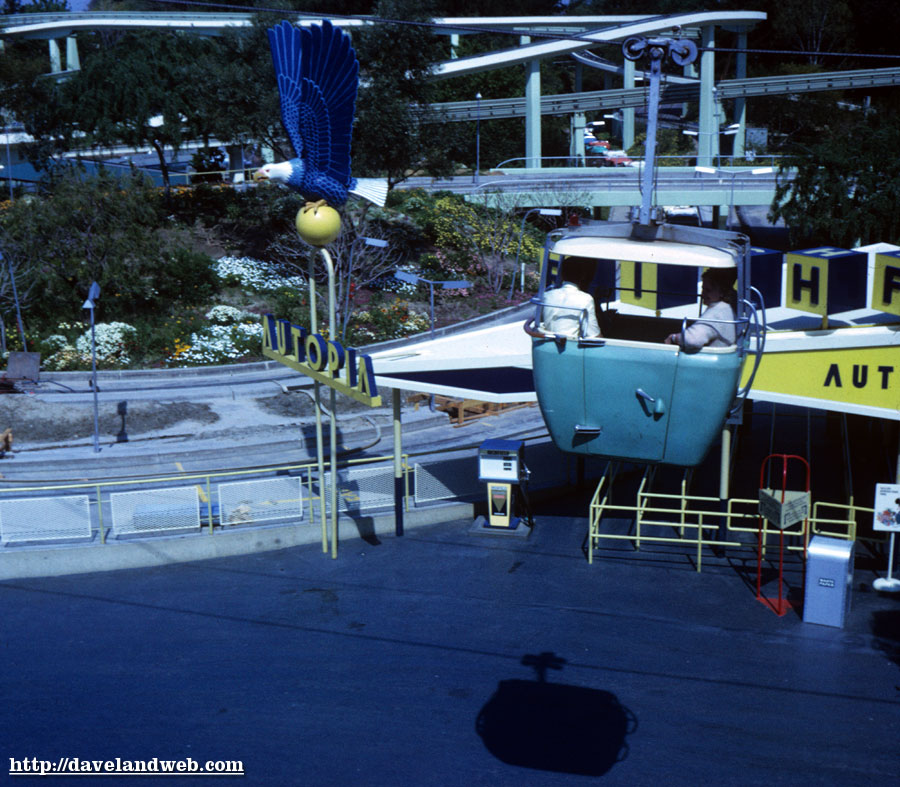
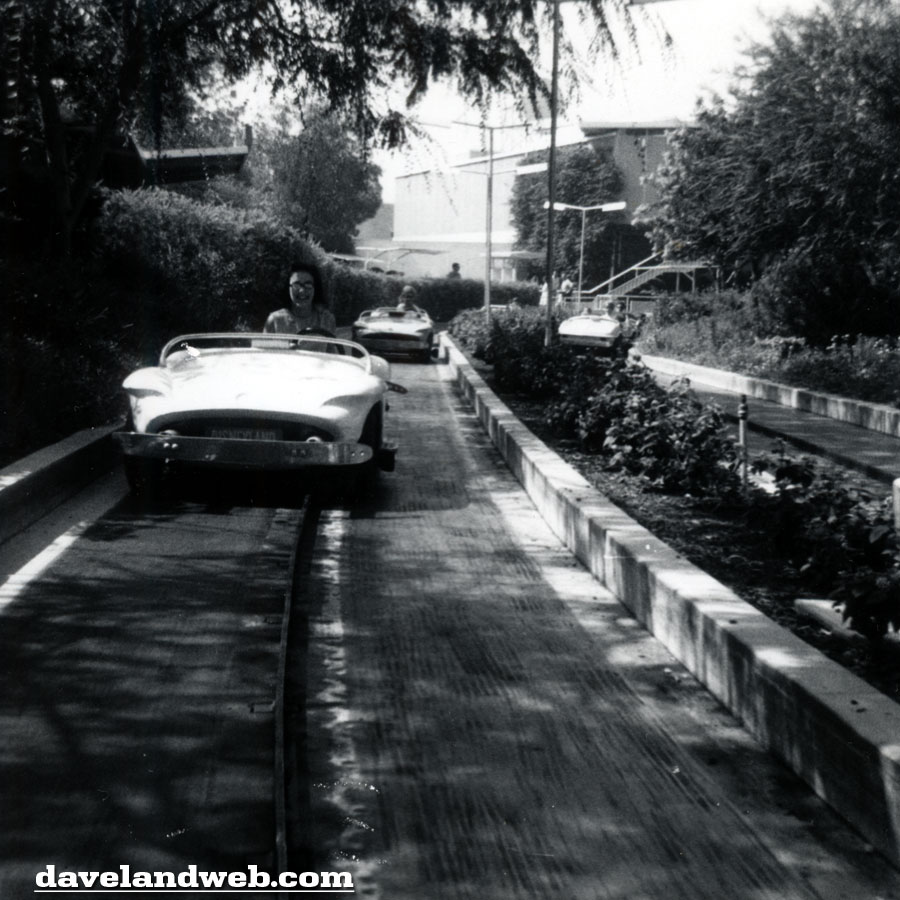
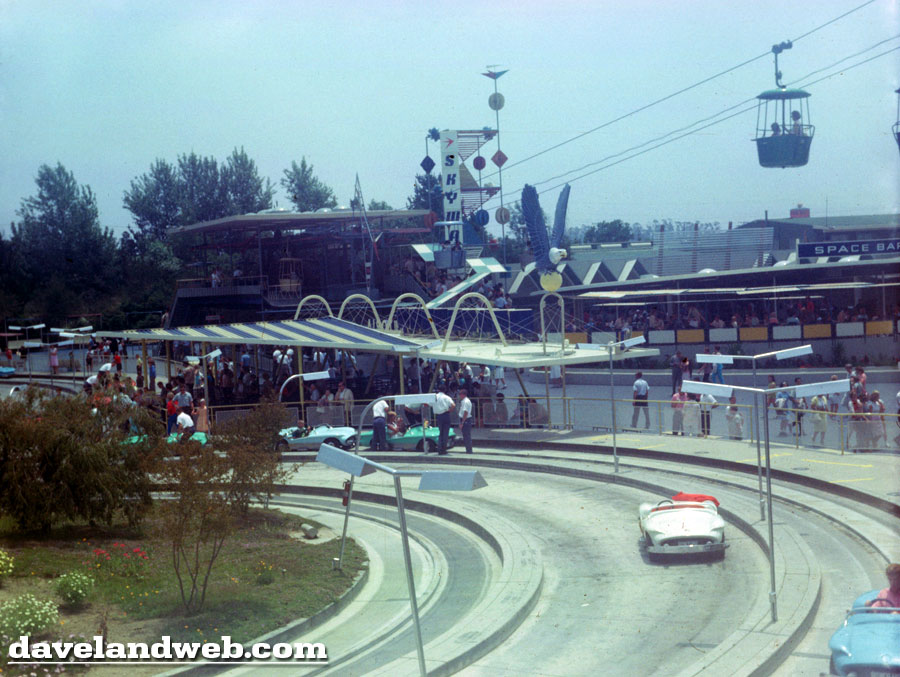
BACKSTORY (July 17, 1955–Present): In a memo that he dictated on August 7, 1954, Walt listed The Auto Speedway as number five for The Land of Tomorrow. The name transitioned into Autopia by October 30, 1954 and stayed that way ever since. Sponsored by Richfield (1955–1970), it represented the future of America’s highways. Bob Gurr, a recent graduate from an automotive design school, created the design of the body for the car, inspired by a Porsche 550 Spider and a custom Ferrari he had once seen. The Fiberglass bodies were constructed by Glasspar of Costa Mesa. Each of the 40 original Autopia cars were powered by a Gladden “75,” a one-cylinder mill producing 7.5 horsepower. This was the same engine used in the Mustang motorcycle and was assembled in Glendale, California. Cars without bumpers were almost completely destroyed by the test drivers, so bumpers were fitted around the vehicle; spring-loaded bumpers were eventually installed to discourage collisions. Imagineer Bob Gurr tells the story how the Autopia got a "garage": "After Disneyland opened, we had a lot of trouble with the Autopia cars. The majority of them were failing, and no one had figured out the support side of the attractions. I had been repairing the cars with my own tools on-site. Walt came by, looked at the whole scene, and asked, 'What do you need?' I told him we needed mechanics to work on the cars and that we didn't have any kind of facilities. In less than an hour, here comes this tractor dragging an old building, and the drivers says, 'Here's your building. Where do you want it?' We had mechanics the next morning."
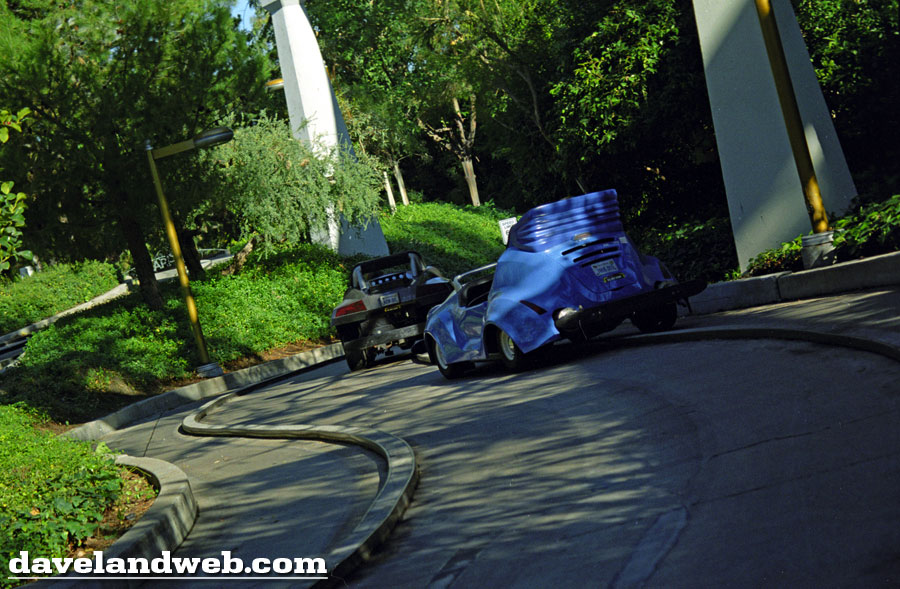
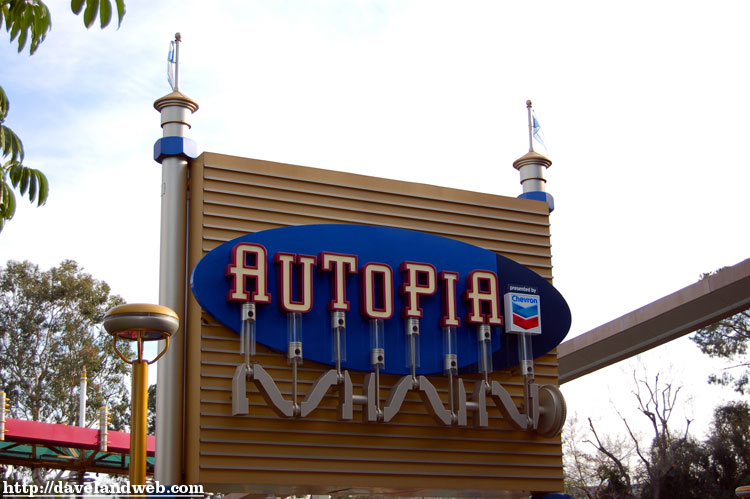
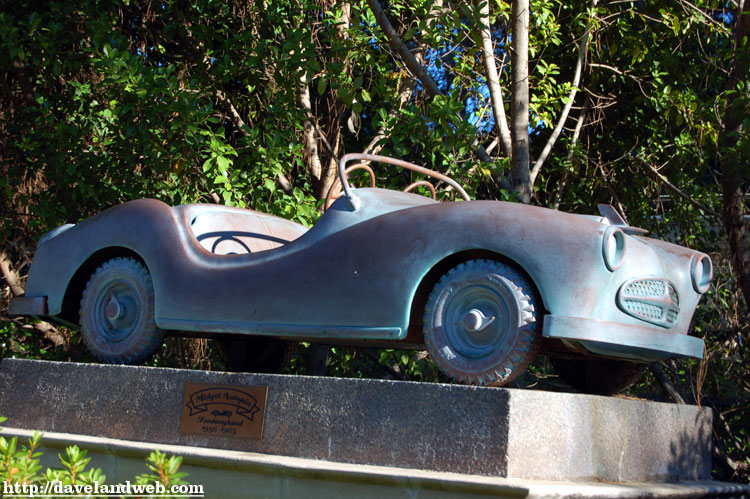
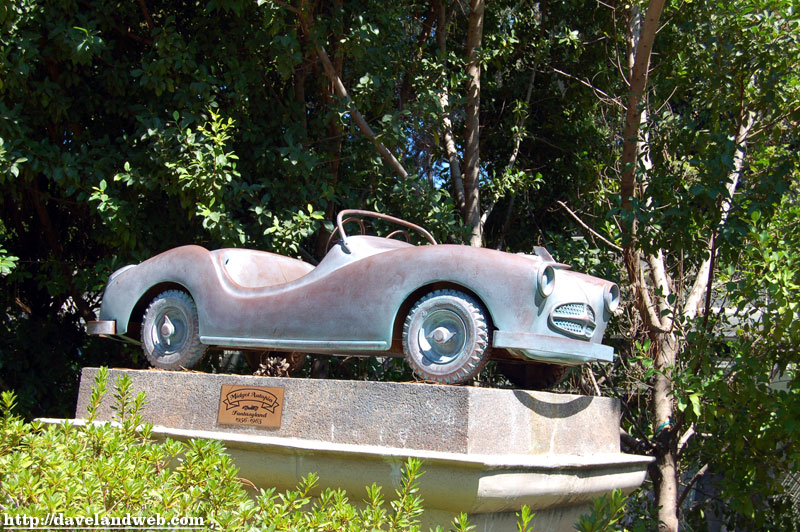
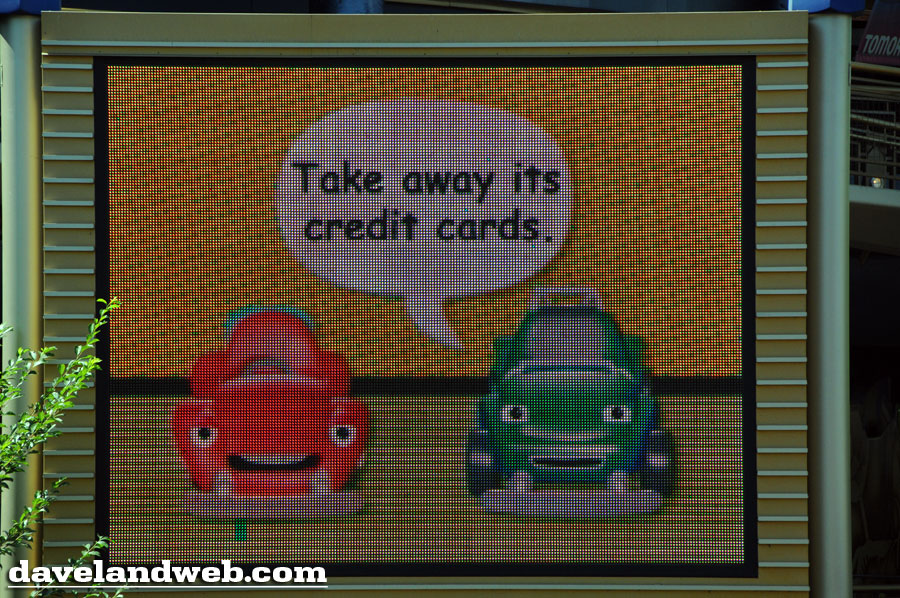
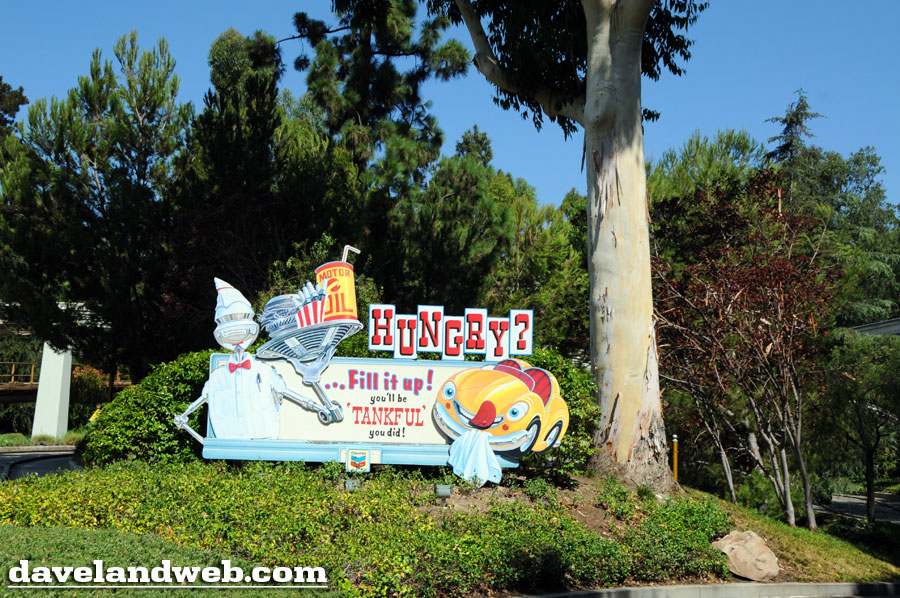
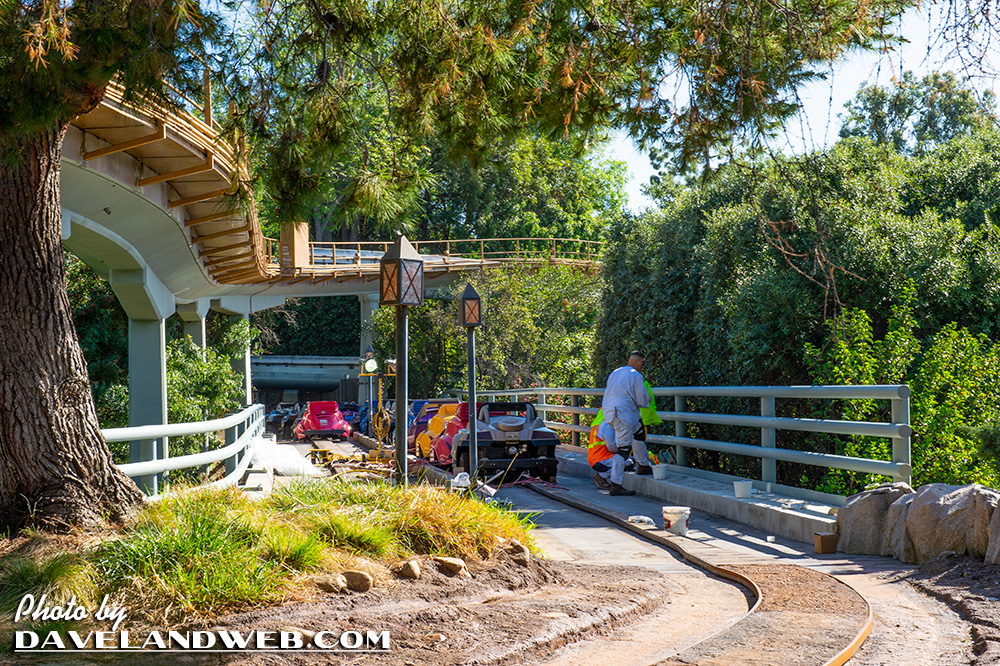
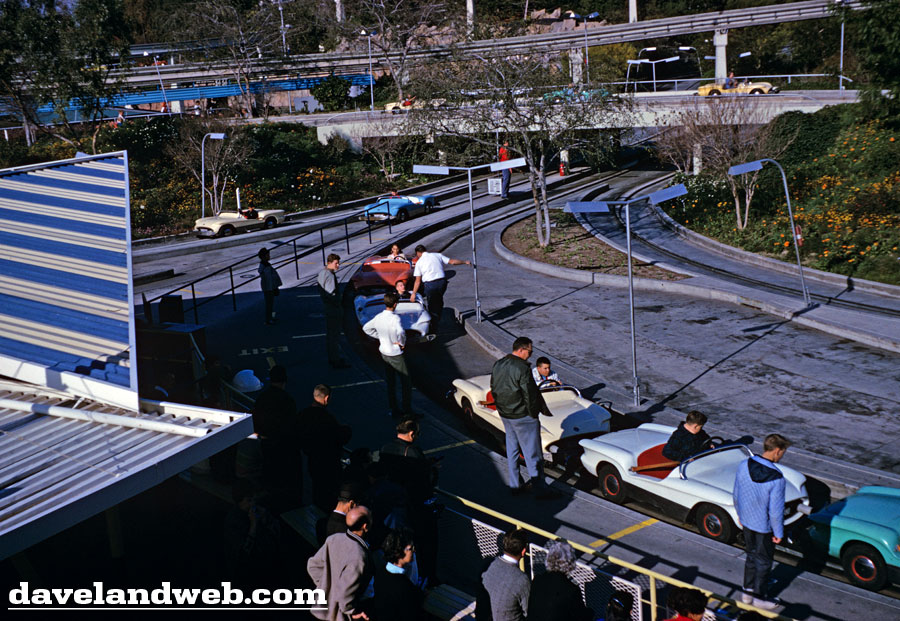
The Tomorrowland version received makeovers in 1967 & 1999. Other versions included the Midget Autopia, Fantasyland Autopia (Rescue Rangers Raceway), and Junior Autopia. Of these, the Tomorrowland Autopia existed the longest. The Midget Autopia opened April 23, 1957. It was the third and smallest track, after the Tomorrowland Autopia (1955) and the Junior Autopia in Fantasyland (1956). It was located next to the Storybook Land Canal Boats and the Motor Boat Cruise at the very edge of Fantasyland. Closed in 1966 and dismantled to make way for “it’s a small world.” The ride was donated to the city of Marceline where it operated for a few years. In 2000 both existing Autopia tracks were replaced with a much larger Autopia sponsored by Chevron. The Chevrolet Corvette Stingray-inspired cars were replaced by three different kinds of cars: Dusty (off-road style), Sparky (sports car), and Suzy(Volkswagen Beetle-style). Each was designed to be tied into the Chevron line of animated “Chevron Cars”; 4 versions were sold as toys during the 2000 summer season at Chevron stations.


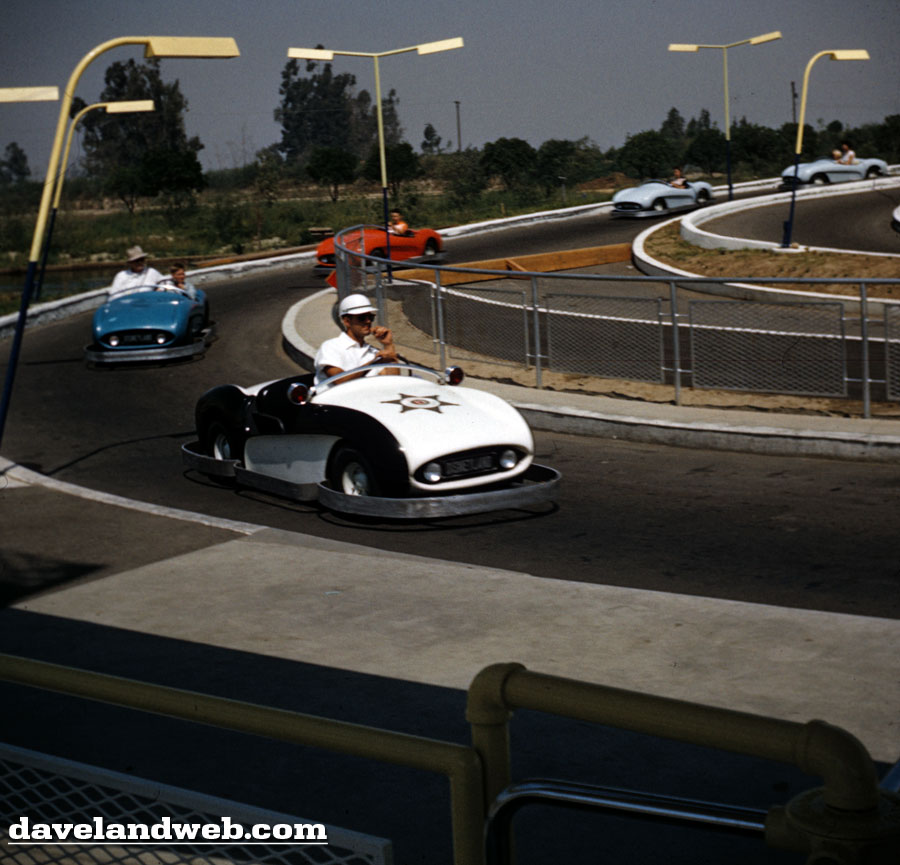
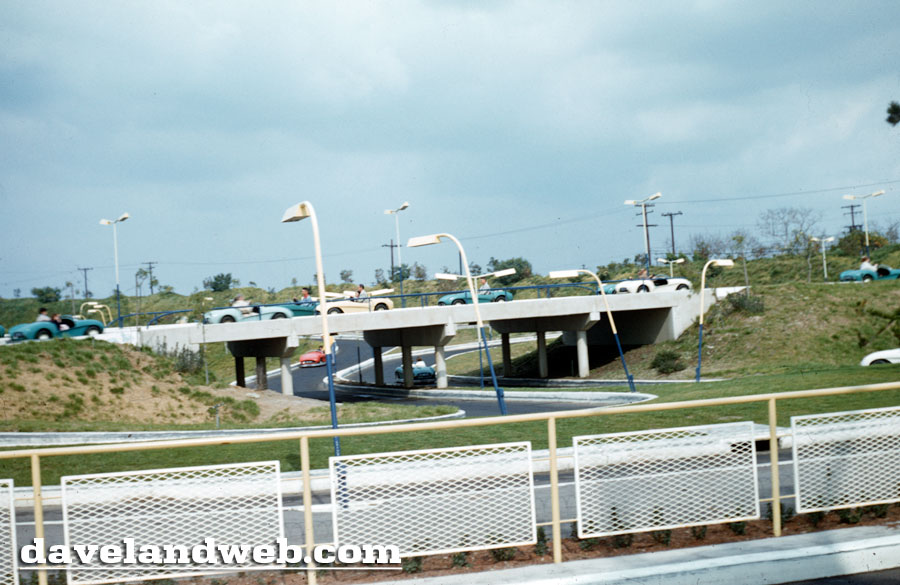
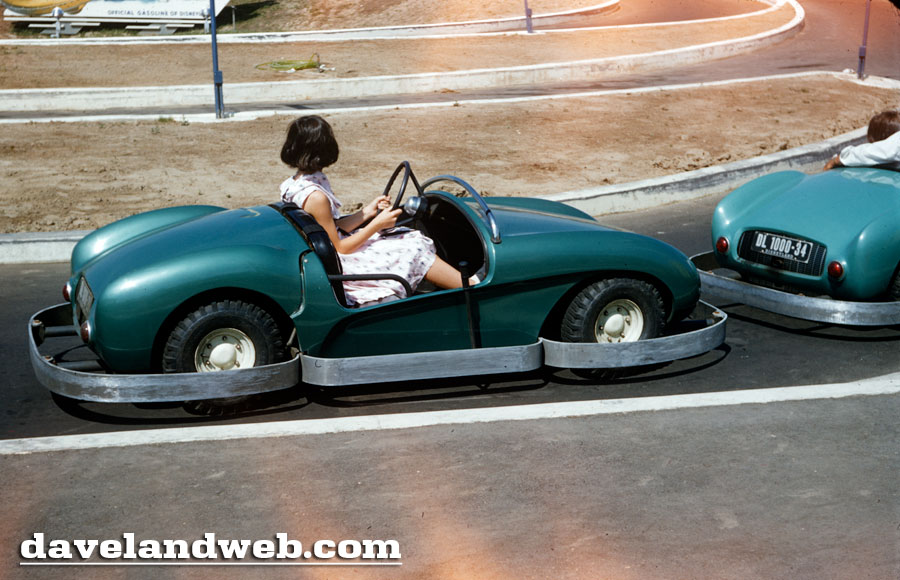
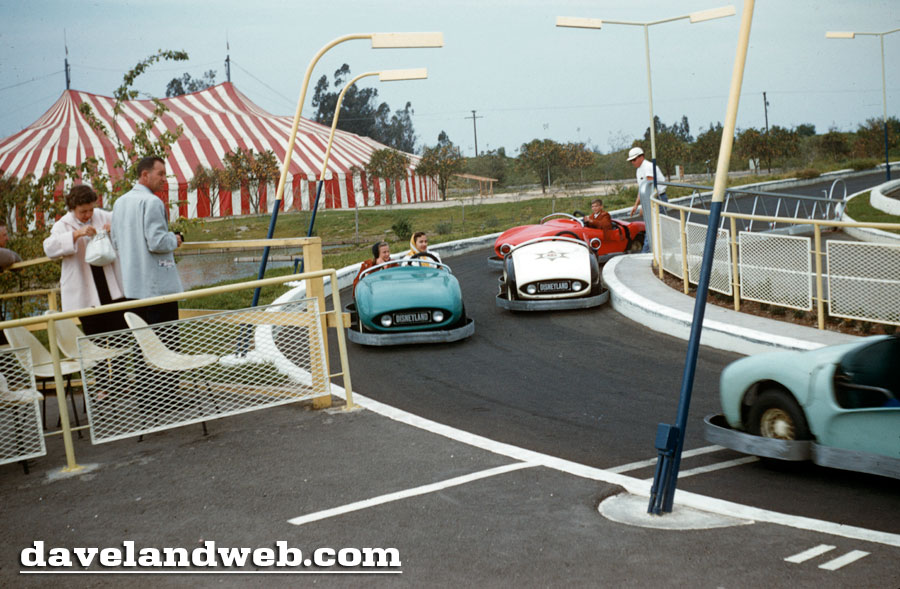

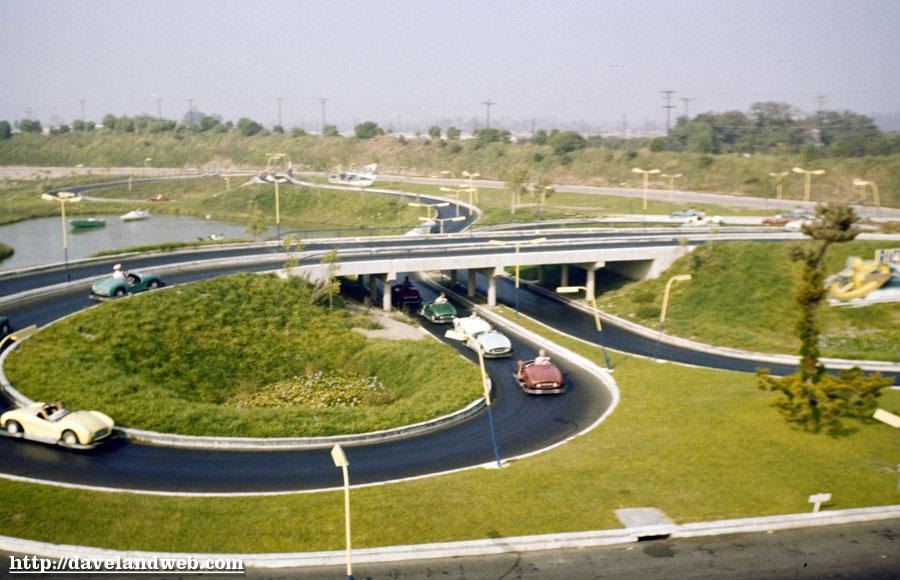
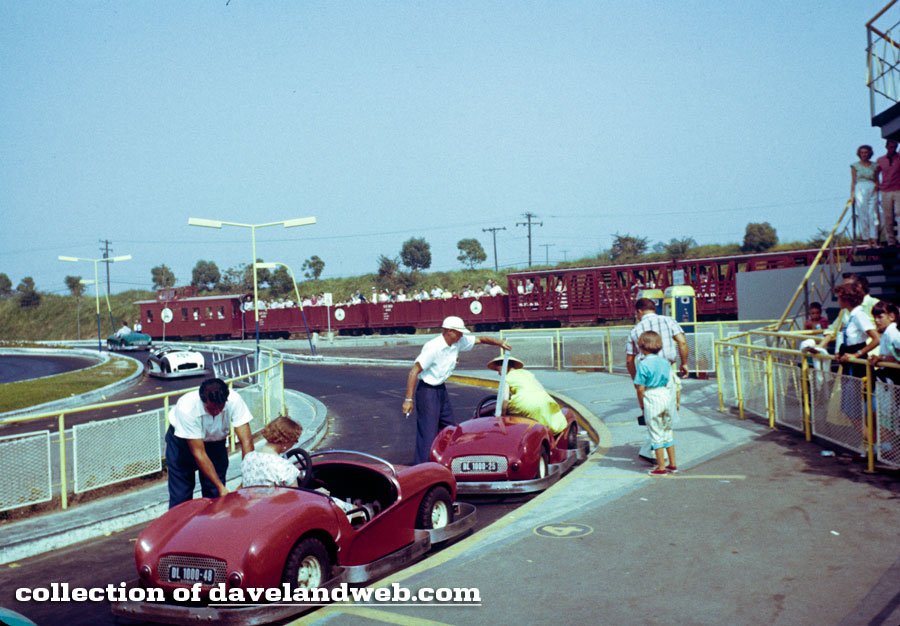

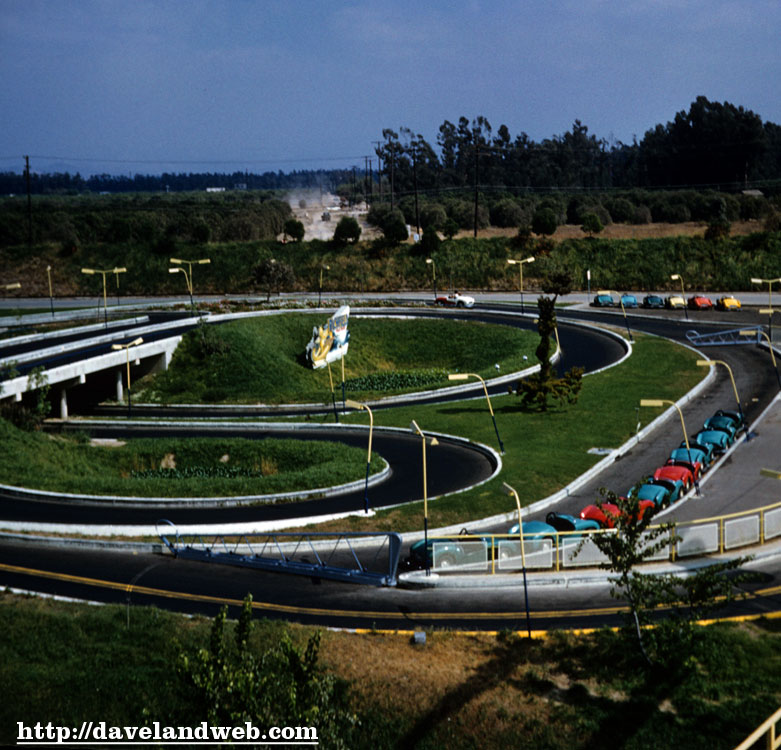
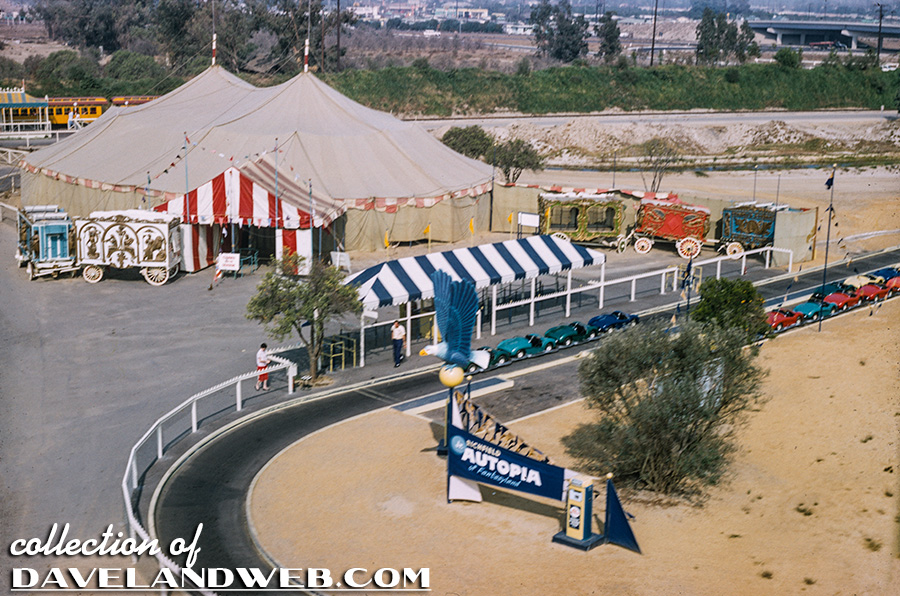

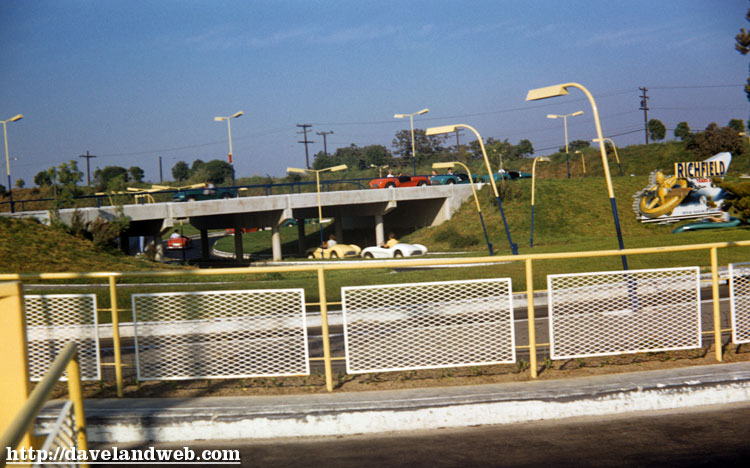

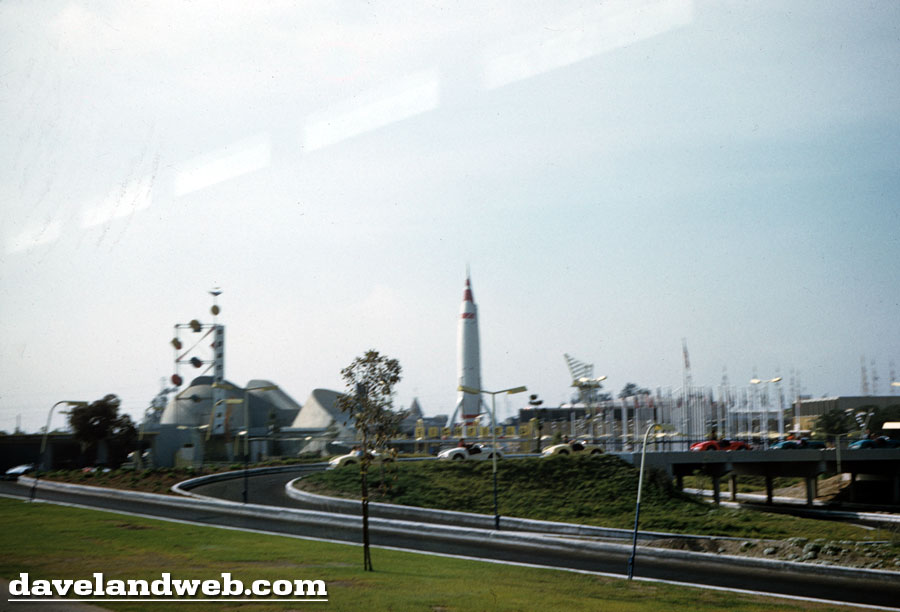
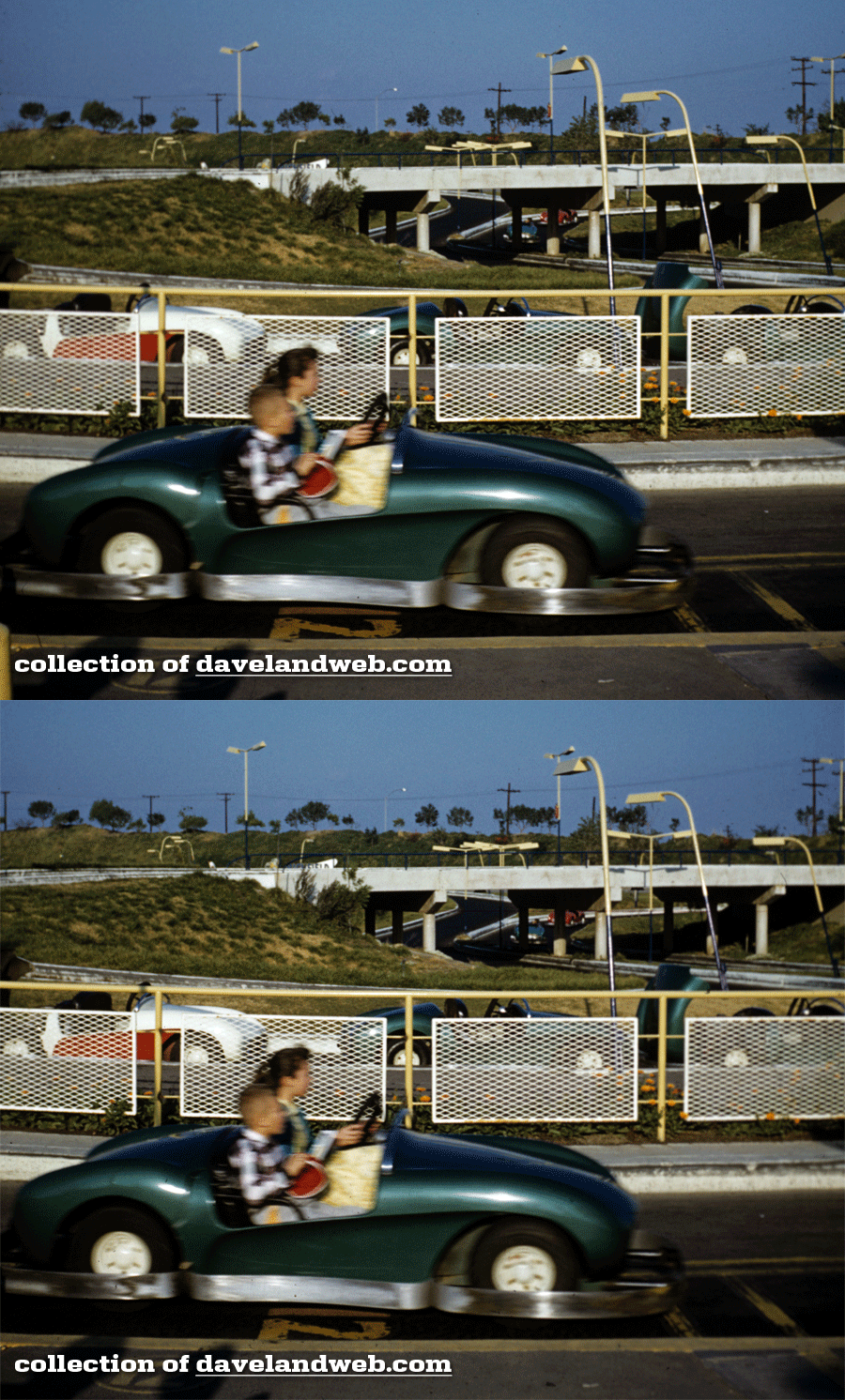
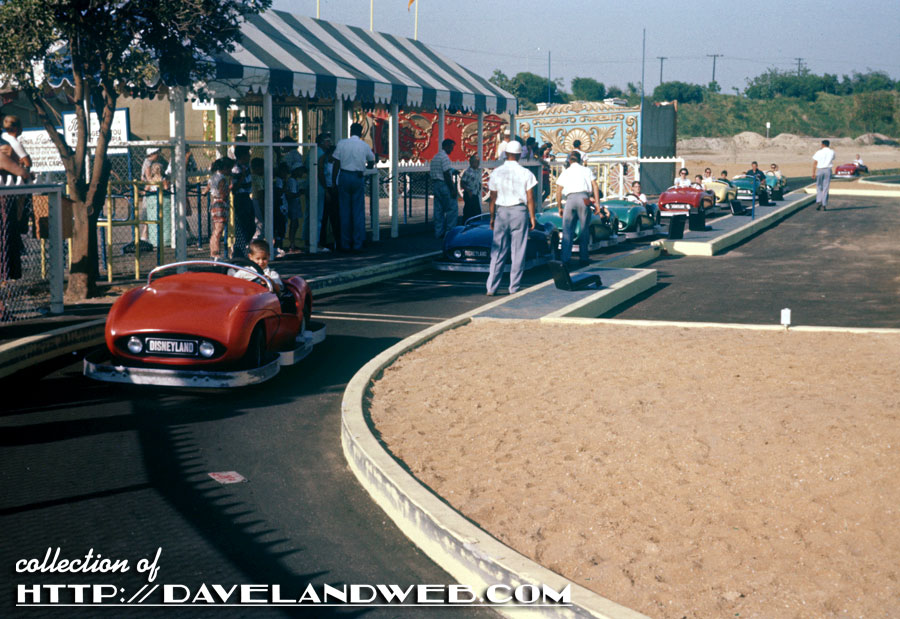


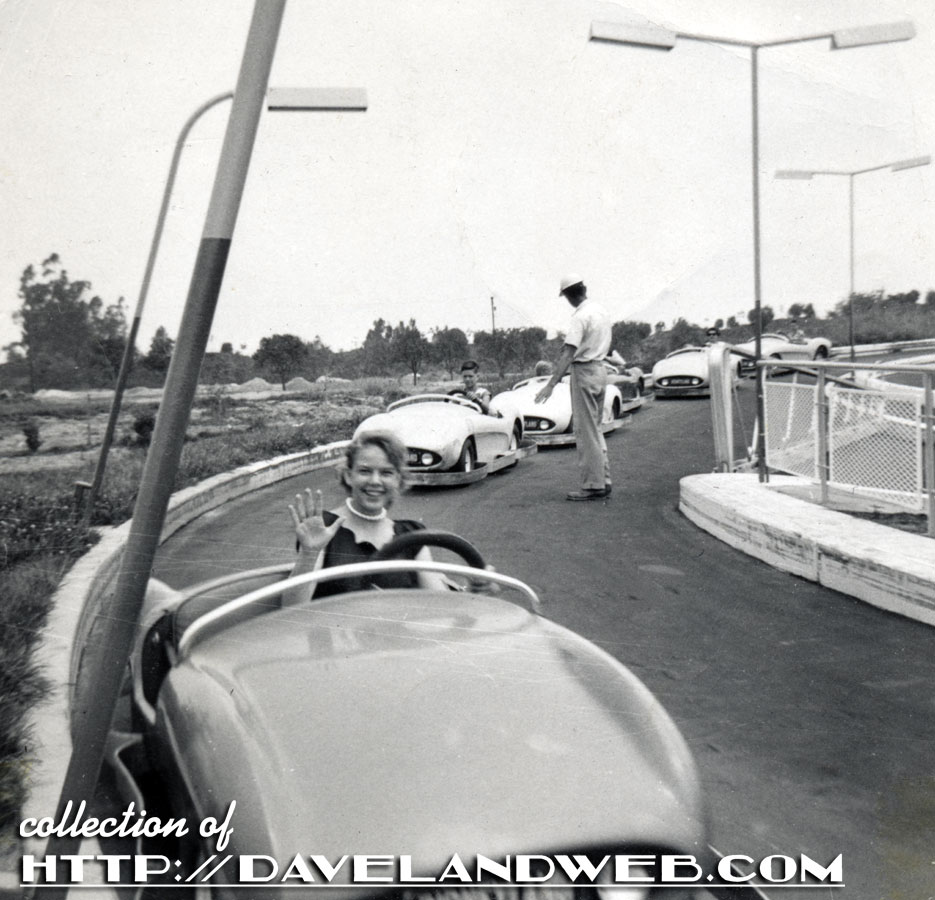


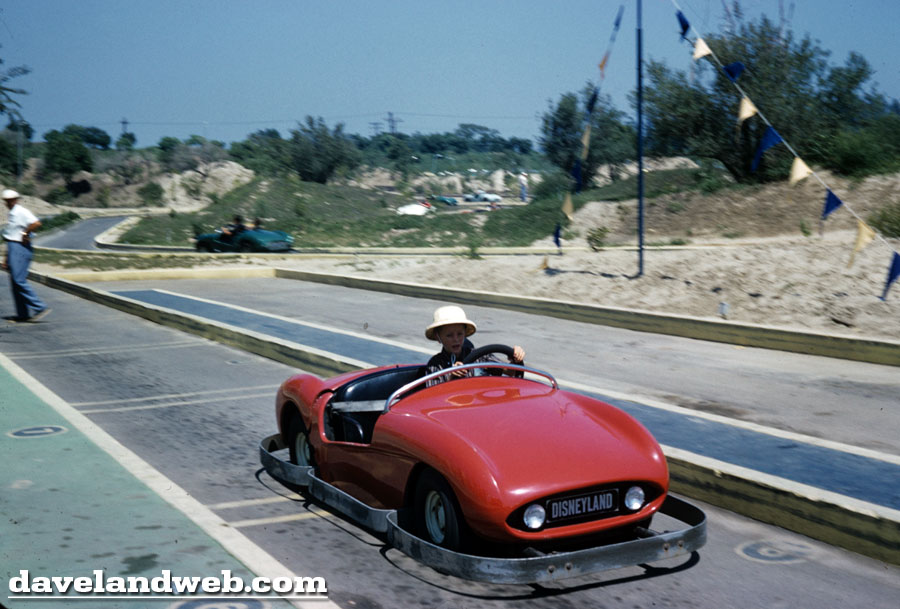

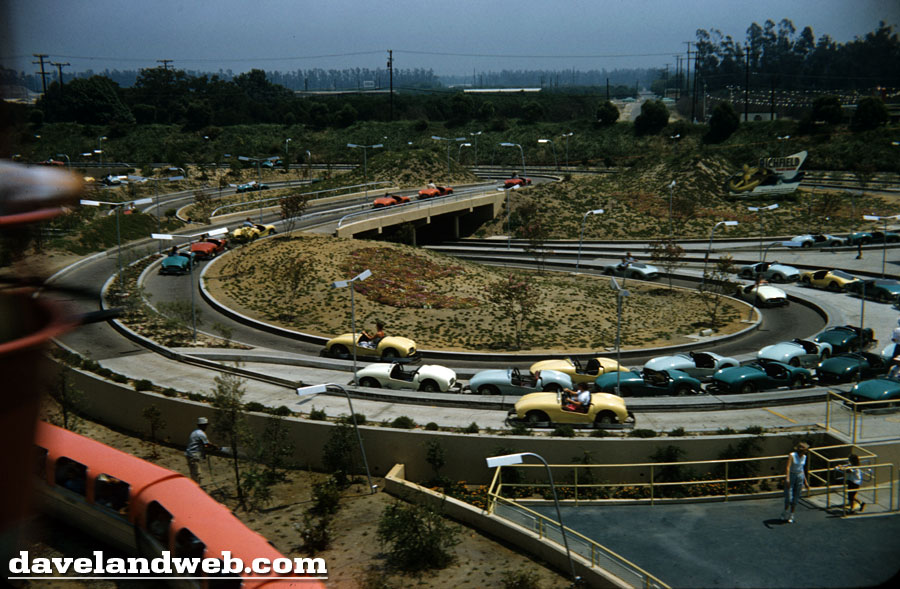
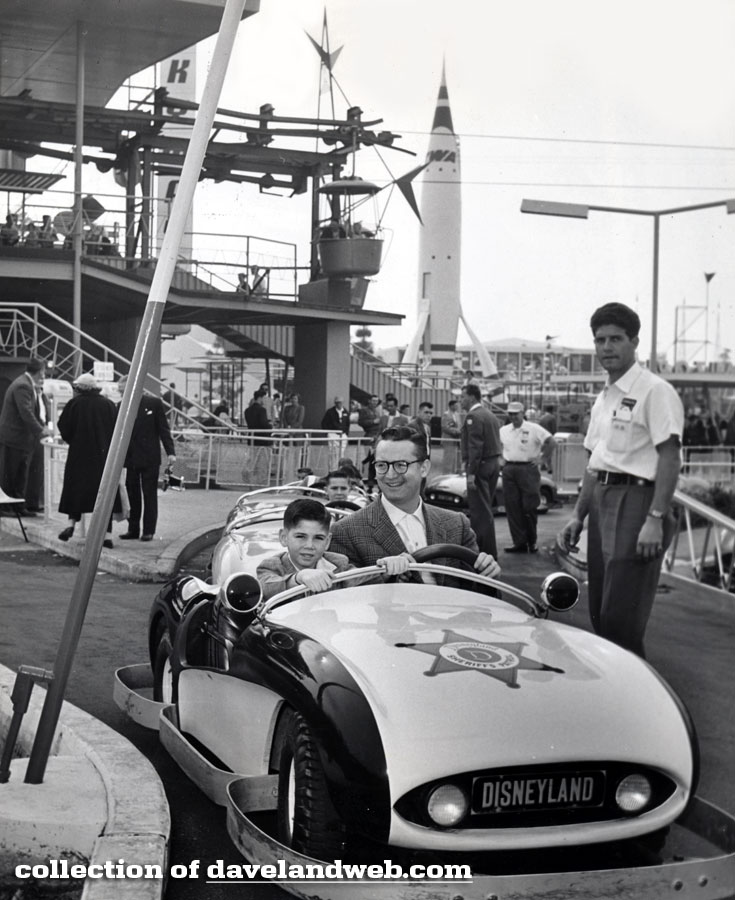
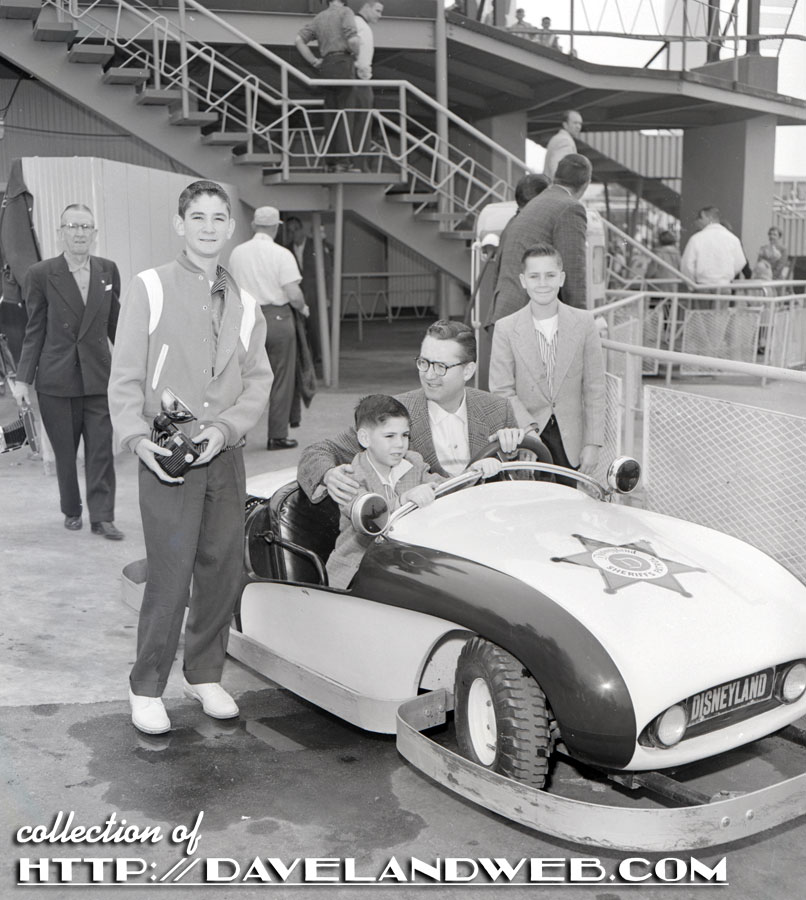
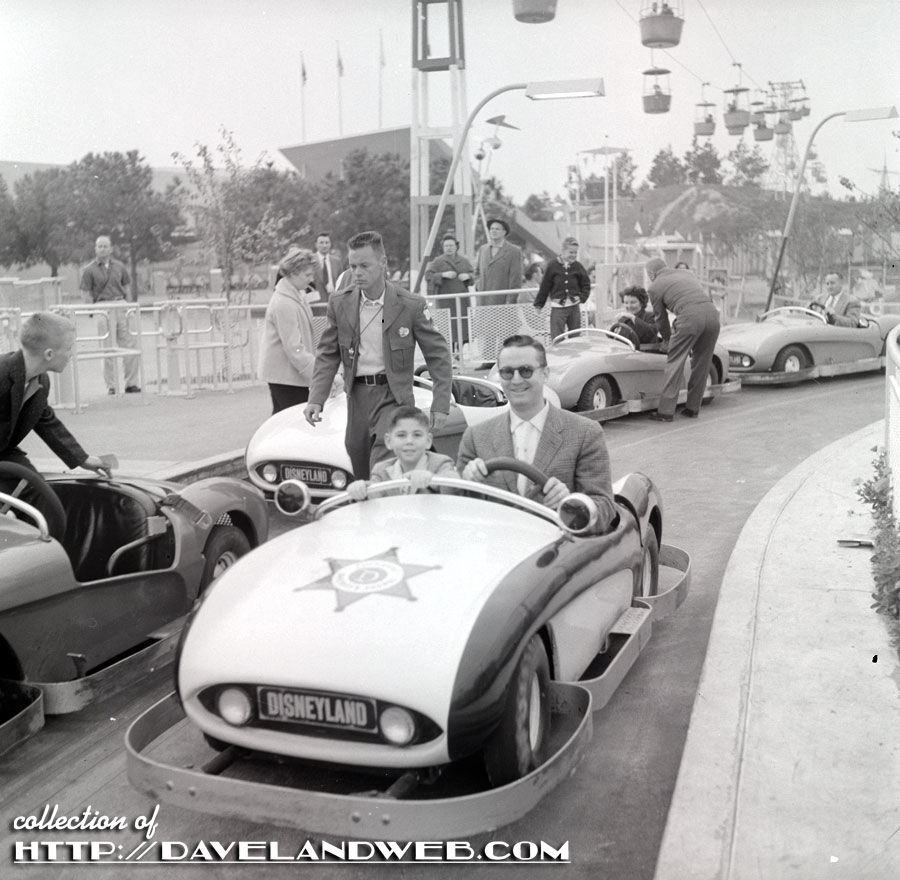
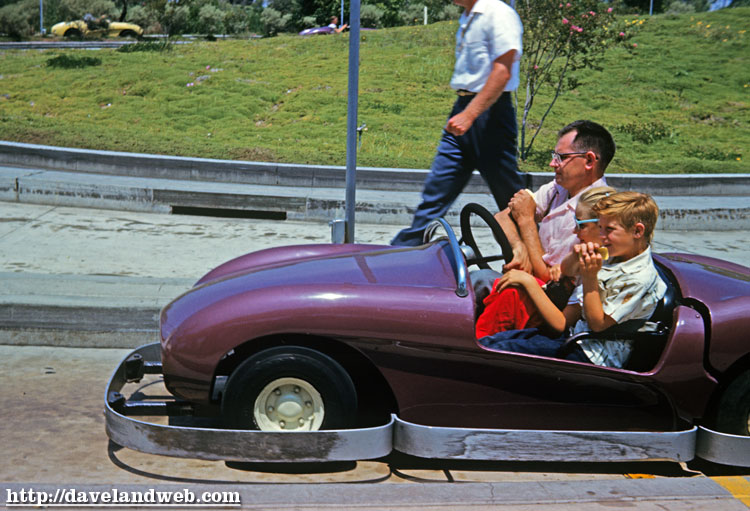

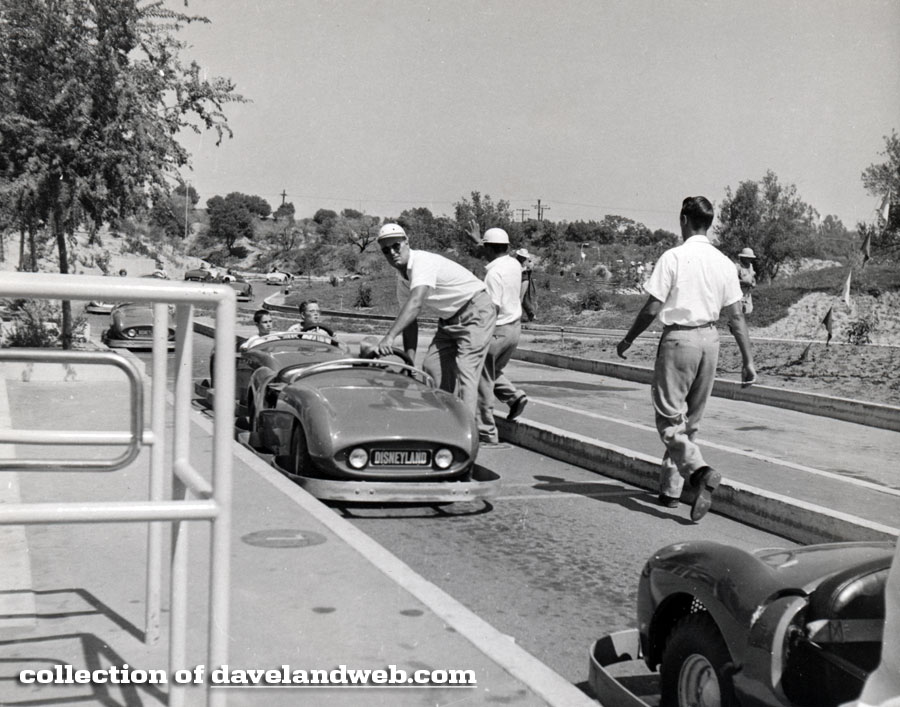
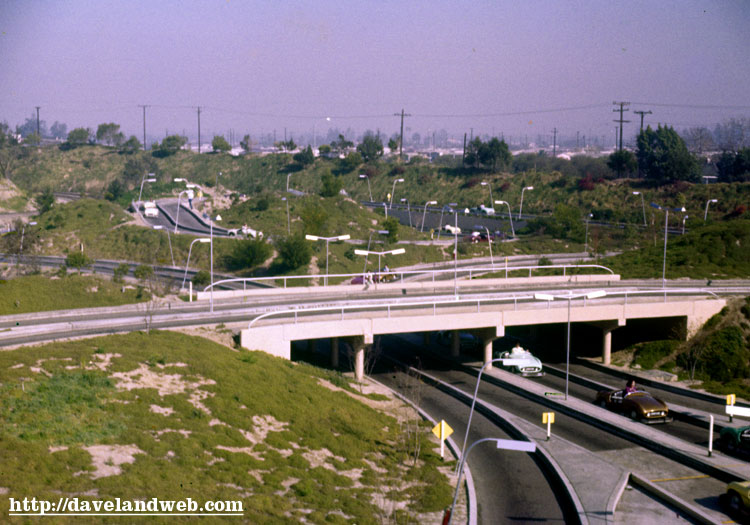
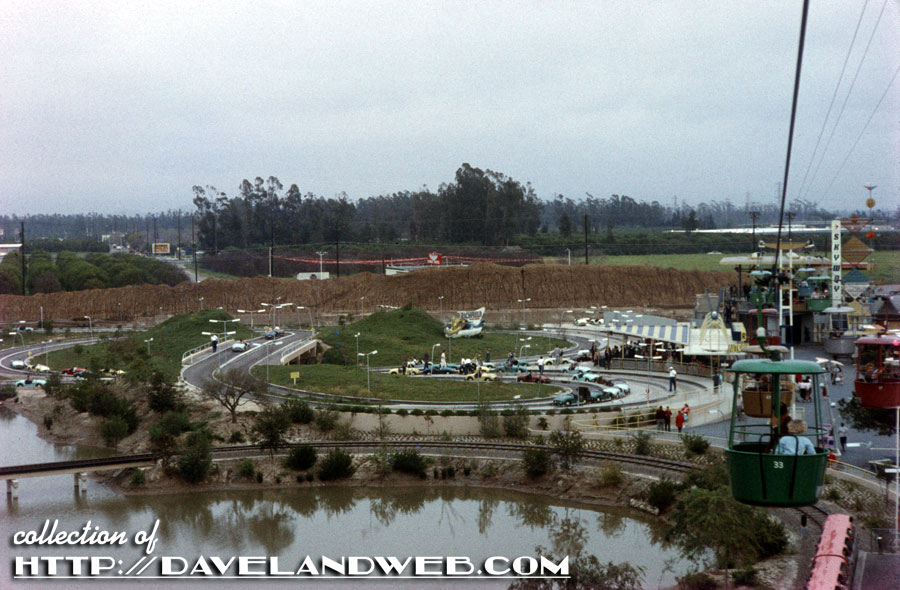
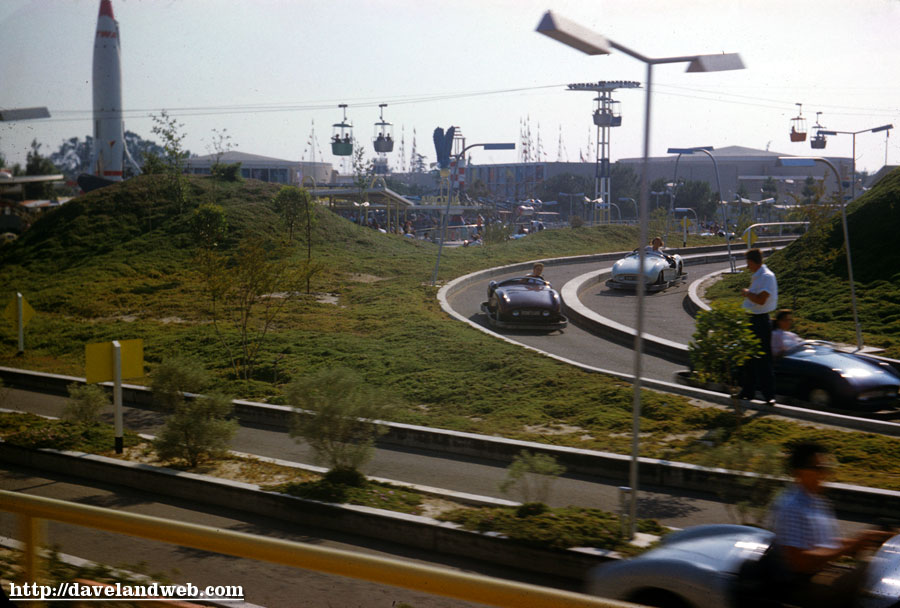
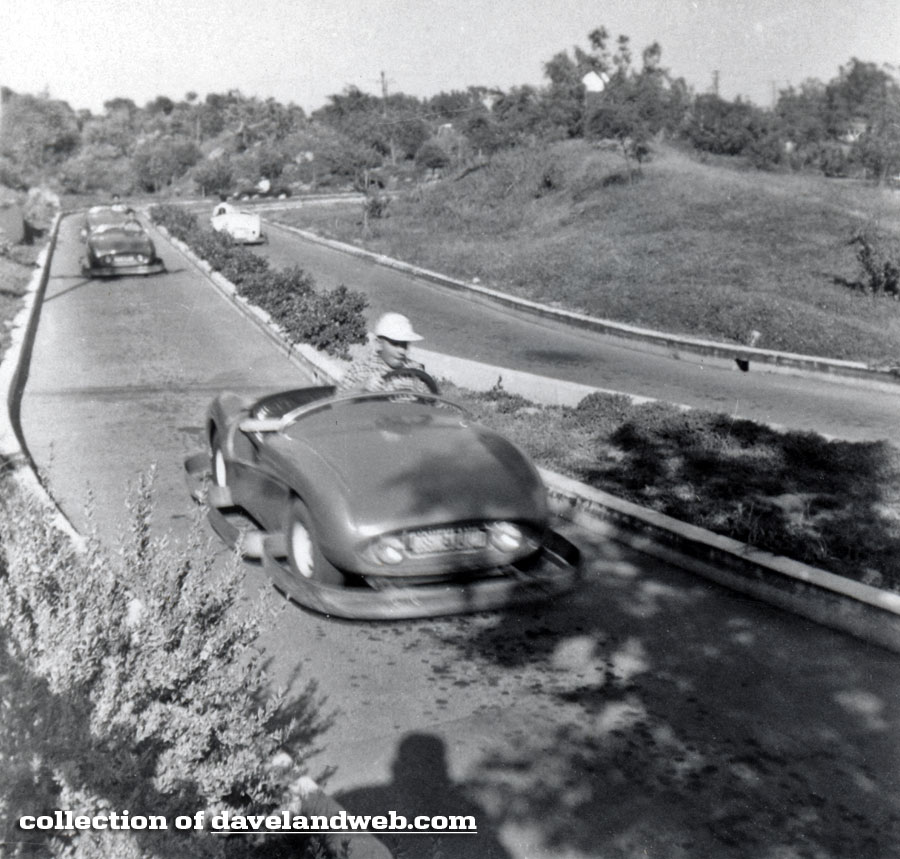


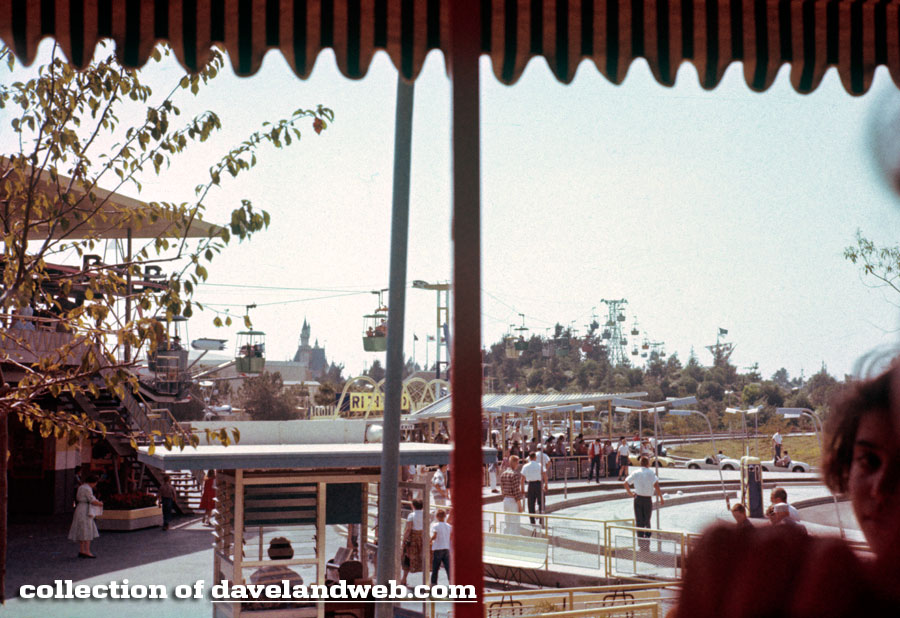
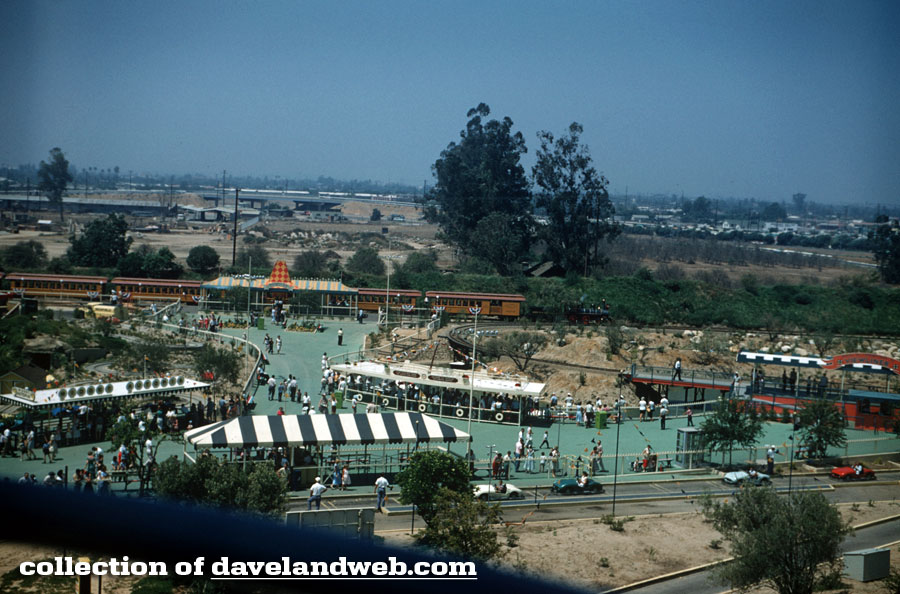

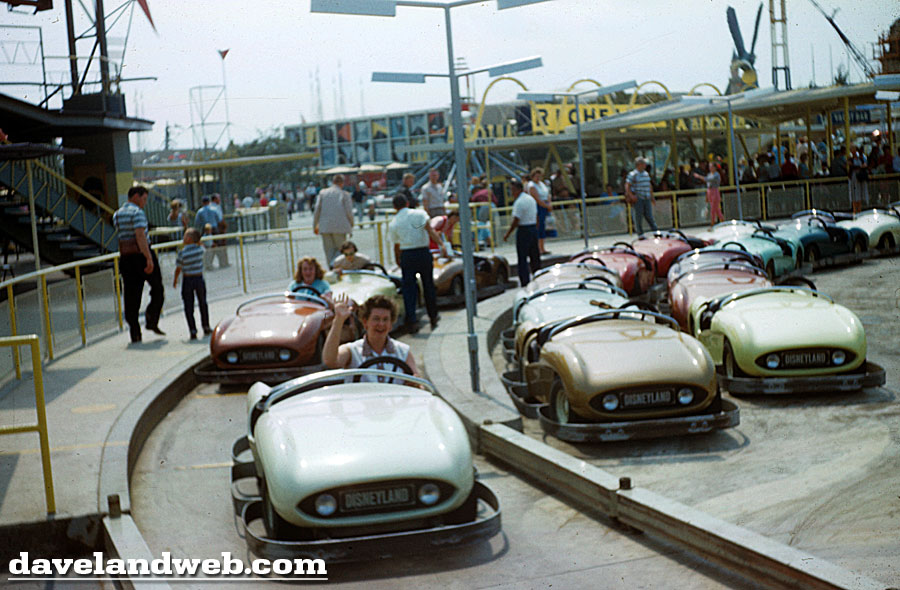
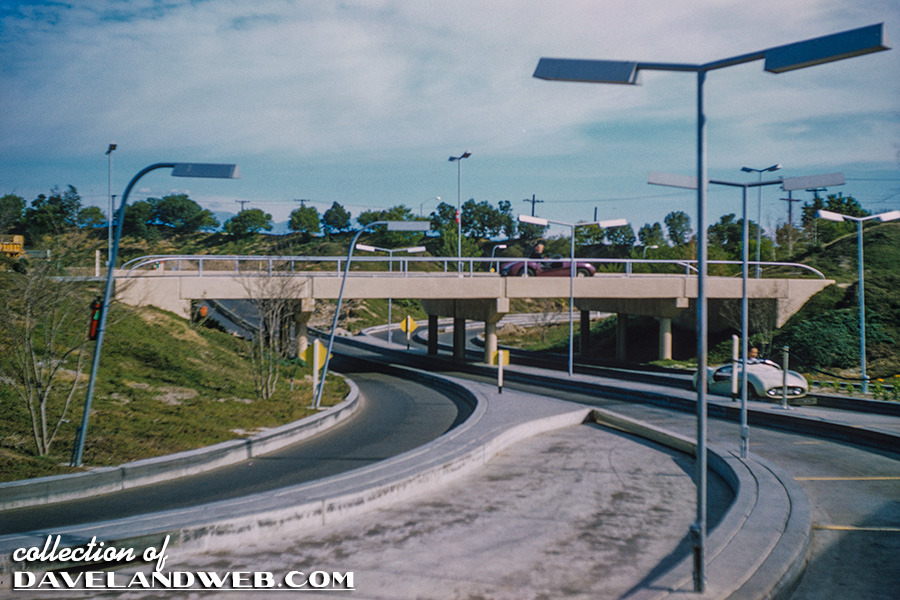
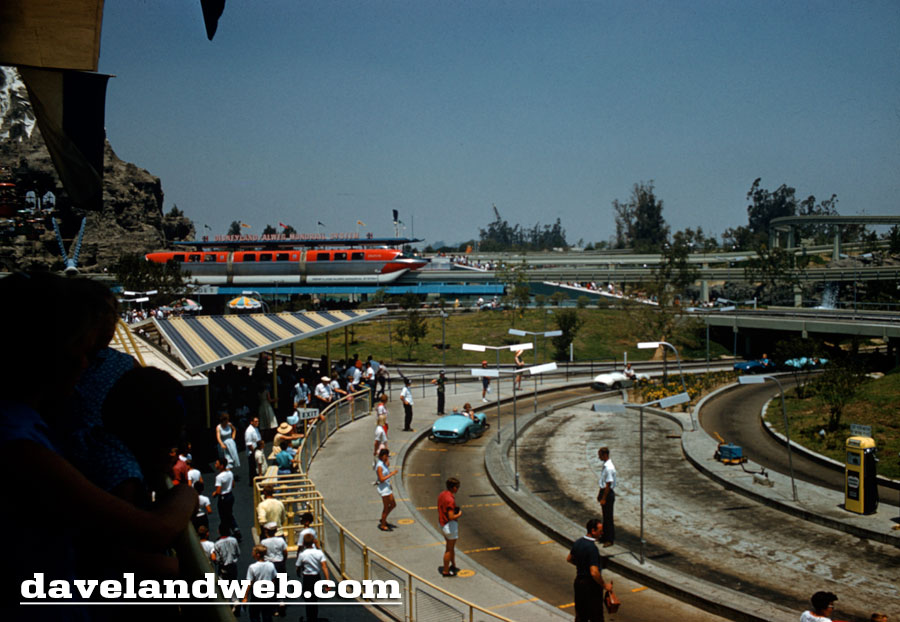
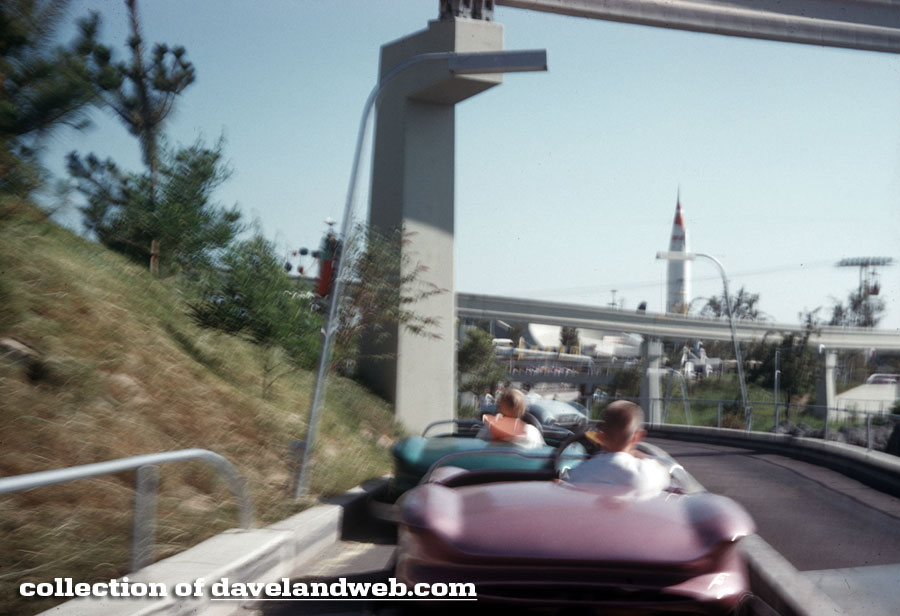
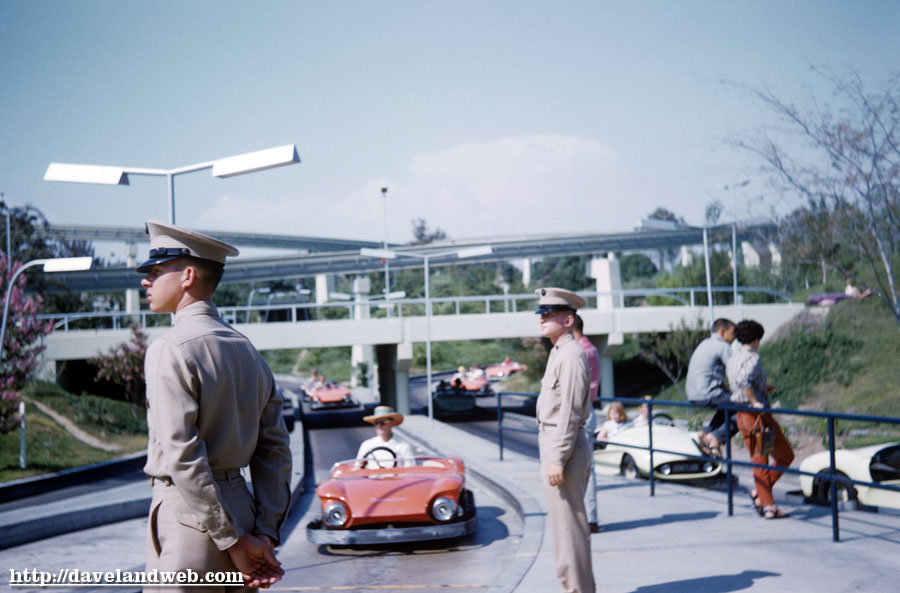
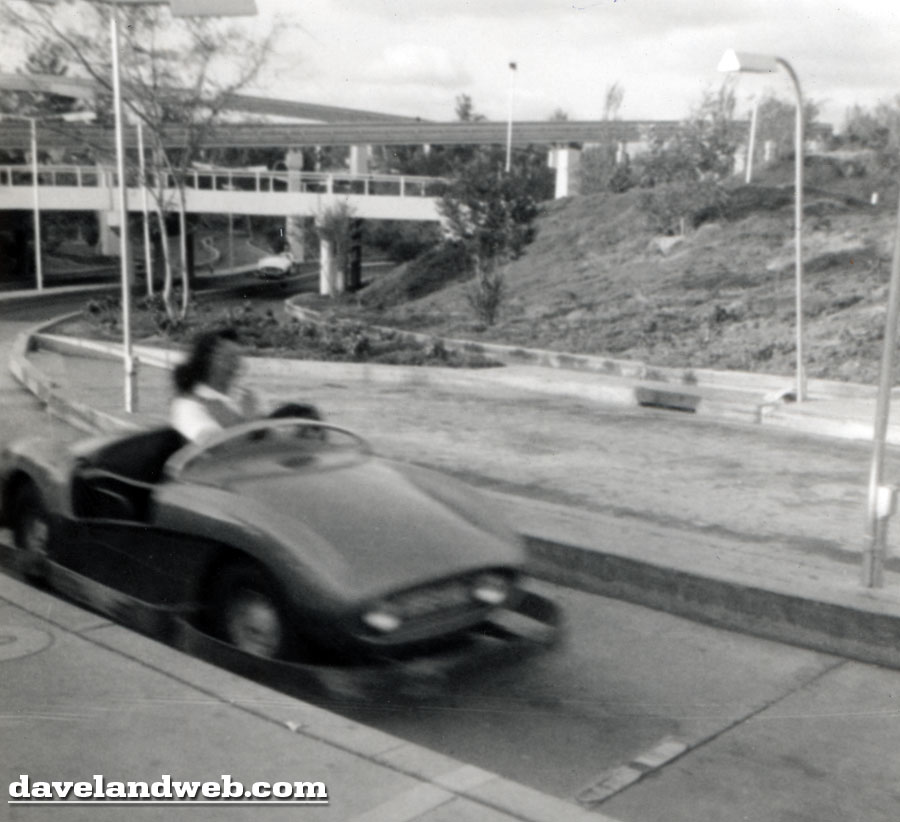
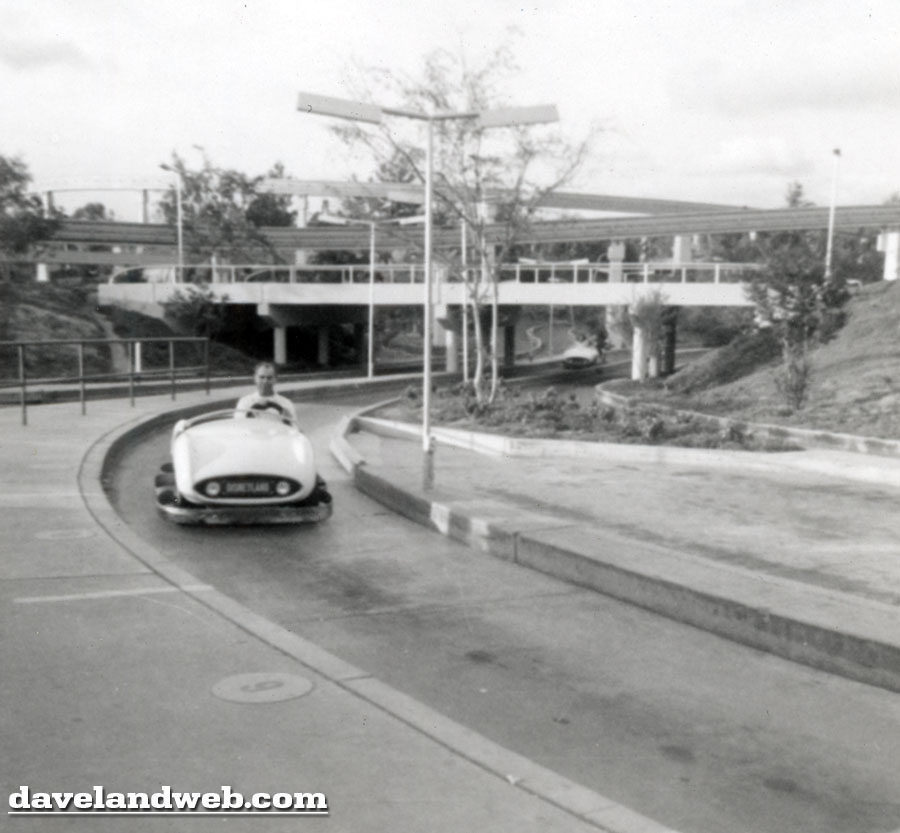


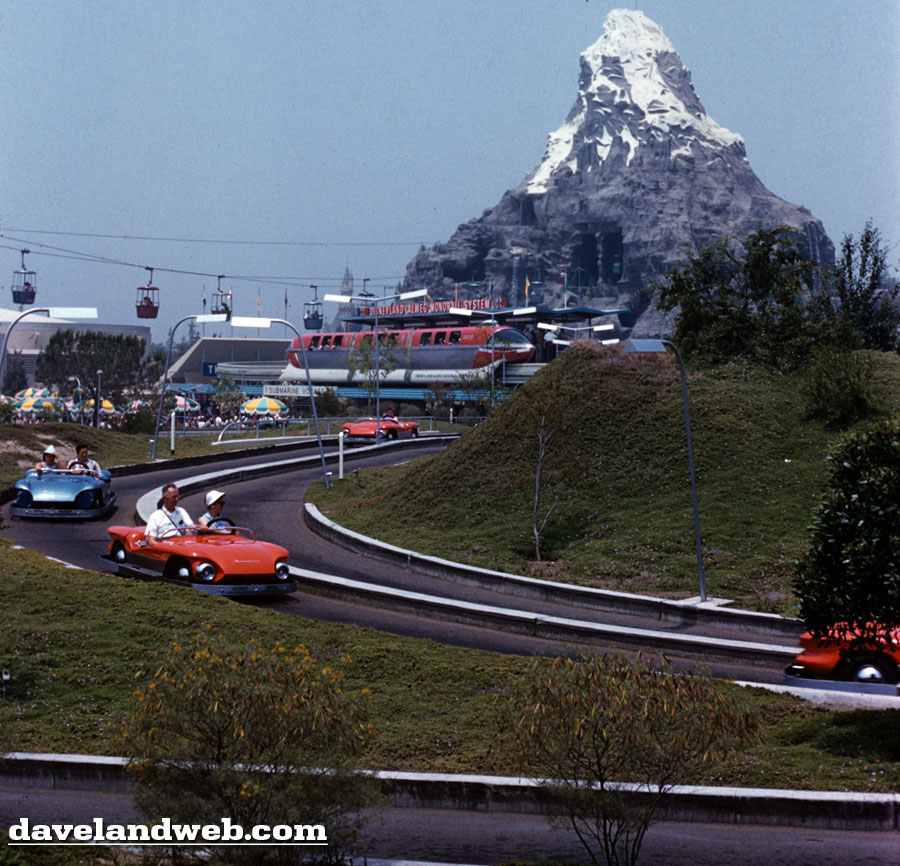
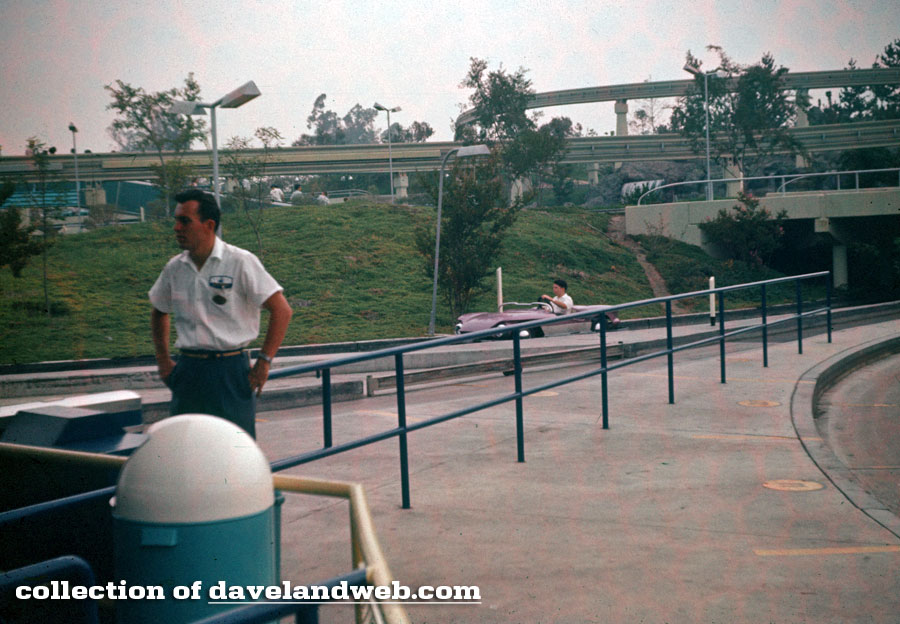
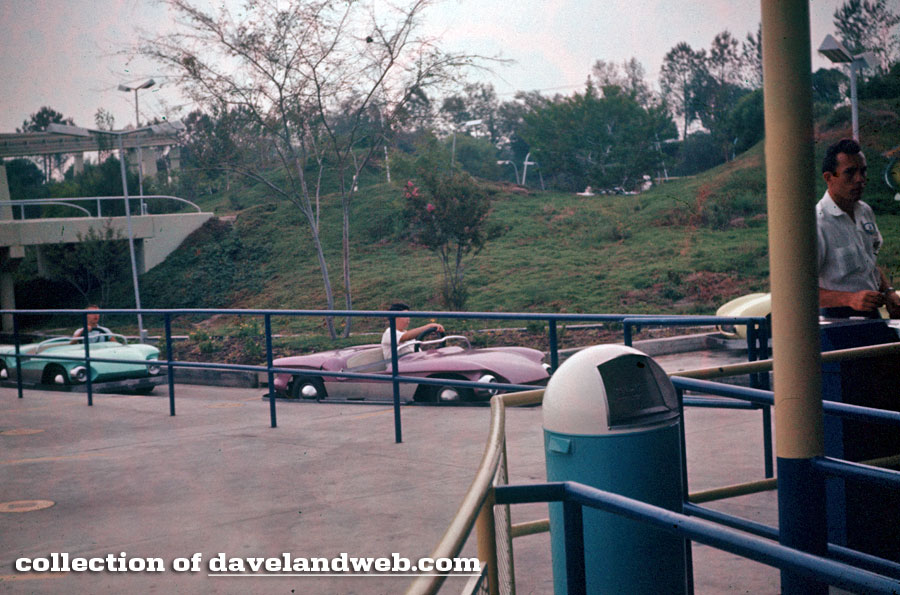
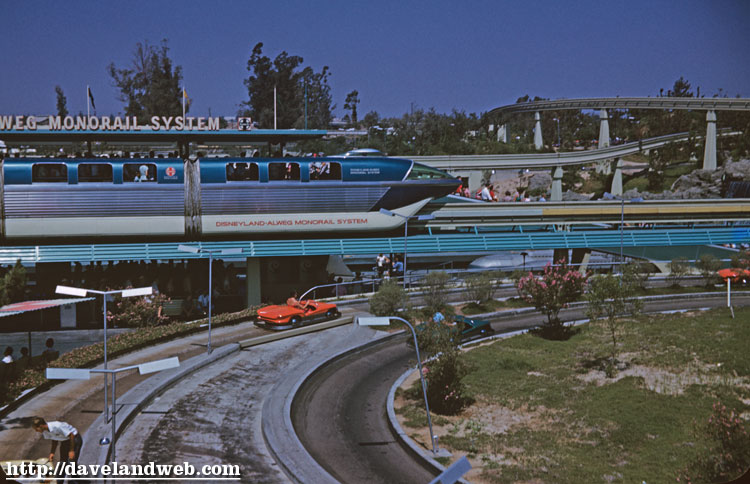
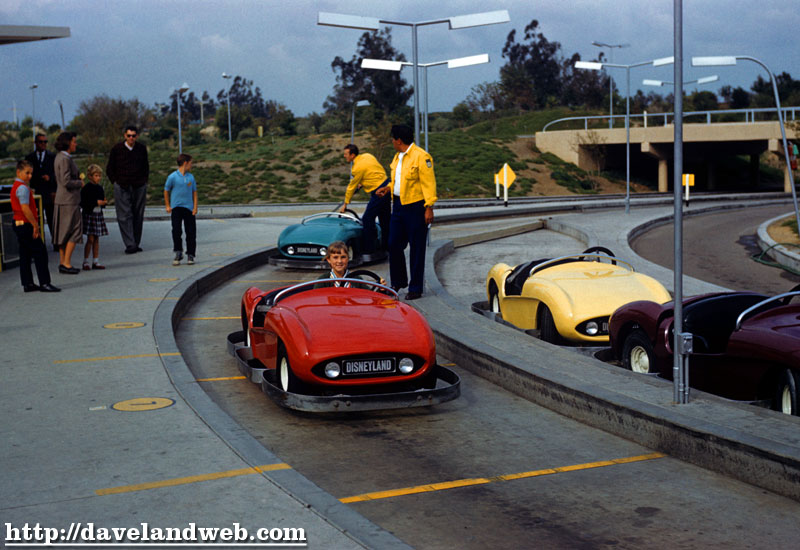
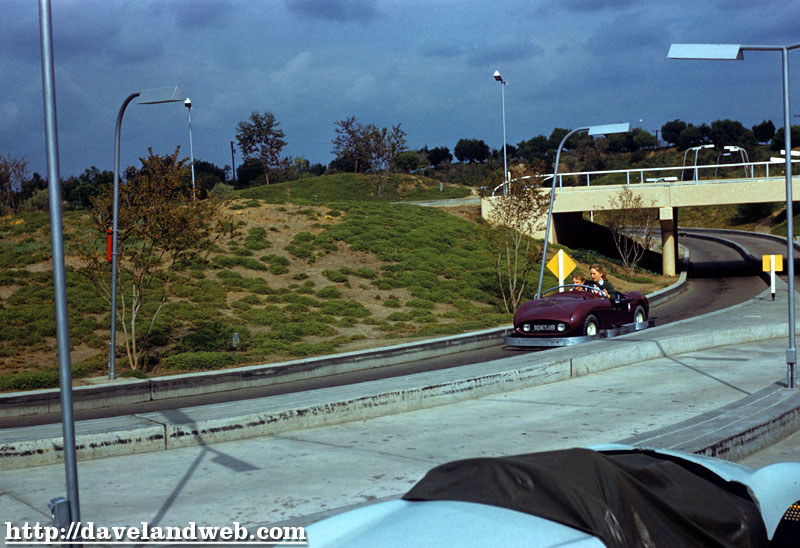

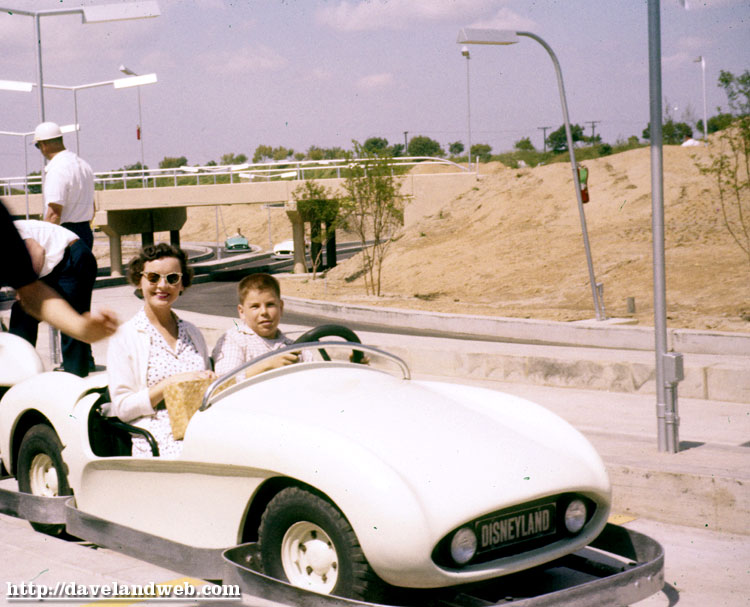
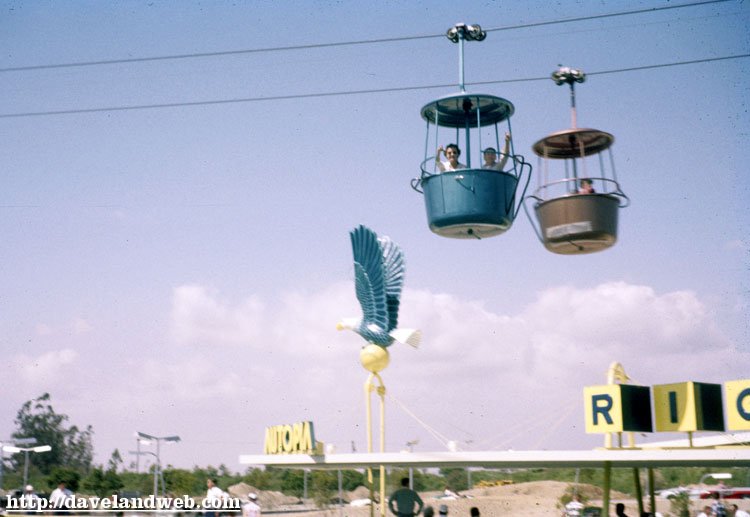
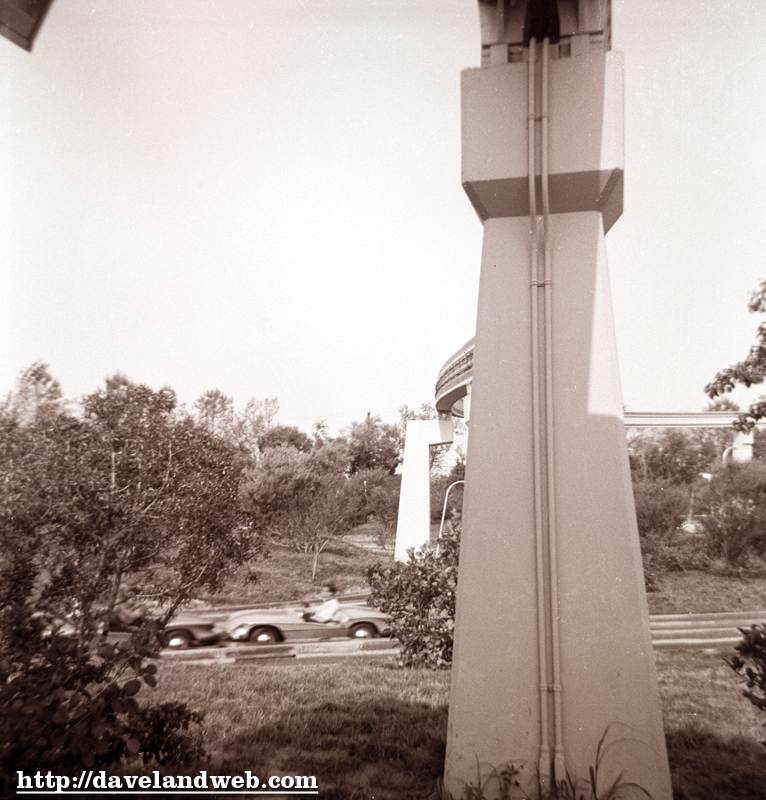
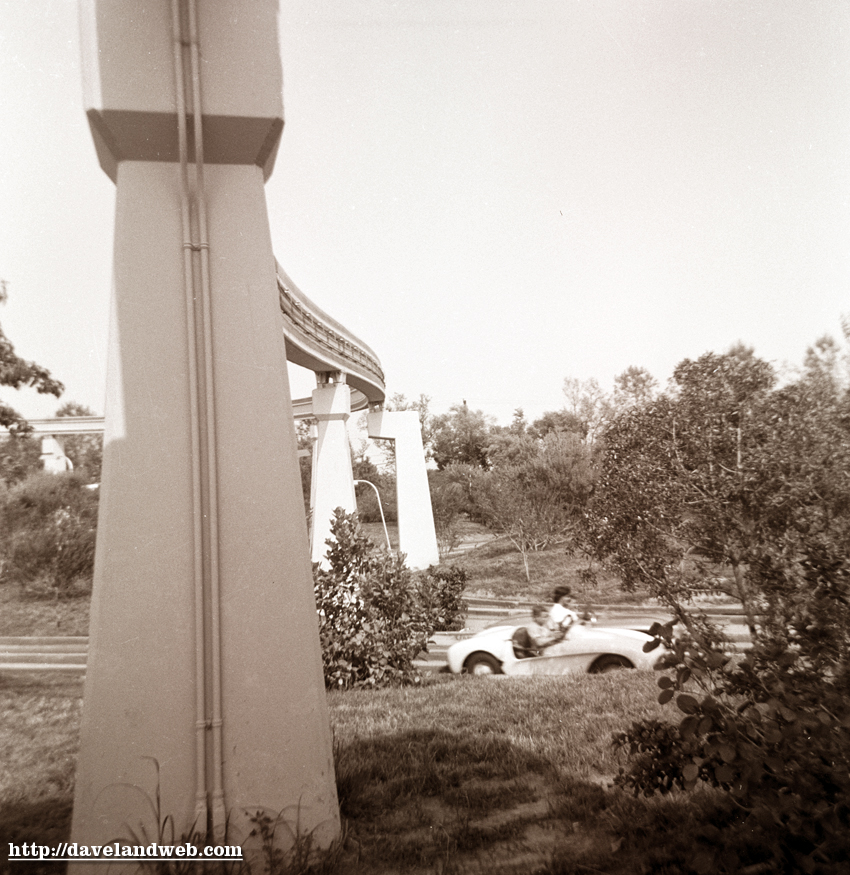
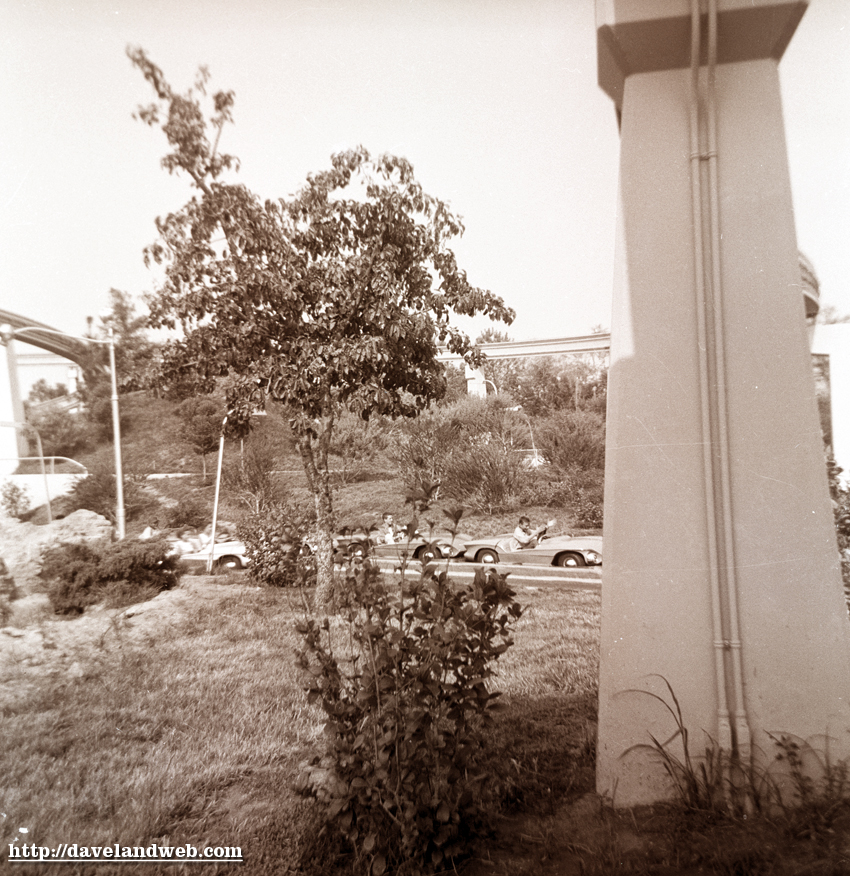
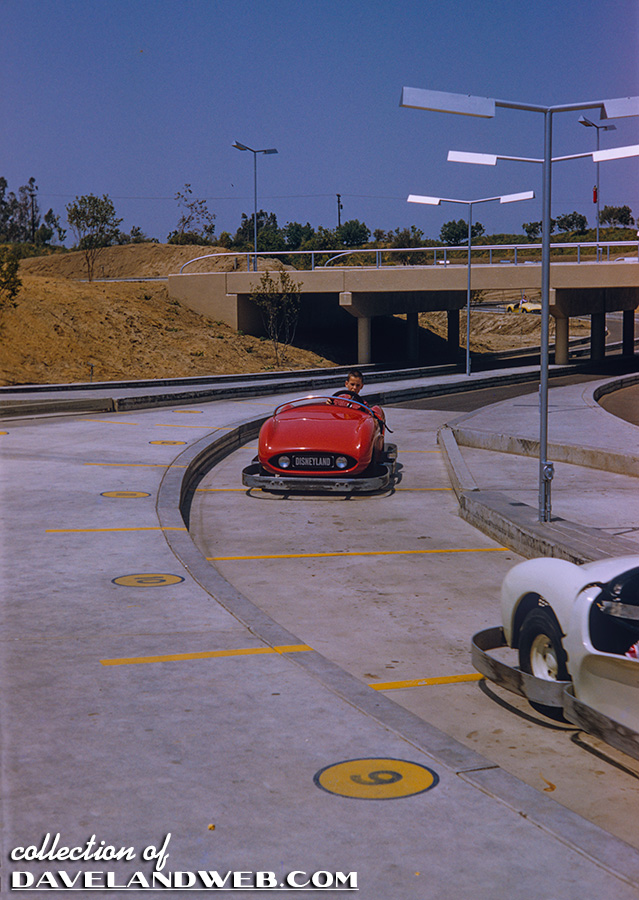

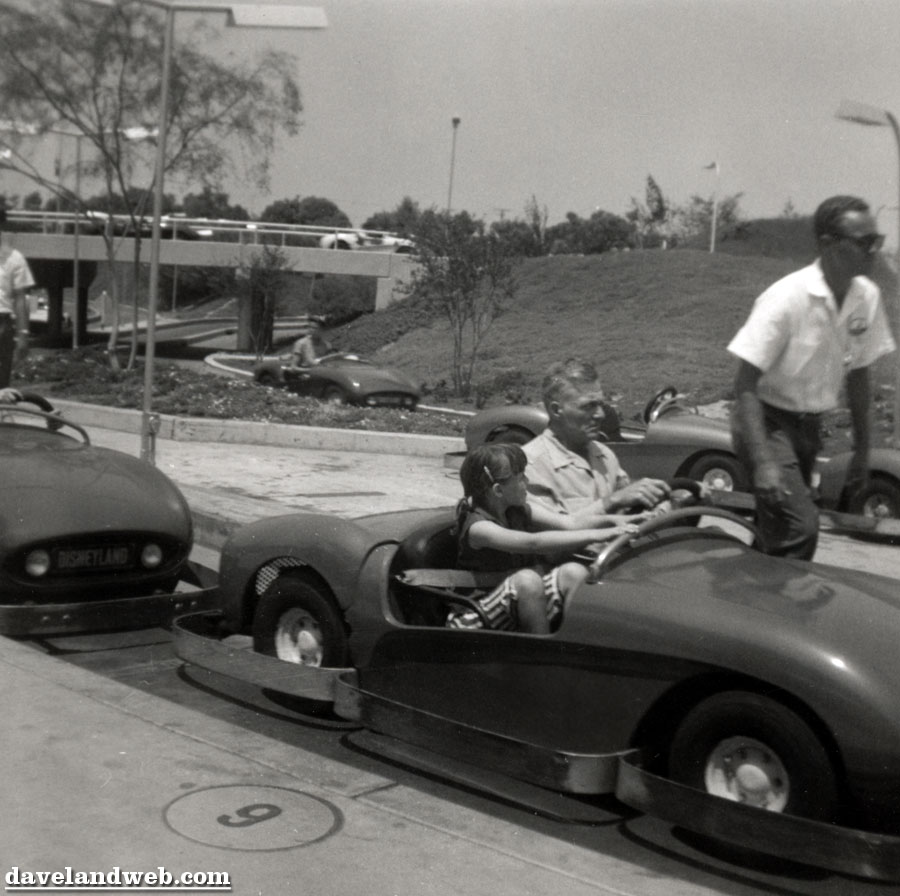
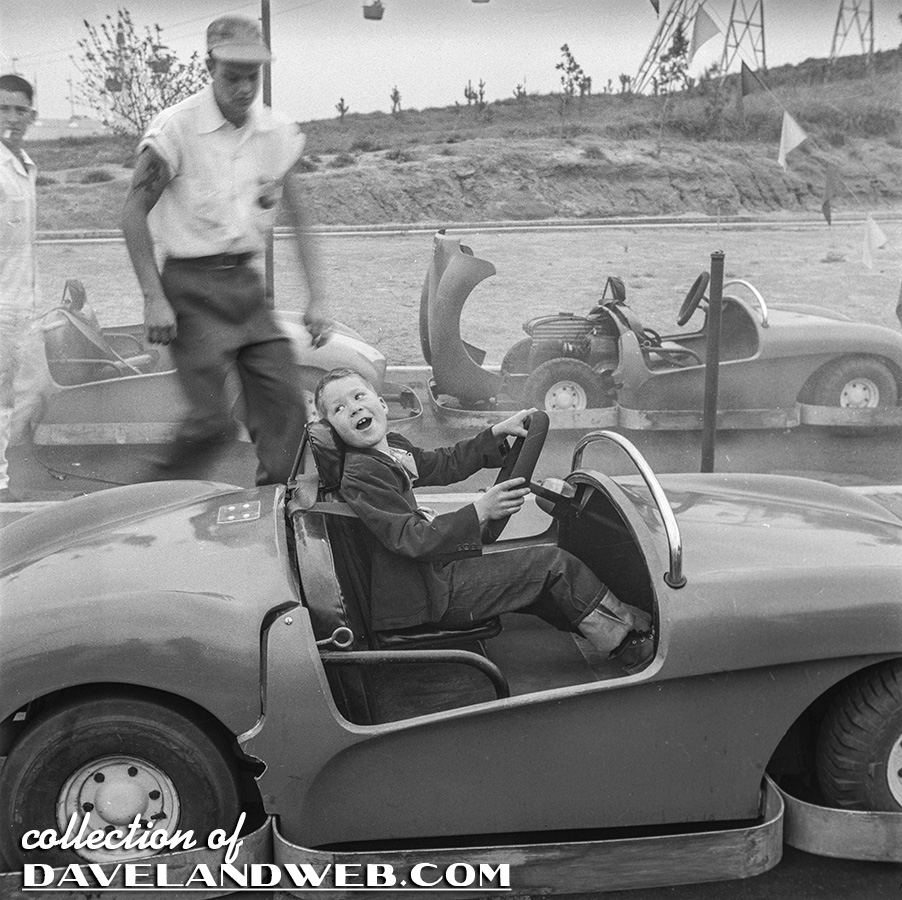
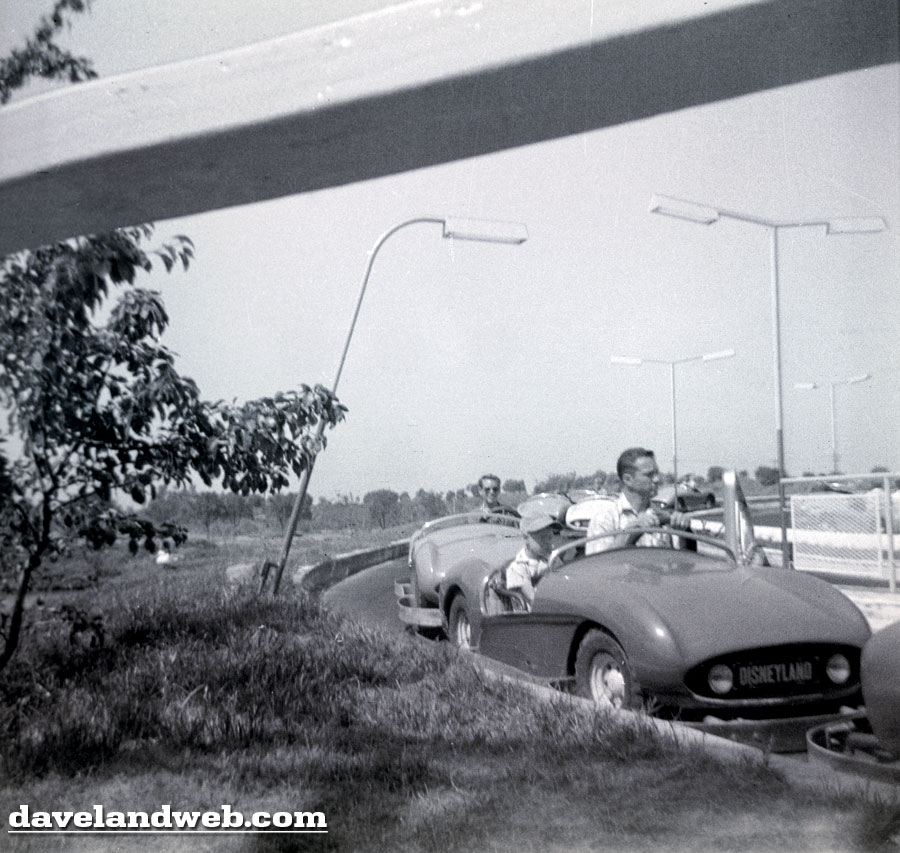
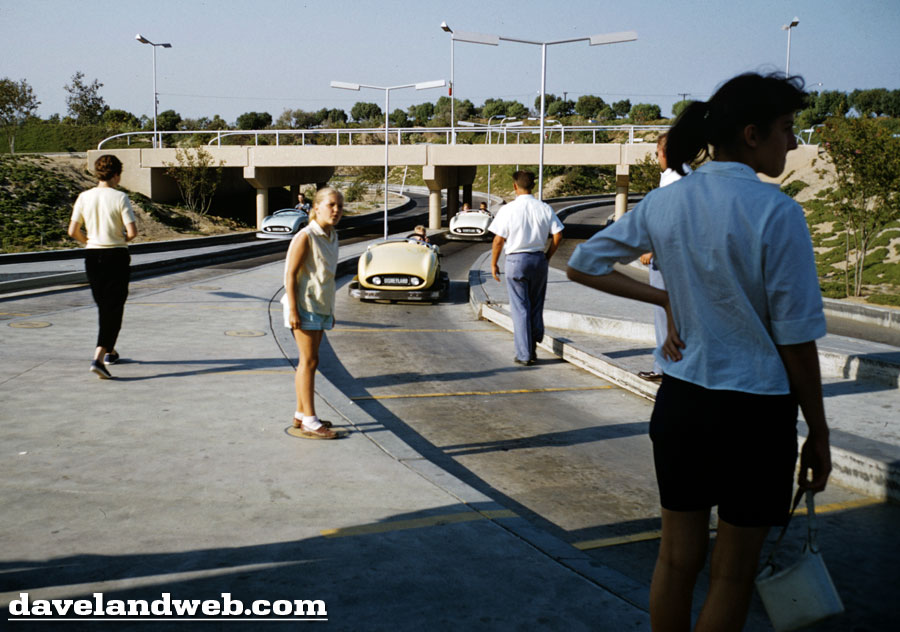
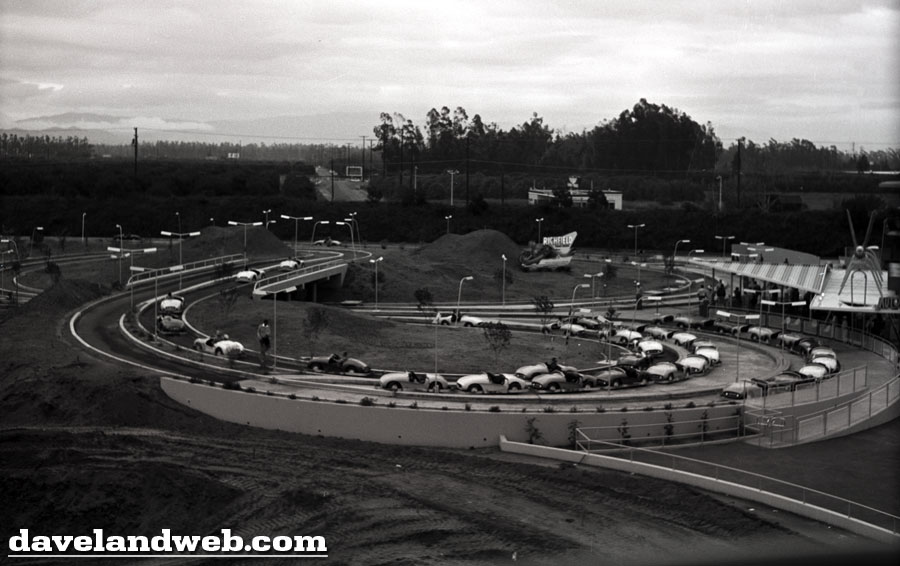

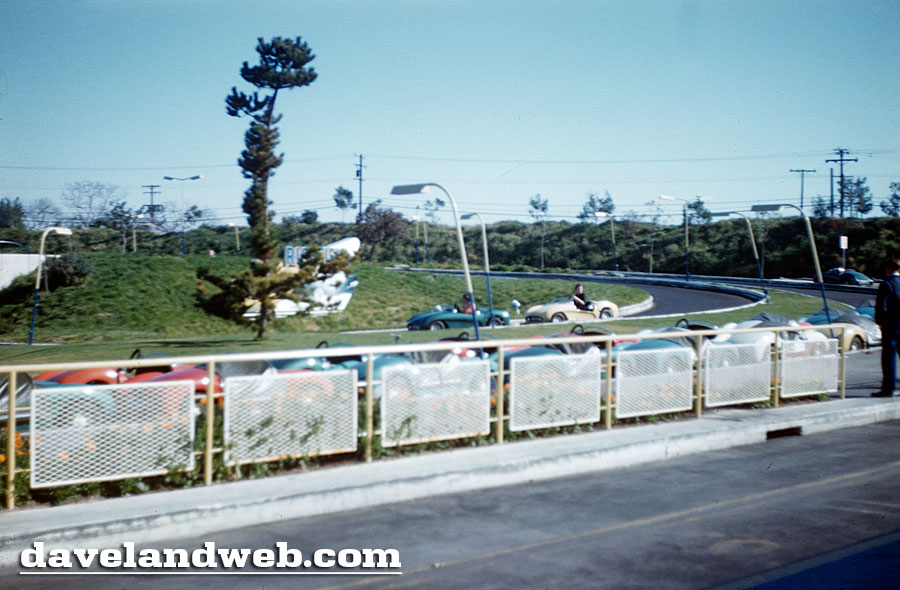
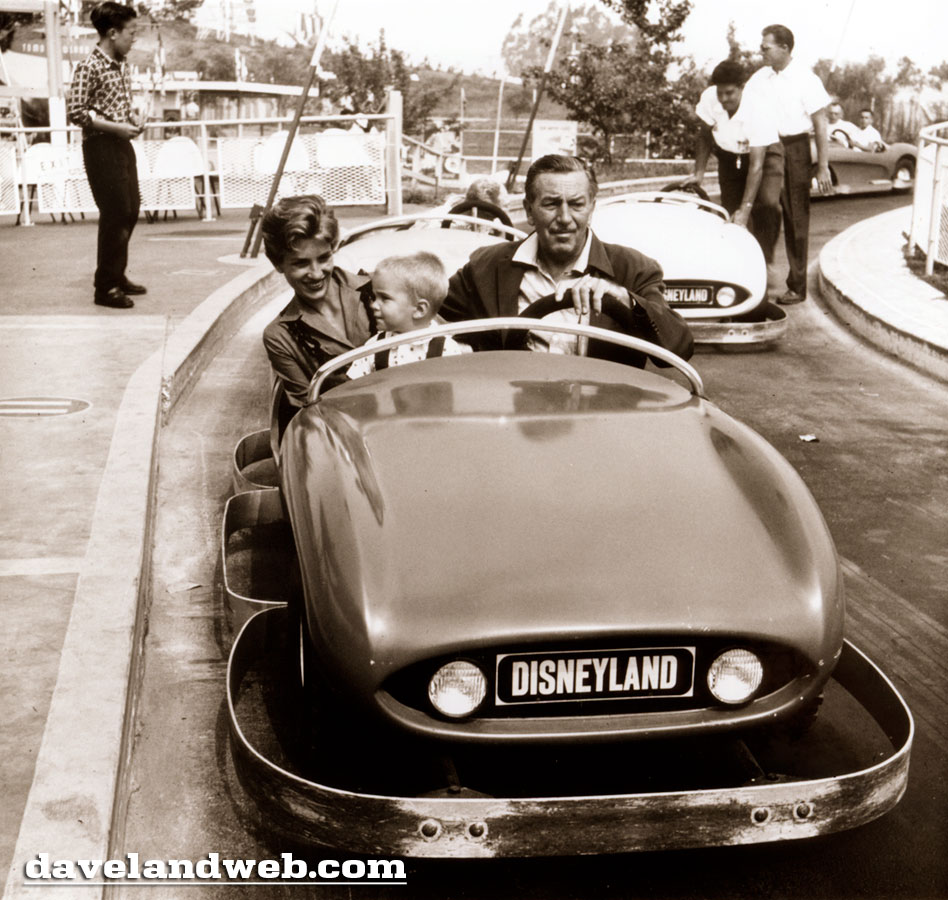
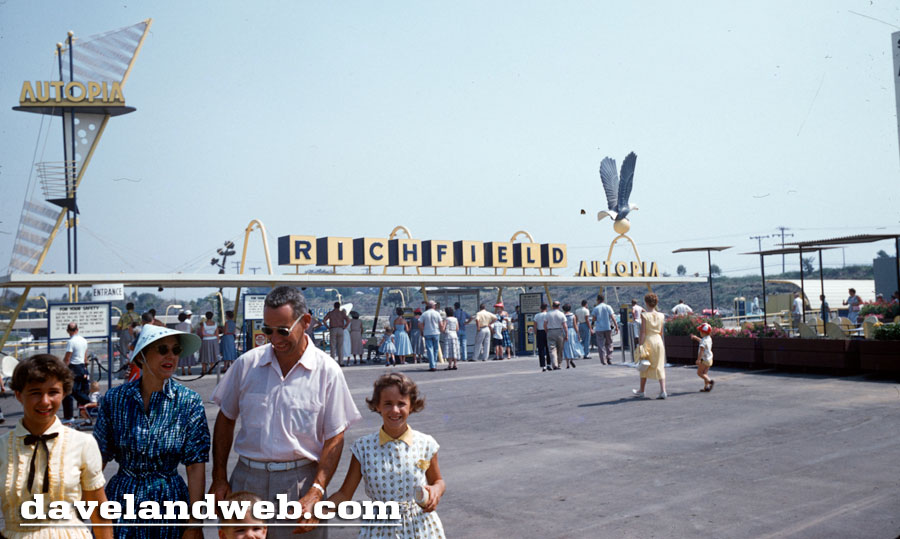

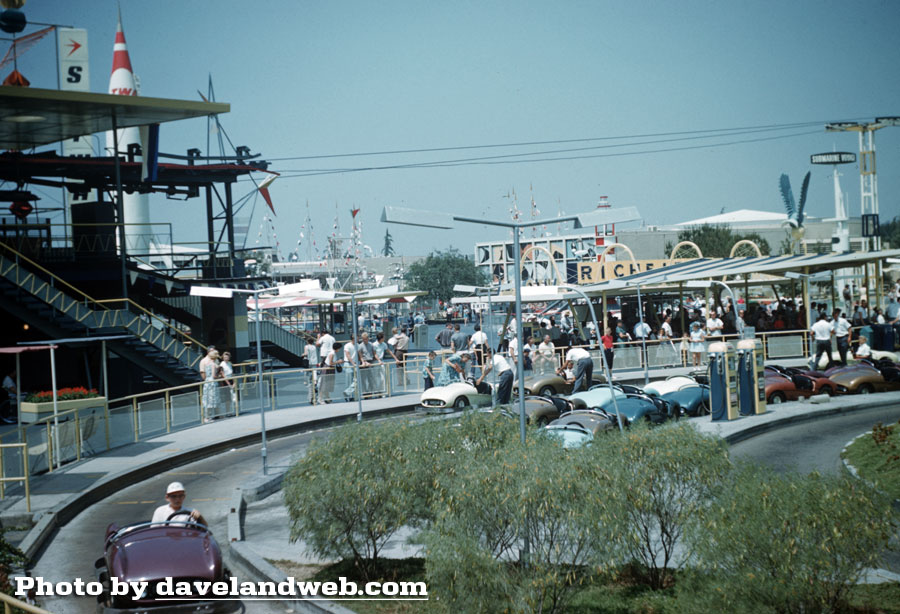
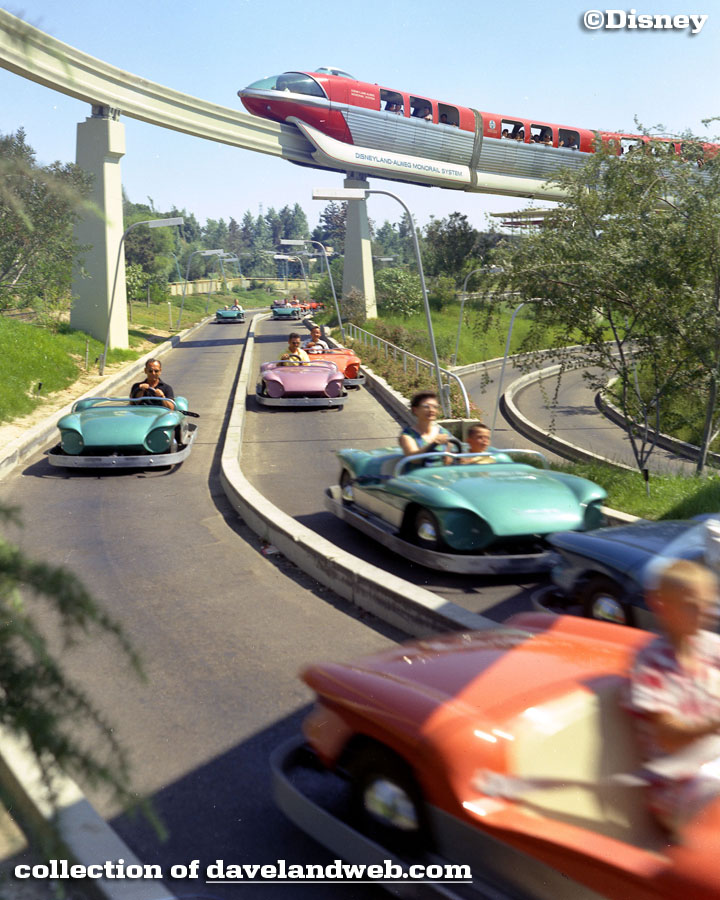
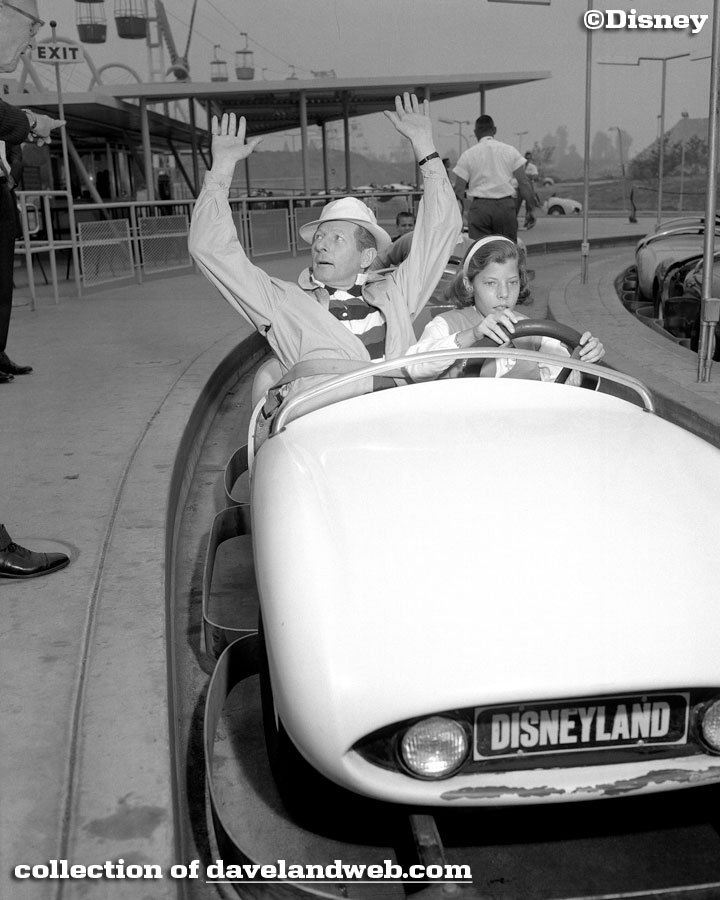
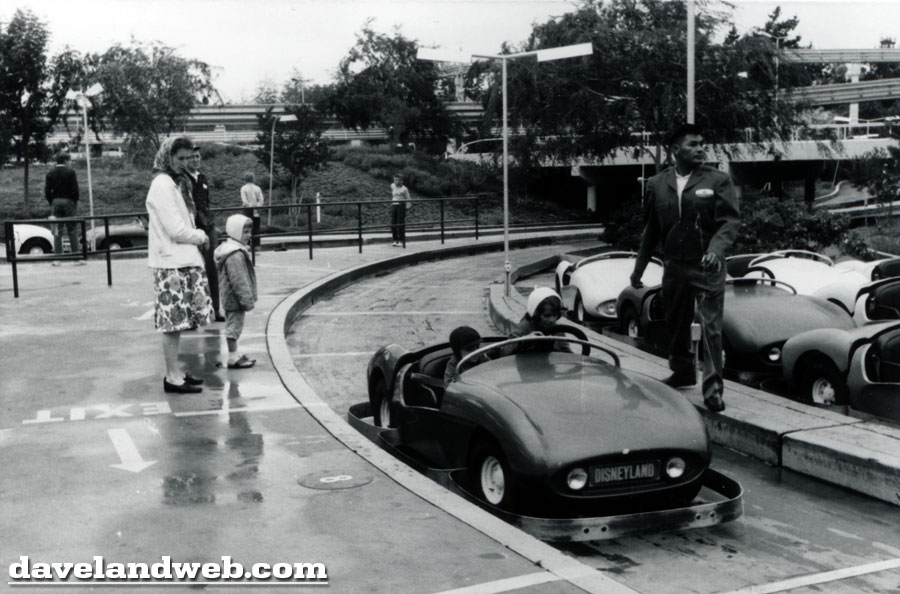
According to the November 1955 issue of “Rod & Custom” magazine there were four police cars amongst the first batch of 40 Autopia cars. They went 25mph (vs. 11mph), had sirens, red lights and other “distinctive insignia”:
“Thirty-six of the vehicles are painted in bright two-tone 1955 automobile colors, thte remaining four are black and white—official colors of the California Highway Patrol. The patrol cars are equipped with sirens and red lights and other distinctive insignia. The police cars are not governed and can attain a speed of 25 mph as compared to the conventional cars’ top speed of 11 mph. The deputies need this extra speed to enable them to unsnarl traffic jams, lend assistance to the young and sometimes bewildered ‘rookie driver’ and to sidetrack any straggling or disabled vehicles to prevent any accidents on the miniature Autobahn.”
Daveland Reader Oswald Jackson chimes in with additional info:
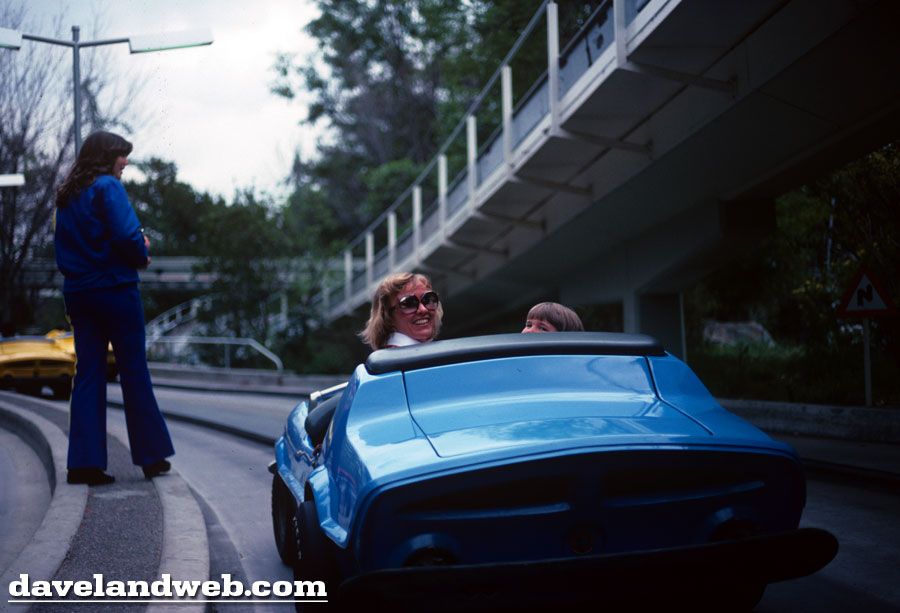
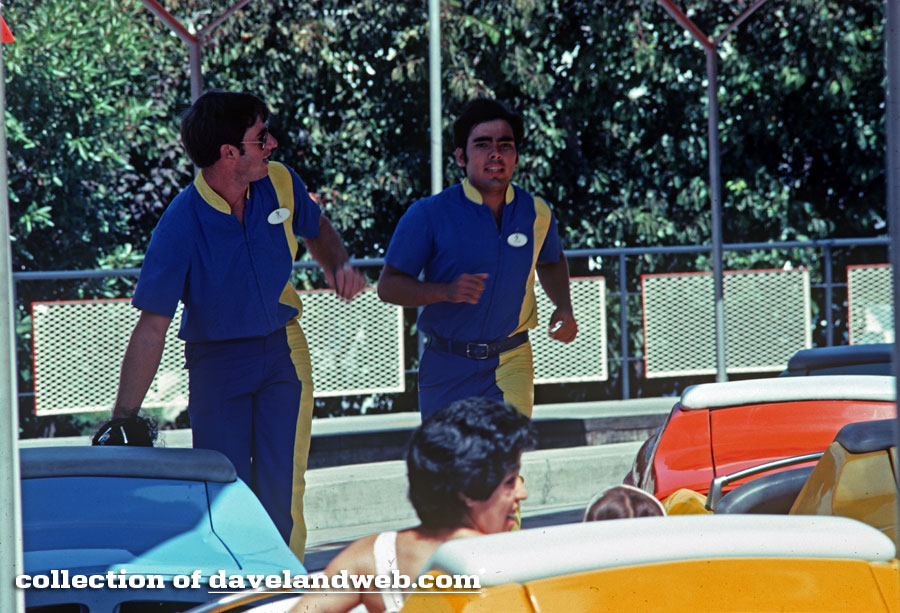
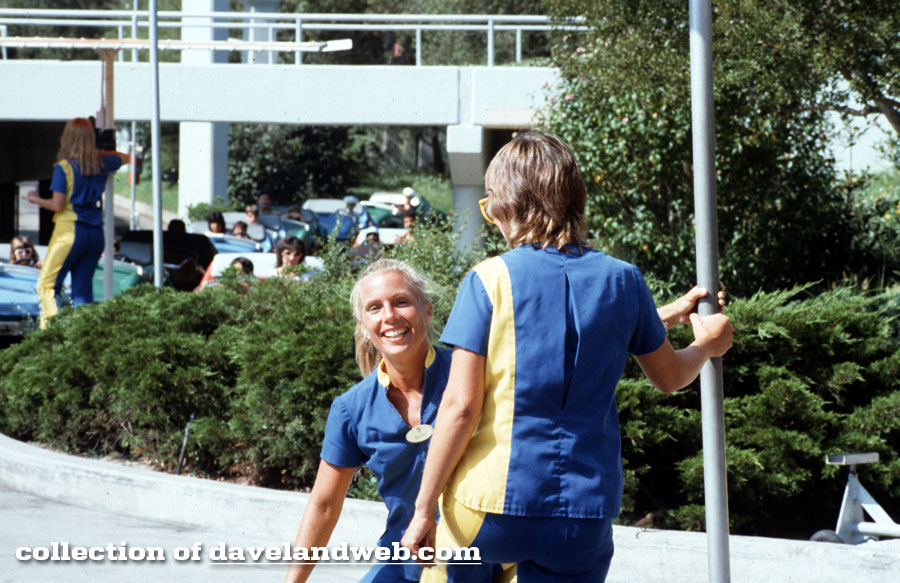
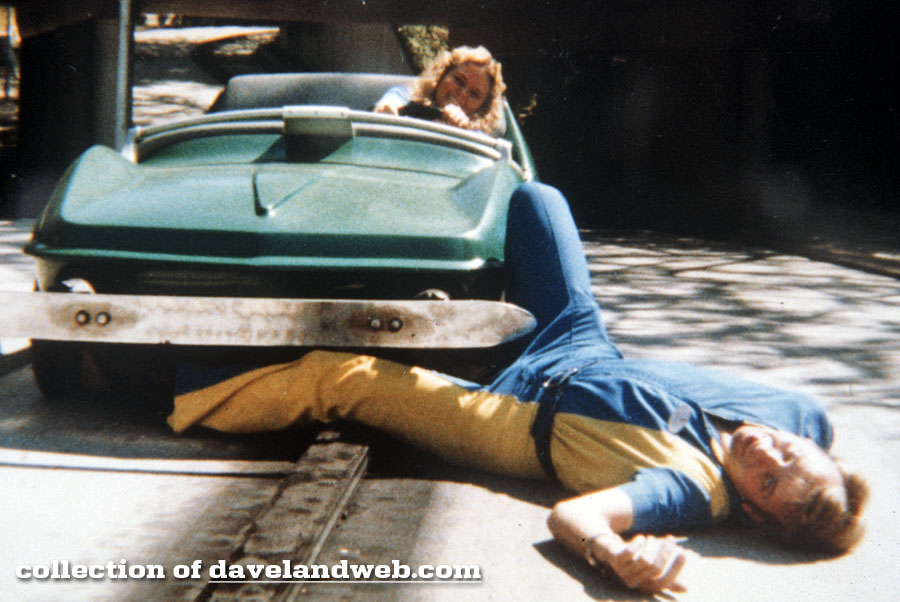
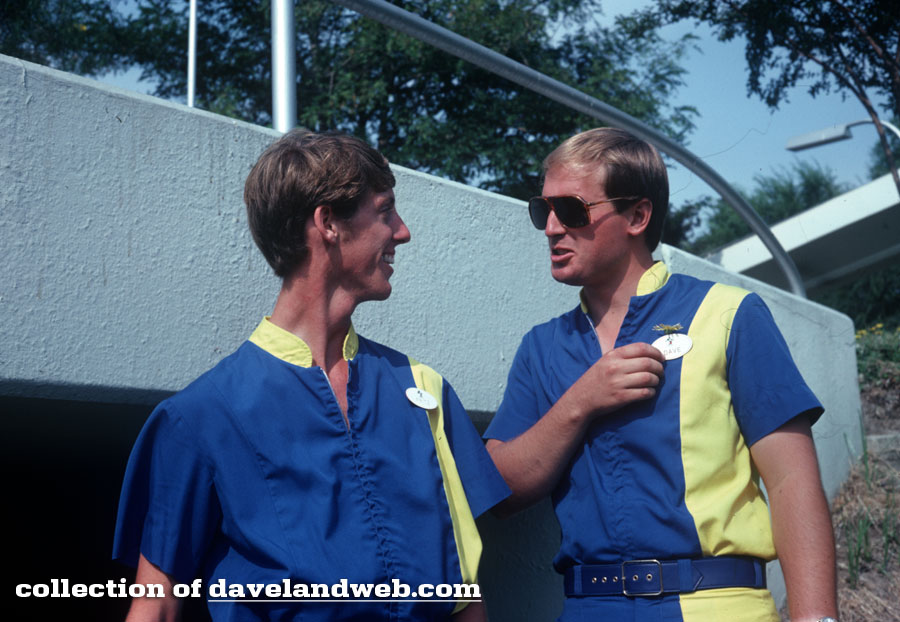
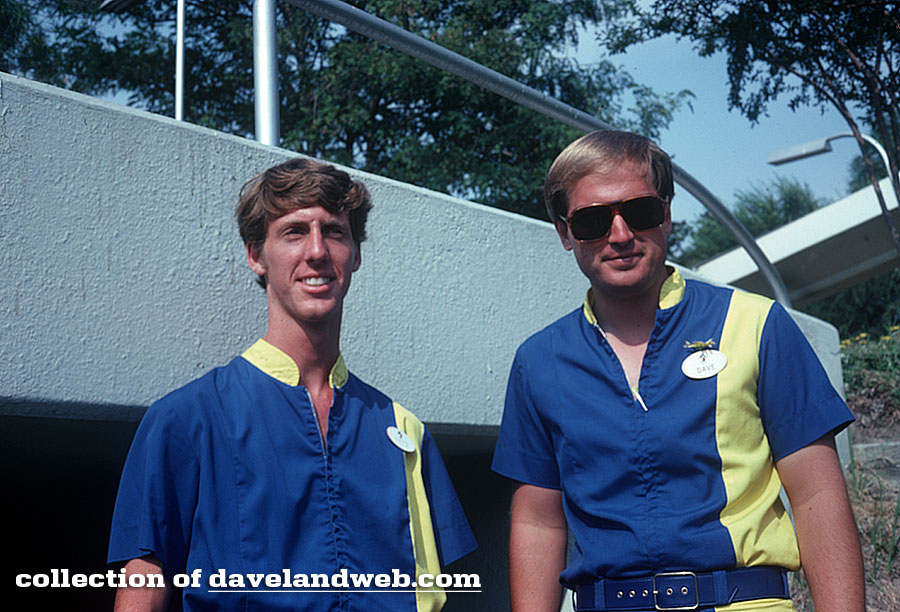
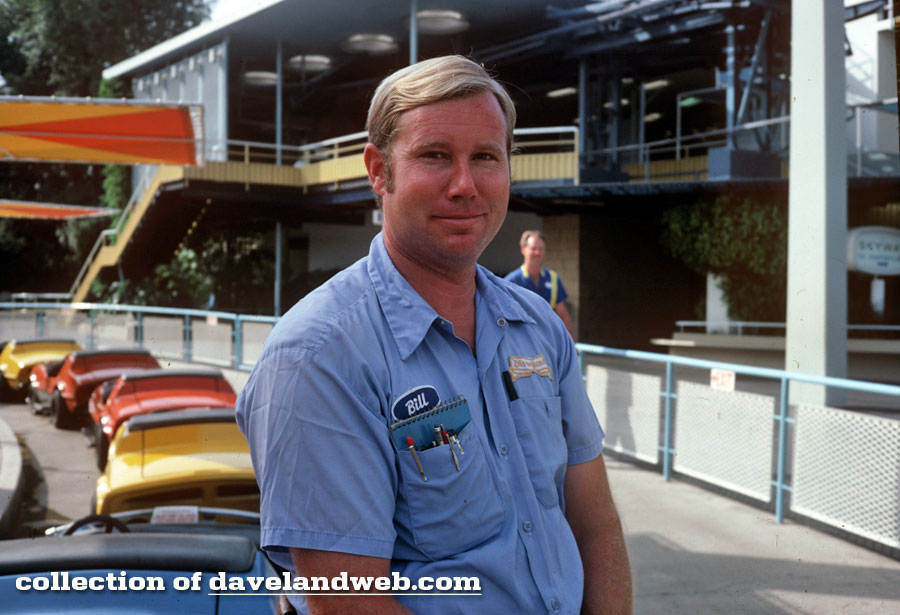
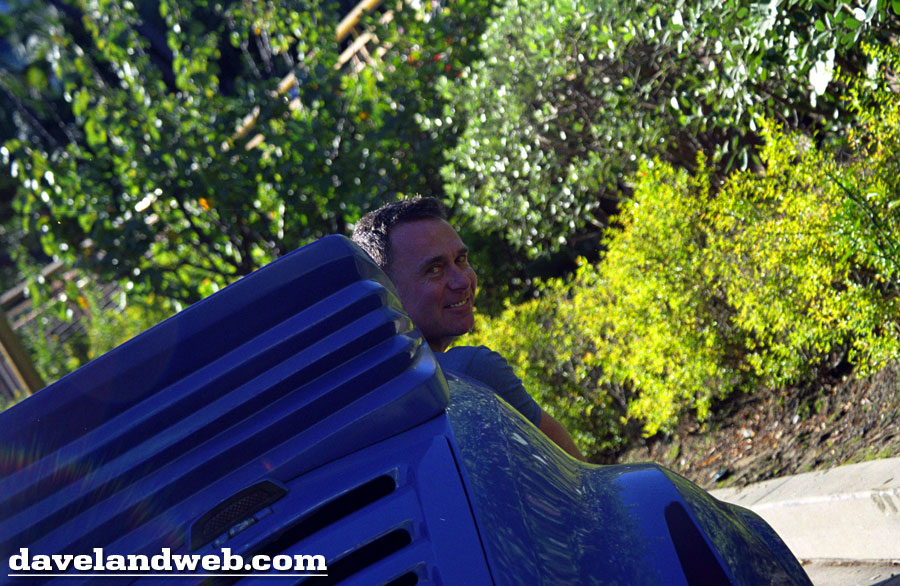
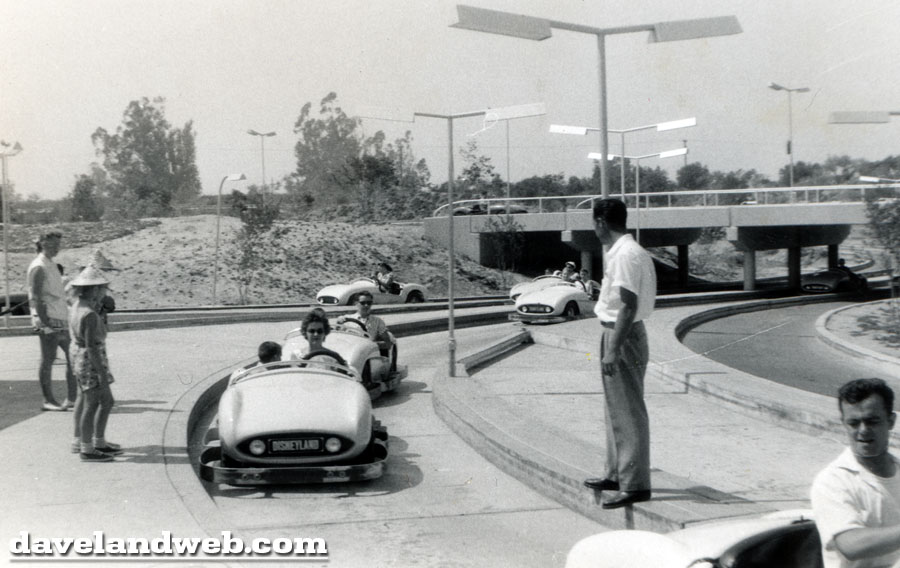
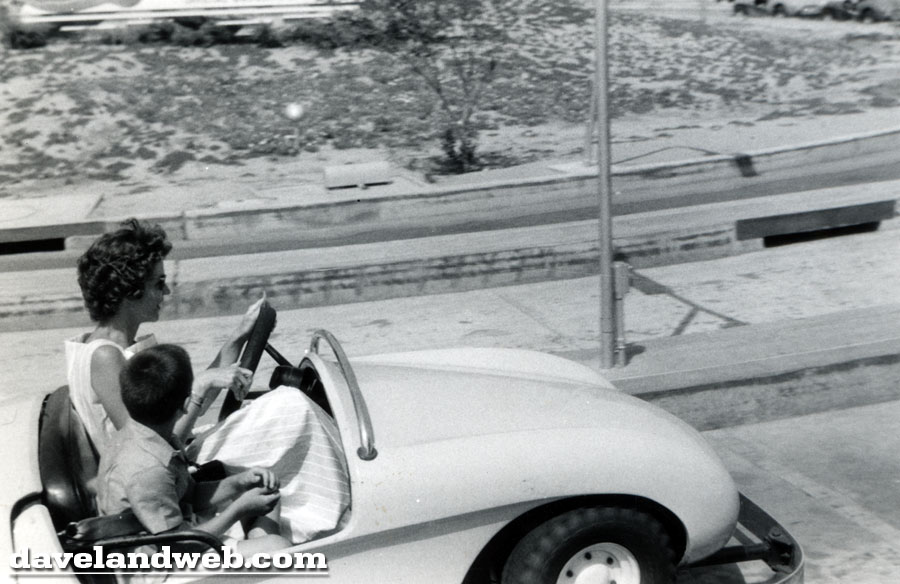
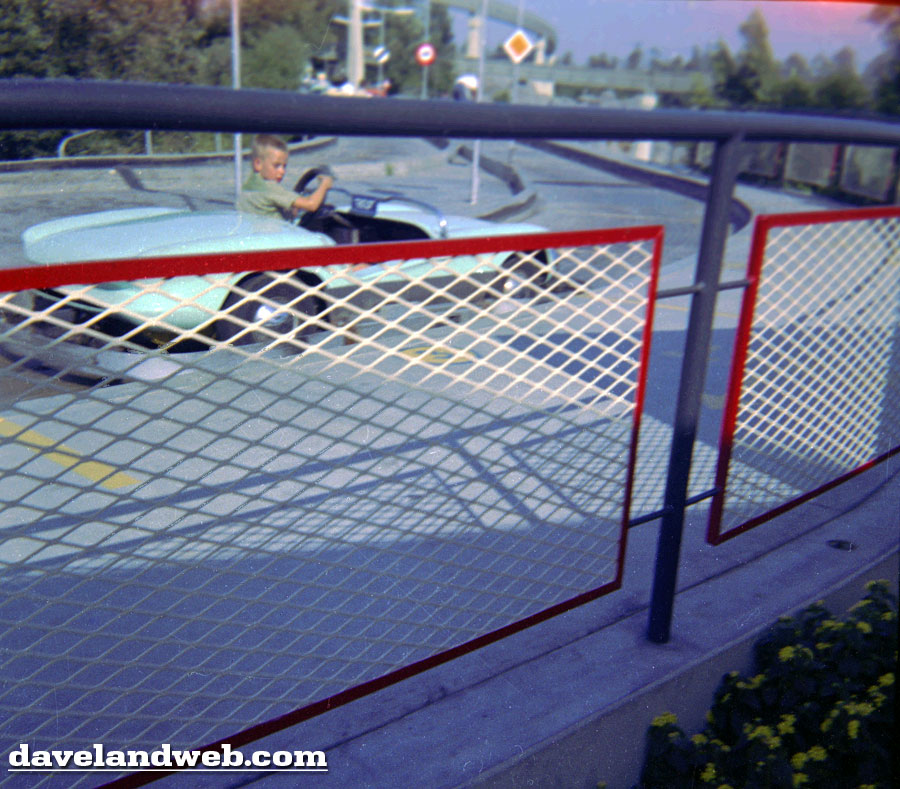
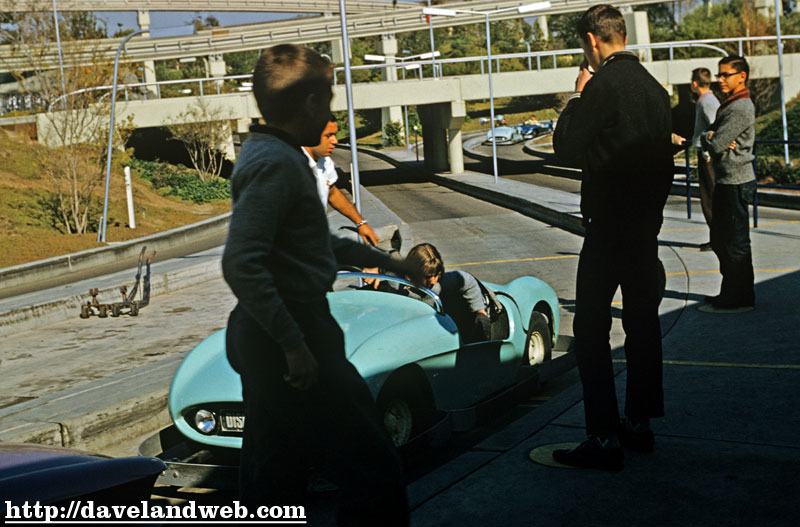
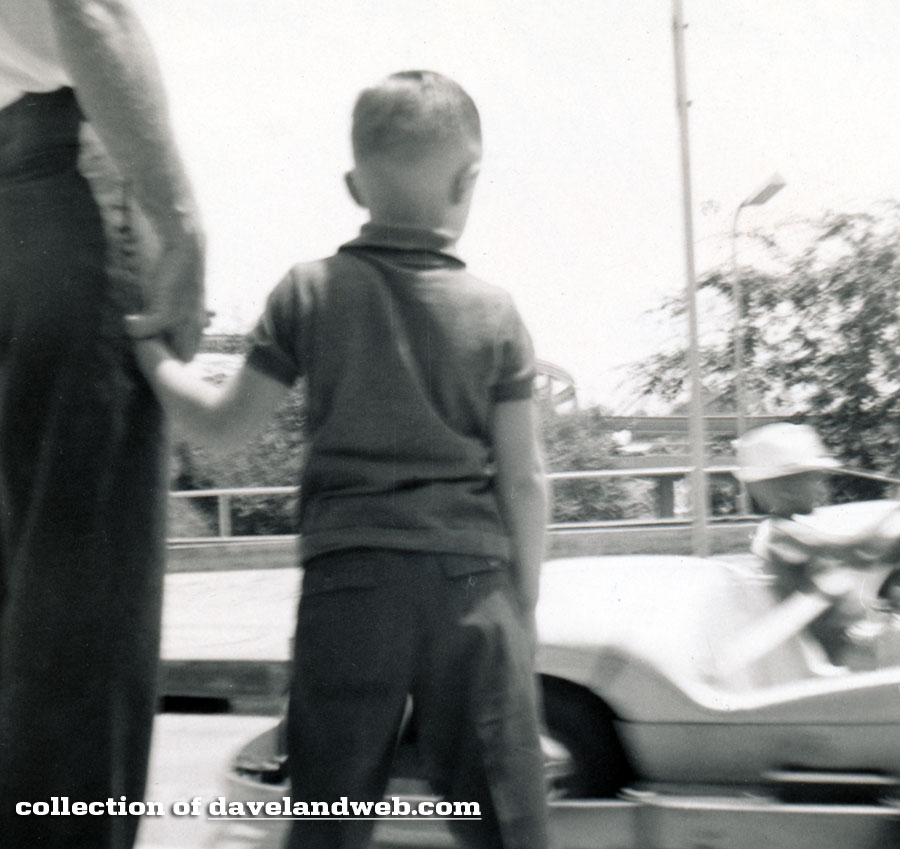
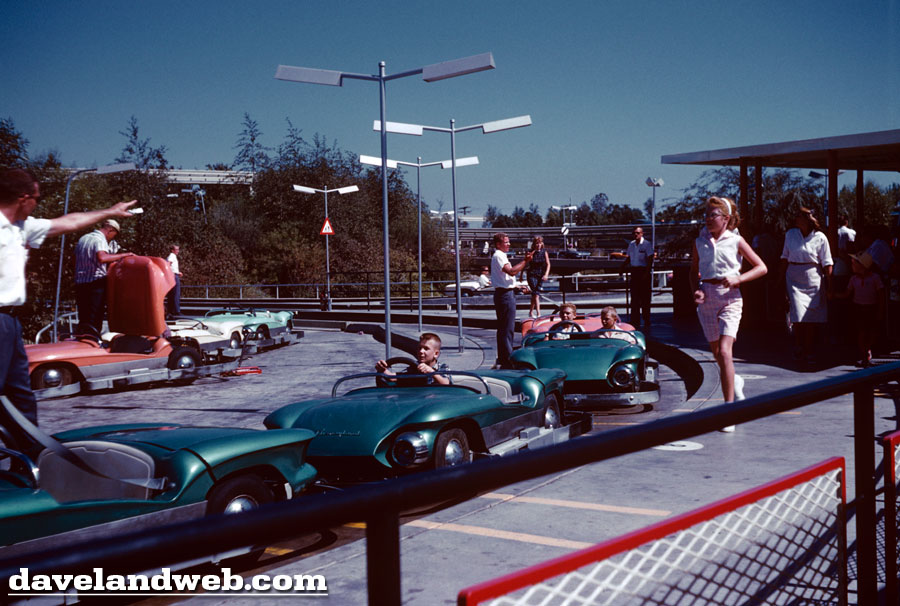
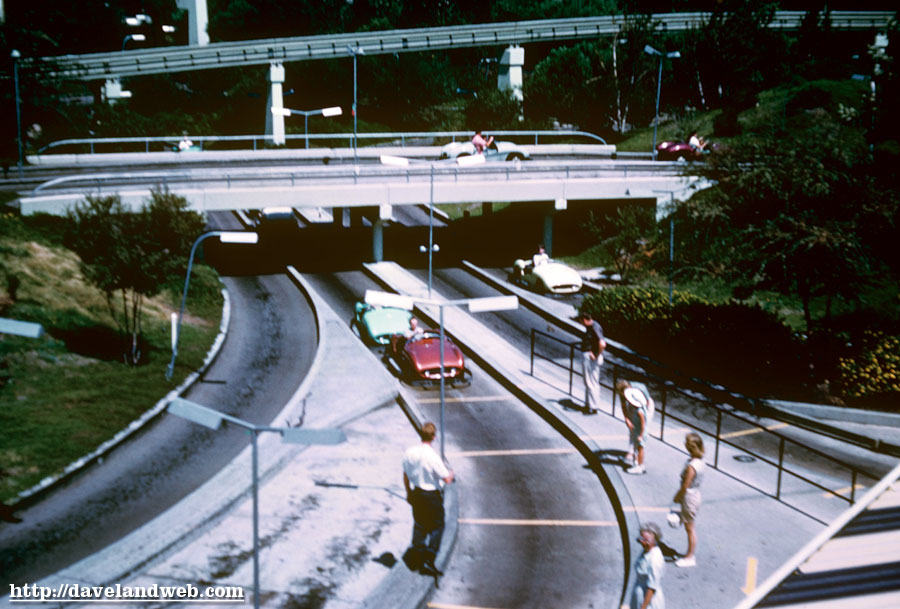
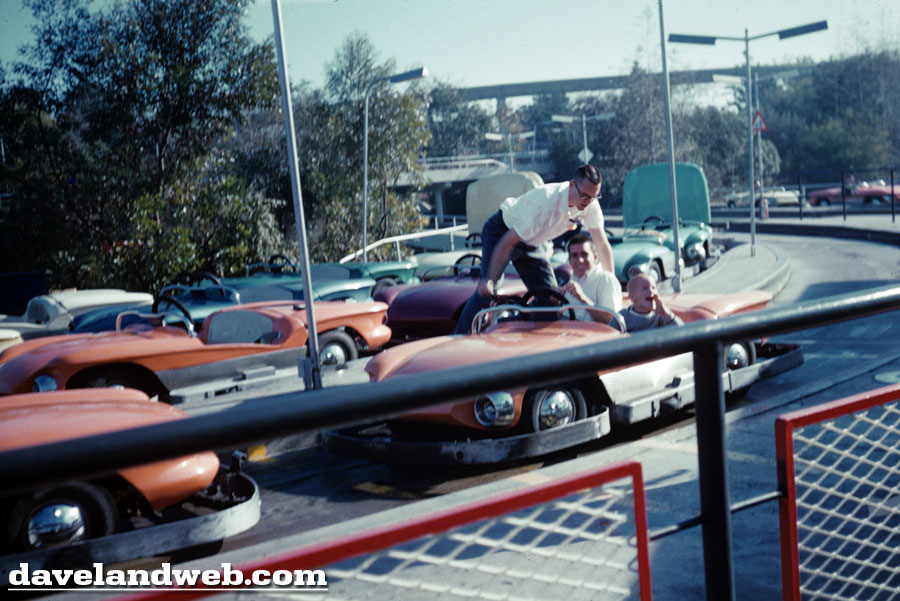
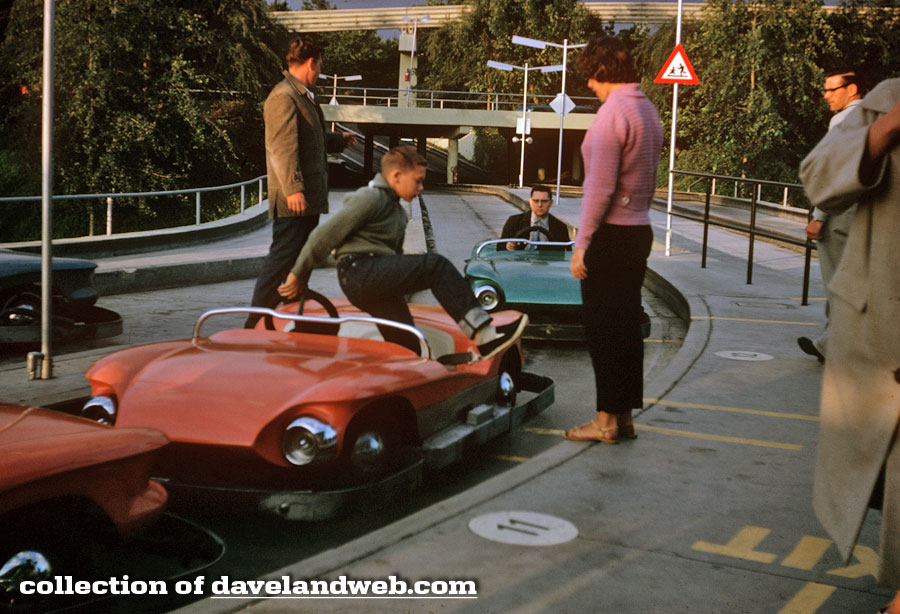
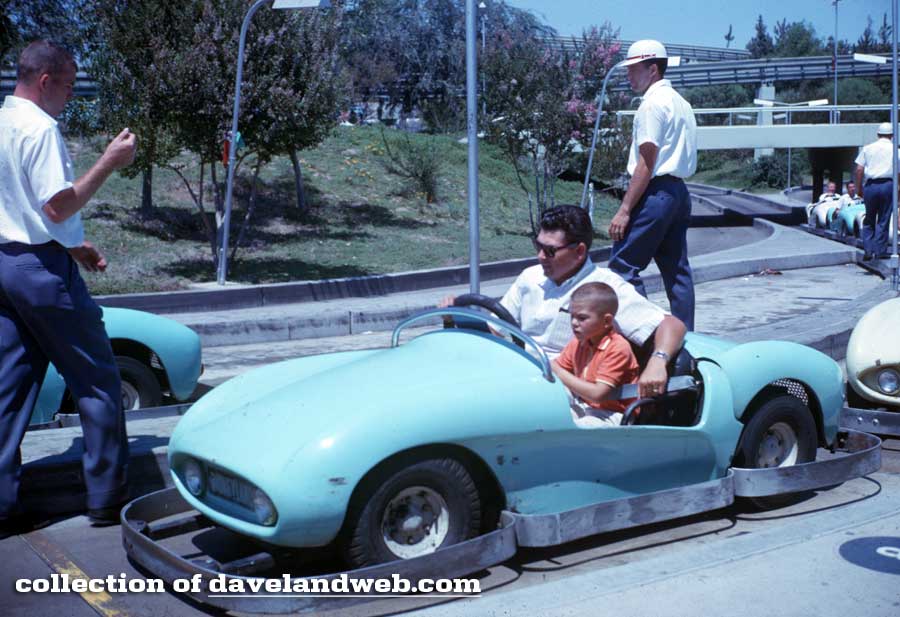
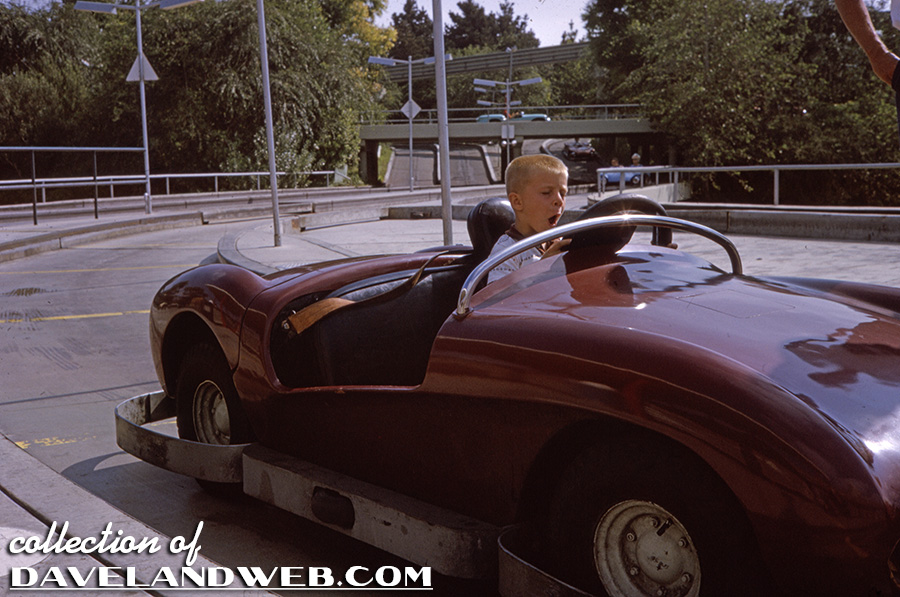
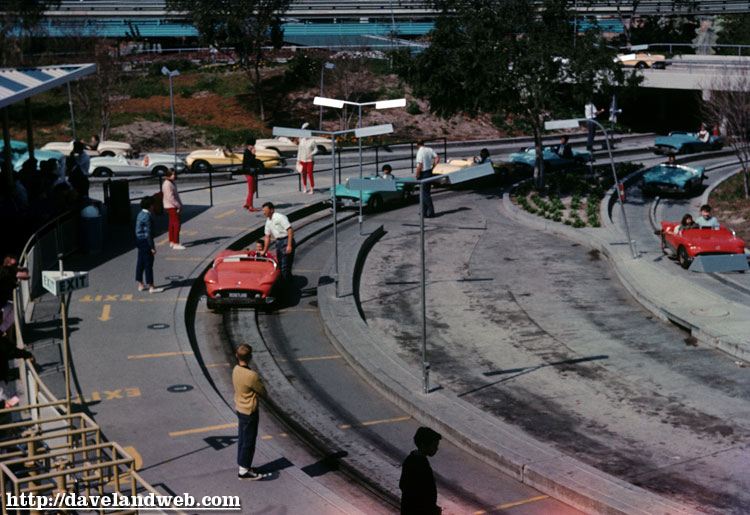
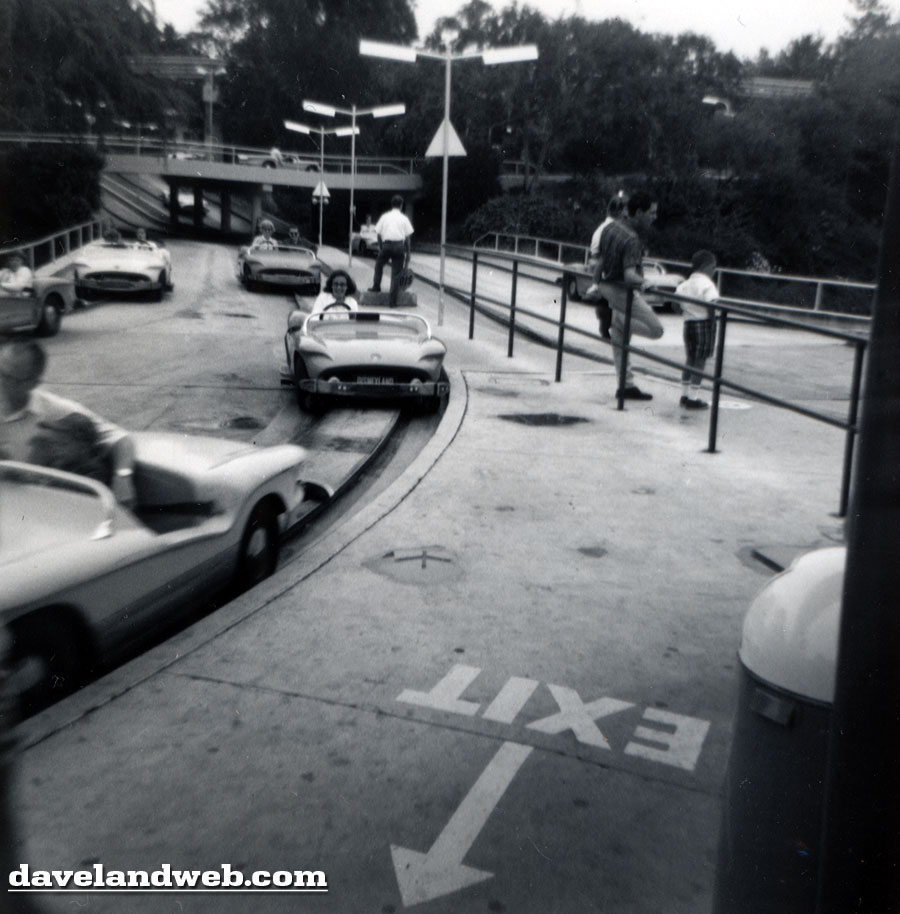
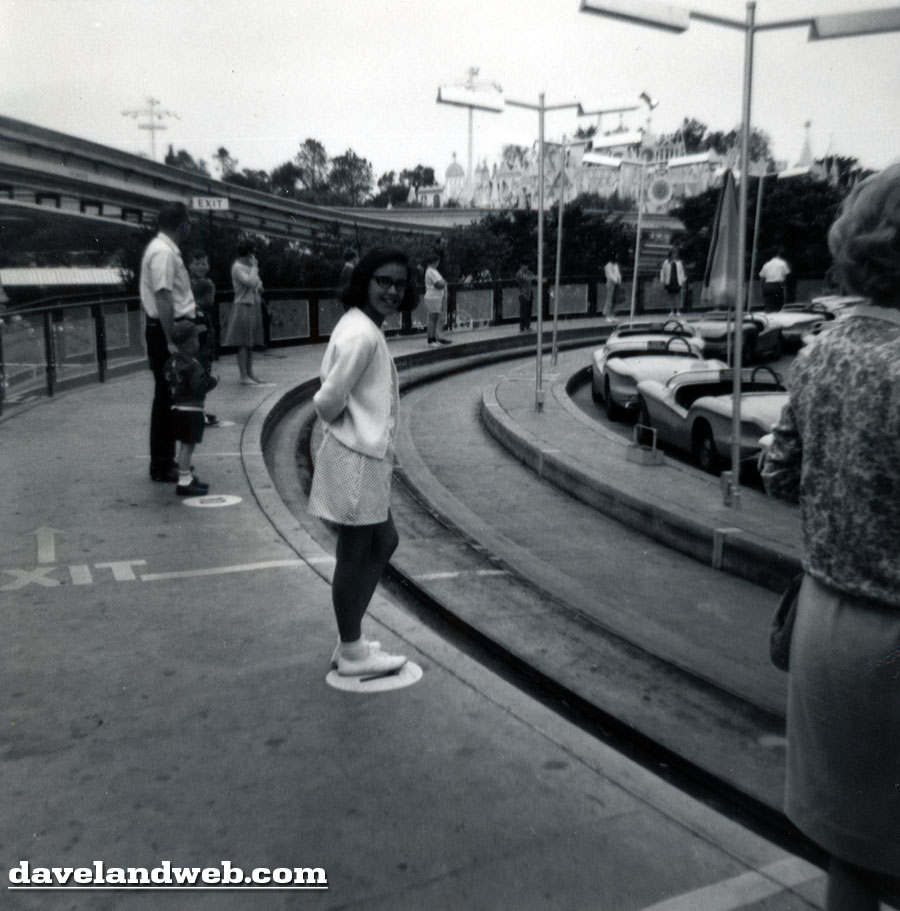
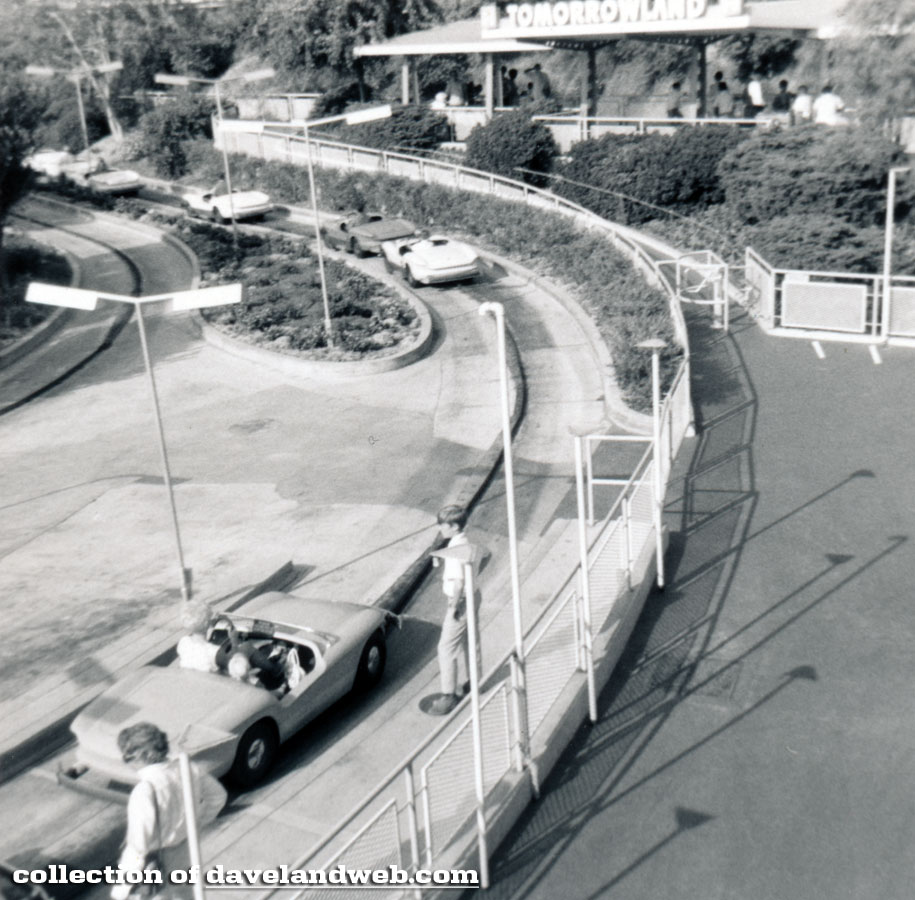
Walt wanted, to teach “espect for the rules of the road.” If a car was stranded, just as you supposed, the other cast member would retrieve the kid (so the boy in the picture above was either: (A) Disrespecting the rules of the Autopia Highway—at which point he would be given a little citation, much like the driver’s licenses Richfield gave out—to remind him of respect for others on the Highway) or (B) His vehicle had broken down and the Cast Member in the background brought him back to the load area. According to Bob Gurr, before the Midget Autopia was put in, sometimes a Cast Member would allow a just-under-the-height-limit child to go out with him and chase down “speeders.” Note that the cars were not on a rail, yet, and kids could literally pass each other, before management realized (when a child figured out a way to wedge himself all the way around, backwards, until he was driving directly into oncoming traffic!) that the cars would have to be rail-bound to prevent head-on collisions.



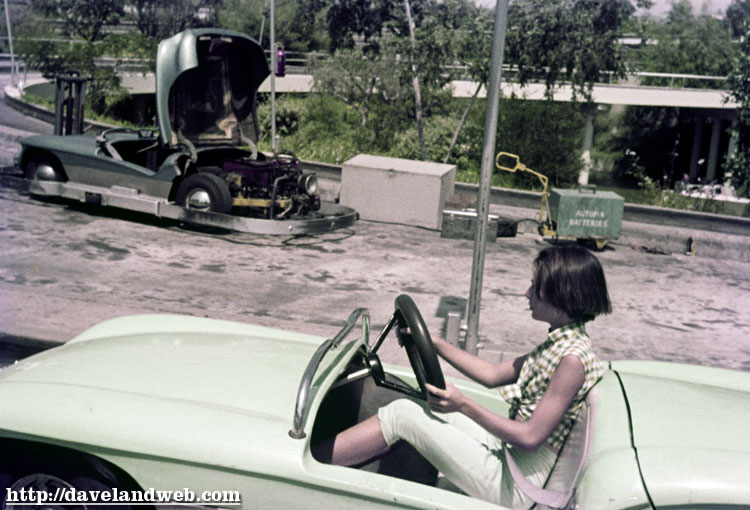
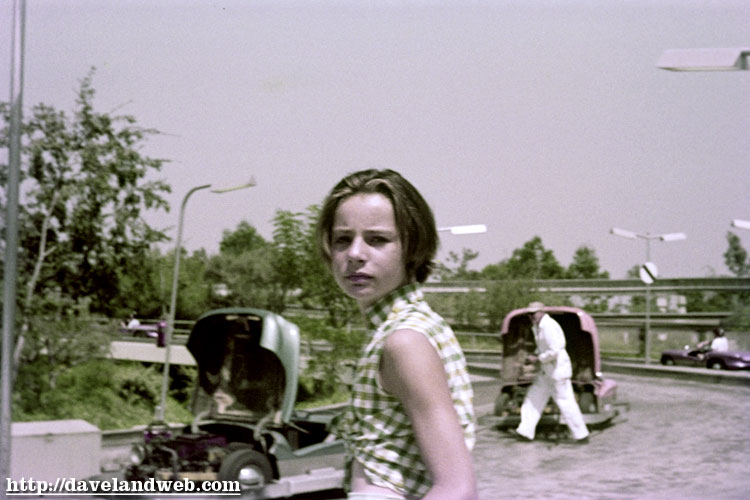







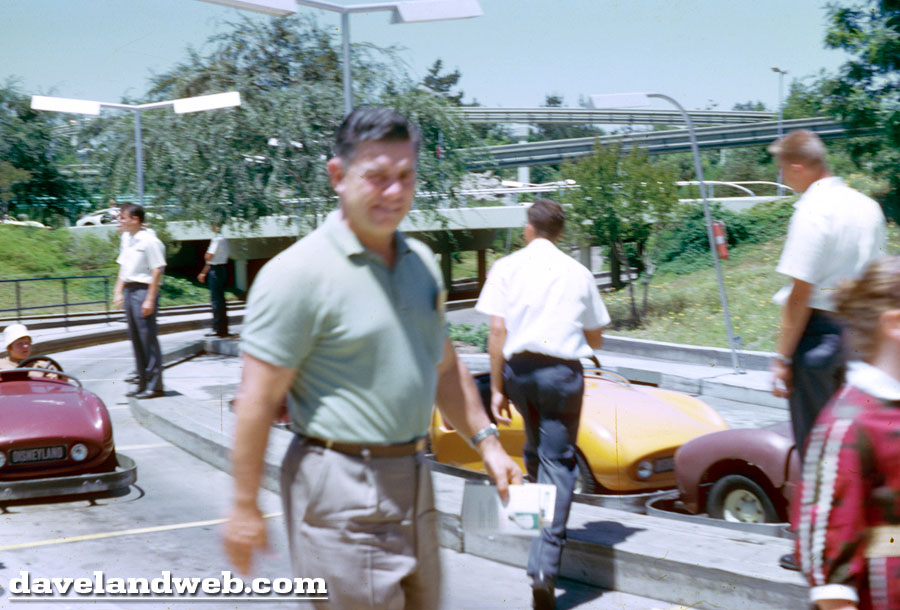










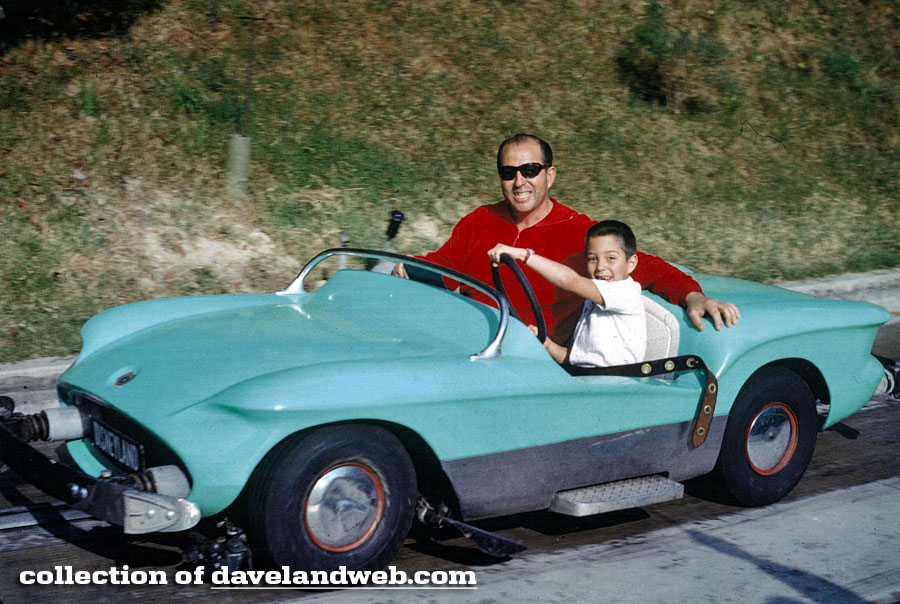

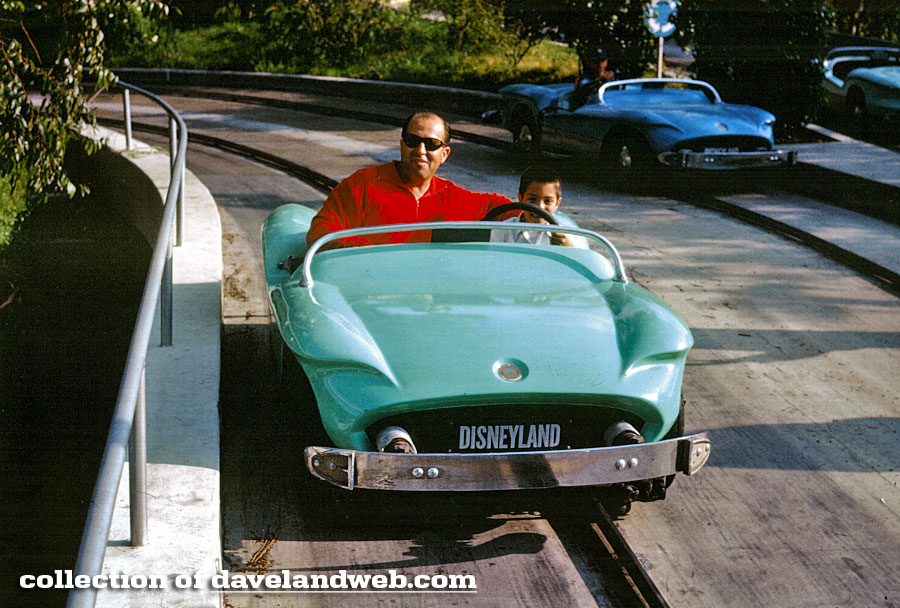

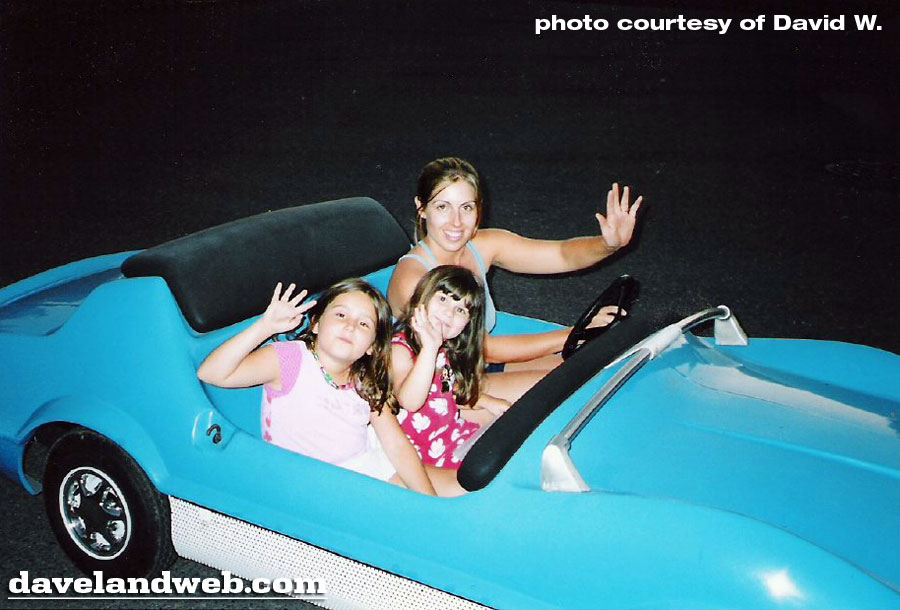
 Part of going to Disneyland is checking out the souvenirs; they vary in cost (and quality) from el cheapo pencils to exorbitantly expensive limited edition collectibles. However, for the big Disneyland collectors, the ultimate souvenir is having a piece of the park itself...namely an attraction vehicle. Daveland reader David W. emailed recently about his acquisition: an Autopia Car! Imagine racing around the neighborhood in that?!? Here’s his story:
Whenever I visited Disneyland's Emporium on Main Street late at night, I marveled at people frantic to buy something. Something that would allow them to take home a piece of the magic they had seen at Disneyland. Often I would see guests buying the biggest plush Mickey they could find. When the Autopia car bodies were auctioned by Disney, I missed out on the opportunity to own one, but, months later, when Phil Sears put some up for sale, I knew what I must do. It took $1295 but was worth every penny. I did not believe that I could engineer and build a complete car under the fiberglass shell—but that’s exactly what I did in only 3 months. A local mover, Steve Hill, picked up the car for me in Anaheim and brought it to me, no charge. It took three months to build the frame and chassis and to get the car “on the road”.
So, what do I have? A souvenir of Disneyland park, four feet wide and ten feet long! It sits outside our bedroom window—the first thing I see each morning.
To read more about David transforming the body into a working Autopia car, visit his website